

Reported by Ariajegbe Sylvia Esezobor
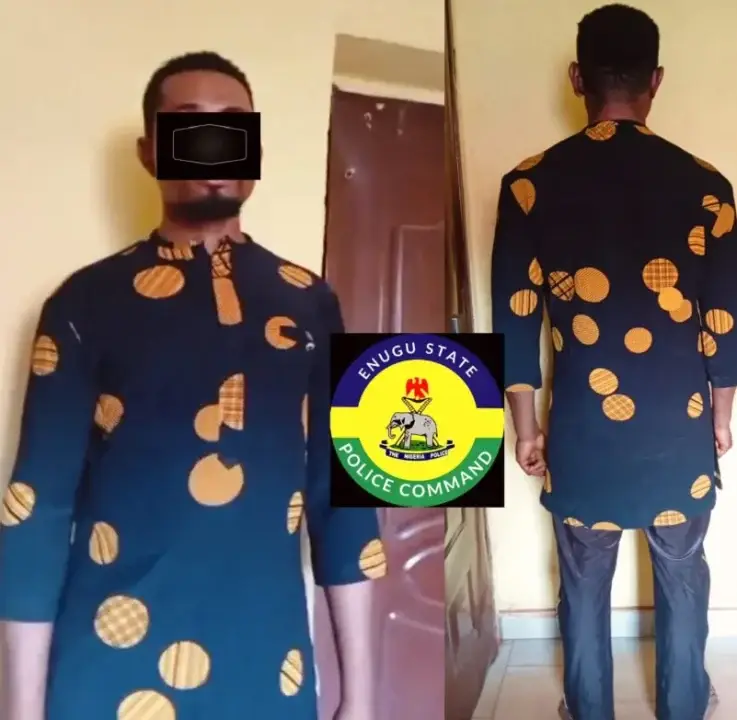
The Enugu State Police Command has arrested a 30-year-old man, Okpara Chibuike Emmanuel, over the alleged murder of his girlfriend, whose decomposing body was discovered inside the toilet of his apartment at Olympic Layout, One-Day, Enugu, following what police described as an argument over who infected the other with the Human Immunodeficiency Virus.
According to a statement issued on Tuesday by the Command’s spokesperson, SP Daniel Ndukwe, the suspect was rescued from an angry mob and re-arrested by operatives attached to the Awkunanaw Division at about 6:30 p.m. on Monday, September 21, 2026. Preliminary investigation indicated that the suspect allegedly killed the victim, identified simply as Chinyere, on September 19, wrapped her remains in nylon and locked them inside the toilet of his apartment. The offensive odour of the decomposing body subsequently attracted neighbours, who forced the door open and apprehended him before the arrival of the police.
During preliminary interrogation, the suspect confessed to the crime, stating that the incident followed an argument between him and the deceased over allegations of who infected the other with HIV. He further stated that during the argument, he struck the deceased on the head with a pestle, resulting in her death, and subsequently wrapped and dumped her remains inside the toilet. The putrefying remains were evacuated to a mortuary for preservation and autopsy, while efforts are ongoing to trace and notify her relatives. The deceased’s surname, age and address were yet to be established as of the time of the police statement.
The State Commissioner of Police, Mamman Bitrus Giwa, has ordered the State Criminal Investigation Department to conduct a discreet and thorough investigation to establish the circumstances of the incident and ensure the suspect is arraigned in court upon conclusion of investigations. Giwa also cautioned members of the public, particularly young women, to inform trusted relatives or friends of their movements and exercise caution about whom they visit or spend time with. “The offensive odour of the decomposing body subsequently attracted neighbours, who forced the door open and apprehended him before the arrival of the Police,” the statement read. “The putrefying remains were evacuated to a mortuary for preservation and autopsy, while efforts are ongoing to trace and notify her relatives.” The police said the suspect was rescued from an angry mob that had apprehended him, a detail that underscores the community’s fury at the discovery of the body.
The case has drawn attention to the intersection of intimate partner violence and HIV-related stigma in Nigeria, where a positive diagnosis is often treated as a source of shame and a justification for abandonment or aggression. According to the Nigeria HIV/AIDS Indicator and Impact Survey, approximately 1.9 million Nigerians are living with HIV, and women account for a disproportionate share of new infections and are more likely to face blame and violence upon disclosure. Studies from across sub-Saharan Africa have documented a pattern in which women who disclose their HIV status are at heightened risk of physical abuse, abandonment and economic deprivation. In Nigeria, the stigmatisation of people living with HIV is compounded by legal and social frameworks that criminalise perceived transmission, creating conditions in which disputes over status can escalate into violence.
The Enugu case also reflects a broader crisis of gender-based violence in Nigeria, where intimate partner killings have persisted despite the passage of the Violence Against Persons (Prohibition) Act in 2015. Many states have domesticated the law, but enforcement remains uneven, and reporting is often inhibited by fear, stigma and the reluctance of families to pursue cases against men who are known to them. The police have consistently urged victims and their families to report threats and violence before they escalate, but the obstacles to reporting are substantial, particularly in cases involving stigmatised health conditions.
In this instance, neighbours intervened after the smell of decomposition alerted them to the presence of the body. Their decision to force the door open and apprehend the suspect before police arrived reflects the community’s role in responding to violence when formal systems are slow to act. However, the mob action that preceded the police arrest also highlights the risk of jungle justice, a recurring problem in Nigeria where suspects are sometimes lynched before they can face trial. The police said they rescued the suspect from the crowd, and he remains in custody as investigations continue.
For the family of Chinyere, whose identity is still being established, the case represents an unbearable loss compounded by the circumstances of her death. The autopsy will determine the precise cause of death, and the investigation will establish the facts surrounding the killing. The suspect is presumed innocent until proven guilty by a court of competent jurisdiction. The Enugu State Police Command has said the suspect will be arraigned upon the conclusion of investigations.
The killing adds to a growing list of cases in which women have been killed by intimate partners in Nigeria, often after disputes that could have been resolved through dialogue, counselling or the intervention of family and community members. The police have urged young women to exercise caution about whom they visit and to keep trusted relatives informed of their movements, but the responsibility for preventing such violence cannot rest solely on potential victims. It requires a broader societal commitment to addressing stigma, strengthening the enforcement of laws against gender-based violence, and ensuring that mental health and conflict-resolution support is available to individuals in crisis. As the Enugu investigation proceeds, the case stands as a grim reminder of the violence that can flow from stigma, silence and the refusal to treat HIV as a manageable health condition rather than a moral indictment.
📩 Stone Reporters News | 🌍 stonereportersnews.com
✉️ info@stonereportersnews.com | 📘 Facebook: Stone Reporters News | 🐦 X (Twitter): @StoneReportNew | 📸 Instagram: @stonereportersnews
Reported by Ariajegbe Sylvia Esezobor
The Enugu State Police Command has arrested a 30-year-old man, Okpara Chibuike Emmanuel, over the alleged murder of his girlfriend, whose decomposing body was discovered inside the toilet of his apartment at Olympic Layout, One-Day, Enugu, following what police described as an argument over who infected the other with the Human Immunodeficiency Virus.
According to a statement issued on Tuesday by the Command’s spokesperson, SP Daniel Ndukwe, the suspect was rescued from an angry mob and re-arrested by operatives attached to the Awkunanaw Division at about 6:30 p.m. on Monday, September 21, 2026. Preliminary investigation indicated that the suspect allegedly killed the victim, identified simply as Chinyere, on September 19, wrapped her remains in nylon and locked them inside the toilet of his apartment. The offensive odour of the decomposing body subsequently attracted neighbours, who forced the door open and apprehended him before the arrival of the police.
During preliminary interrogation, the suspect confessed to the crime, stating that the incident followed an argument between him and the deceased over allegations of who infected the other with HIV. He further stated that during the argument, he struck the deceased on the head with a pestle, resulting in her death, and subsequently wrapped and dumped her remains inside the toilet. The putrefying remains were evacuated to a mortuary for preservation and autopsy, while efforts are ongoing to trace and notify her relatives. The deceased’s surname, age and address were yet to be established as of the time of the police statement.
The State Commissioner of Police, Mamman Bitrus Giwa, has ordered the State Criminal Investigation Department to conduct a discreet and thorough investigation to establish the circumstances of the incident and ensure the suspect is arraigned in court upon conclusion of investigations. Giwa also cautioned members of the public, particularly young women, to inform trusted relatives or friends of their movements and exercise caution about whom they visit or spend time with. “The offensive odour of the decomposing body subsequently attracted neighbours, who forced the door open and apprehended him before the arrival of the Police,” the statement read. “The putrefying remains were evacuated to a mortuary for preservation and autopsy, while efforts are ongoing to trace and notify her relatives.” The police said the suspect was rescued from an angry mob that had apprehended him, a detail that underscores the community’s fury at the discovery of the body.
The case has drawn attention to the intersection of intimate partner violence and HIV-related stigma in Nigeria, where a positive diagnosis is often treated as a source of shame and a justification for abandonment or aggression. According to the Nigeria HIV/AIDS Indicator and Impact Survey, approximately 1.9 million Nigerians are living with HIV, and women account for a disproportionate share of new infections and are more likely to face blame and violence upon disclosure. Studies from across sub-Saharan Africa have documented a pattern in which women who disclose their HIV status are at heightened risk of physical abuse, abandonment and economic deprivation. In Nigeria, the stigmatisation of people living with HIV is compounded by legal and social frameworks that criminalise perceived transmission, creating conditions in which disputes over status can escalate into violence.
The Enugu case also reflects a broader crisis of gender-based violence in Nigeria, where intimate partner killings have persisted despite the passage of the Violence Against Persons (Prohibition) Act in 2015. Many states have domesticated the law, but enforcement remains uneven, and reporting is often inhibited by fear, stigma and the reluctance of families to pursue cases against men who are known to them. The police have consistently urged victims and their families to report threats and violence before they escalate, but the obstacles to reporting are substantial, particularly in cases involving stigmatised health conditions.
In this instance, neighbours intervened after the smell of decomposition alerted them to the presence of the body. Their decision to force the door open and apprehend the suspect before police arrived reflects the community’s role in responding to violence when formal systems are slow to act. However, the mob action that preceded the police arrest also highlights the risk of jungle justice, a recurring problem in Nigeria where suspects are sometimes lynched before they can face trial. The police said they rescued the suspect from the crowd, and he remains in custody as investigations continue.
For the family of Chinyere, whose identity is still being established, the case represents an unbearable loss compounded by the circumstances of her death. The autopsy will determine the precise cause of death, and the investigation will establish the facts surrounding the killing. The suspect is presumed innocent until proven guilty by a court of competent jurisdiction. The Enugu State Police Command has said the suspect will be arraigned upon the conclusion of investigations.
The killing adds to a growing list of cases in which women have been killed by intimate partners in Nigeria, often after disputes that could have been resolved through dialogue, counselling or the intervention of family and community members. The police have urged young women to exercise caution about whom they visit and to keep trusted relatives informed of their movements, but the responsibility for preventing such violence cannot rest solely on potential victims. It requires a broader societal commitment to addressing stigma, strengthening the enforcement of laws against gender-based violence, and ensuring that mental health and conflict-resolution support is available to individuals in crisis. As the Enugu investigation proceeds, the case stands as a grim reminder of the violence that can flow from stigma, silence and the refusal to treat HIV as a manageable health condition rather than a moral indictment.
📩 Stone Reporters News | 🌍 stonereportersnews.com
✉️ info@stonereportersnews.com | 📘 Facebook: Stone Reporters News | 🐦 X (Twitter): @StoneReportNew | 📸 Instagram: @stonereportersnews
Add comment
Comments