

Reported by: Ijeoma G | Edited by: Oravbiere Osayomore Promise.
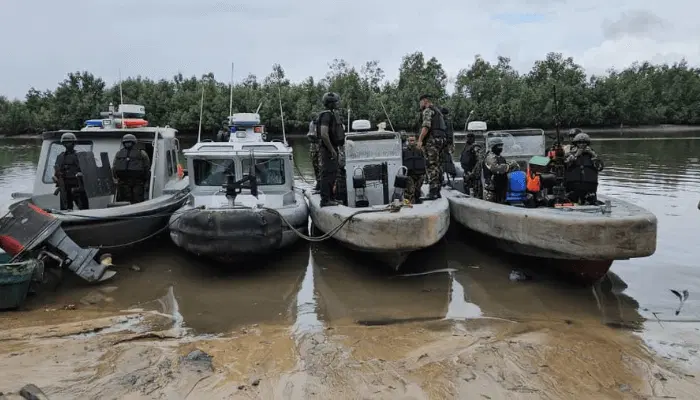
The Nigerian Navy has uncovered approximately 182,000 litres of substance suspected to be stolen crude oil in Bethel Creeks, Rivers State, in what the service described as another major disruption of illicit crude oil storage and transfer activities within the area. The discovery was made by the Forward Operating Base Bonny on Tuesday, September 22, 2026, during a follow-up operation based on actionable information concerning suspicious activities around the creeks. The Director of Naval Information, Navy Captain Abiodun Folorunsho, disclosed this in an operational report on Tuesday, stating that the operation uncovered eight dugout pits, five of which contained the suspected stolen crude oil, while three were empty. Hoses associated with the movement of crude oil were also discovered and subsequently handled in accordance with established procedures.
The latest discovery came barely two weeks after FOB Bonny uncovered approximately 87,000 litres of suspected stolen crude oil at four newly activated illegal refining sites around Aworkiri on September 8, 2026. That earlier operation also exposed 19 dugout pits and associated infrastructure, indicating attempts by criminal operators to establish facilities for the storage and handling of stolen crude oil. The successive discoveries, according to Folorunsho, highlight the Nigerian Navy's expanding focus on denying criminal operators the storage and transfer infrastructure required to sustain crude oil theft, rather than allowing illicit activities to become re-established after previous disruptions. He said the latest operation further constrains the availability of crude oil and supporting infrastructure for illegal exploitation within the area, adding that the Navy was determined to prevent illicit activities from becoming re-established after previous disruptions.
The operation is part of the broader mandate of Operation Delta Sanity, the Nigerian Navy's flagship anti-oil-theft initiative in the Niger Delta. The operation was launched to combat crude oil theft, illegal refining, and other maritime crimes that have drained Nigeria's oil revenue and degraded the environment across the region. Under the operation, naval personnel conduct raids, patrols, and intelligence-led surveillance targeting oil thieves and their networks. The discovery in Bethel Creeks is one of several recent successes recorded by the Navy in Rivers State and neighbouring states. In April 2026, the Navy dismantled 22 illegal refineries and arrested 18 suspects, recovering 531,500 litres of illegally refined petroleum products. In May 2026, a similar operation in the Ndoni area of Rivers State uncovered a network of dugout pits and storage locations containing approximately 184,000 litres of suspected illegally refined Automotive Gas Oil.
The scale of the illegal oil economy in the Niger Delta remains staggering. The criminal networks that sustain it are sophisticated, well-resourced, and deeply embedded in coastal communities. They operate through a complex chain that includes the tapping of pipelines, the transportation of stolen crude through creeks and waterways, the operation of illegal refining sites, and the sale of refined products in local and regional markets. The Navy's strategy of targeting storage and transfer infrastructure, rather than merely reacting to individual incidents, reflects a recognition that dismantling the logistics of the trade is essential to disrupting it. Each dugout pit destroyed and each cache of stolen crude recovered represents a direct blow to the operational capacity of the syndicates.
The recovery of 182,000 litres of suspected stolen crude oil is significant not only for its volume but for what it represents. The dugout pits found in Bethel Creeks were not idle storage facilities. They were part of an active operation to hold and move stolen crude oil. The hoses discovered alongside the pits were the arteries through which the illicit product was transferred to refining sites or waiting vessels. By seizing these assets, the Navy has disrupted the flow of stolen crude and made it more difficult for criminal operators to sustain their activities in the area. The absence of suspects at the scene, however, raises questions about whether the operators were tipped off or simply abandoned the site when they sensed security presence.
The Nigerian Navy has maintained that its operations are conducted in accordance with established procedures, including the proper handling of recovered exhibits and the documentation of sites for potential prosecution. The Navy has not disclosed whether any arrests were made during the Bethel Creeks operation, but it has consistently emphasized that its objective is to deny criminals the infrastructure and resources they need to operate. The recovered crude oil will be handled in line with operational guidelines, which typically involve documentation, evacuation, and possible destruction to prevent it from re-entering the illicit market.
The operation in Bethel Creeks is the latest in a series of sustained efforts by the Nigerian Navy to combat oil theft in the Niger Delta. The Navy's operations have contributed to improvements in crude oil production, which has risen to about 1.8 million barrels per day according to recent figures. However, the fight is far from over. The criminal networks involved in oil theft are resilient and adaptive. They have demonstrated an ability to rebuild their infrastructure and resume operations after disruptions. The Navy's response has been to expand its focus beyond individual raids to a sustained campaign of intelligence gathering, surveillance, and targeted operations aimed at dismantling the networks from the ground up.
For the communities living in and around Bethel Creeks, the presence of illegal refining and stolen crude storage sites has brought environmental degradation, health hazards, and insecurity. The illegal refining process pollutes the air, water, and soil, damaging farmlands and fishing waters that many families depend on for their livelihoods. The criminals who operate these sites often operate outside the law, creating a climate of fear and instability. The Navy's operations, while disruptive in the short term, are intended to create conditions for long-term peace and economic stability in the region.
The Nigerian Navy has reaffirmed its commitment to sustaining pressure on criminal networks involved in crude oil theft and illegal refining. The recovery of 182,000 litres of suspected stolen crude oil in Bethel Creeks is a tangible result of that commitment. The operation sends a clear message that the Navy will continue to pursue those who exploit the nation's resources for personal gain and that the storage and transfer of stolen crude oil will not go unchallenged. For the oil thieves, the message is simple: the creeks are no longer a safe haven, and the Navy is watching.
📩 Stone Reporters News | 🌍 stonereportersnews.com
✉️ info@stonereportersnews.com | 📘 Facebook: Stone Reporters News | 🐦 X (Twitter): @StoneReportNew | 📸 Instagram: @stonereportersnews
Add comment
Comments