

Reported by: Ijeoma G | Edited by: Oravbiere Osayomore Promise.
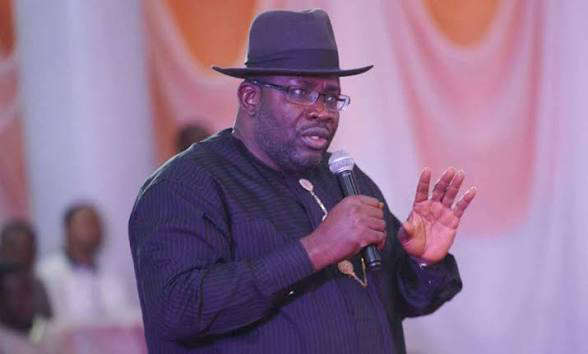
The Nigeria Democratic Congress has drawn a hard line against the OK Movement, the support platform mobilising for its presidential ticket, with National Leader Senator Seriake Dickson declaring that the movement's attempt to constitute a parallel presidential campaign council was "unheard of" and "nonsensical". Dickson spoke on Tuesday, September 22, 2026, in Abuja, while formally receiving former Secretary to the Government of the Federation, Babachir Lawal, into the party. The confrontation has exposed a deepening rift between the party's formal leadership and the grassroots movement that has been mobilising support for the Peter Obi-Rabiu Kwankwaso ticket ahead of the 2027 general elections.
The dispute began when the OK Movement announced a 59-member Presidential Campaign Council comprising zonal and state coordinators to mobilise support for the NDC ticket. The party's National Chairman, Senator Moses Cleopas, disowned the council in a statement on September 19, saying it did not emanate from the party and should be disregarded by the public and the media. Cleopas warned that only the party's leadership has the authority to constitute and announce a Presidential Campaign Council, and that no individual, candidate, or support group would be permitted to establish or announce a campaign structure in the name of the party without prior approval from the National Working Committee. The party also referred the OK Movement's Director-General, John Ugulu, to its disciplinary organ over what it described as his "excesses" during the party's primary election in Lagos State and his repeated disregard for party authority.
Dickson's intervention on Tuesday was even more direct. "Support groups don't compete with the political party that is sponsoring candidates. Support groups don't compete for supremacy, for space. Support groups are what they are: support groups," he said. He stressed that support groups do not sponsor candidates or play the role of a political party. "They provide grassroots support, mobilisation, and support. They don't convert themselves to become critics of the political party sponsored," he added. Dickson said the NDC had made room for support groups from day one and had held meetings with Obidient groups, but insisted that they must confine themselves to their role. "None of them will dare say they are setting up a campaign, presidential campaign council. It's unheard of. Nonsensical," he said.
The OK Movement refused to back down. In a statement signed by its National Secretary, Saadatu Sani, the movement declared that it would not be intimidated by the NDC chairman's position. The group said it recognised the supremacy of political parties within their constitutional and statutory sphere and remained committed to campaigning for the NDC presidential ticket. However, it drew a clear line between supporting the party and being controlled by its leadership. The OK Movement claimed that its internal records contain about 2.5 million registered members and coordinators nationwide, describing itself as a grassroots organisation with a long-term political vision. The standoff forced the resignation of the OK Movement's National Head of Operations, Francis Nnoli, who stepped down on September 20, citing a growing disconnect between the movement and the NDC. Nnoli said he could no longer serve in a structure whose direction he no longer trusted, and warned supporters against establishing parallel structures. He stressed that "we cannot build a credible campaign outside the authority of the political party".
The crisis has been further complicated by the NDC's decision to disown the OK Movement's campaign council while simultaneously preparing to unveil its own Presidential Campaign Council. In a statement signed by National Publicity Secretary Osa Director, the NDC said it had developed a comprehensive campaign structure and timetable since August but was awaiting final inputs from Obi and Kwankwaso before unveiling the council. The party said the presidential candidate and his running mate had been given a free hand to nominate key campaign officials in consultation with the party leadership, including the Director-General of the campaign, Deputy Director-General for the North, Spokesperson, Head of New Media, Finance Director and Deputy Finance Director. The NDC's insistence that it alone can constitute the campaign council reflects a determination to assert control over a movement that has operated with considerable autonomy since its formation.
Against this backdrop of internal turmoil, the defection of Babachir Lawal to the NDC has given the party a significant political boost. Lawal, who served as Secretary to the Government of the Federation under President Muhammadu Buhari from 2015 to 2017, resigned from the African Democratic Congress in June 2026, alleging that the party's presidential primary had been manipulated to favour former Vice President Atiku Abubakar. He claimed that results from the primary were altered and that winners declared in some areas were replaced with other names. He said he could no longer remain in a party whose primary process he considered fundamentally flawed.
Lawal declared that insecurity, hunger, economic hardship, ignorance and disease had made the Obi-Kwankwaso ticket a patriotic alternative. "Anybody in Nigeria who has the interest of our country at heart and sympathy for the suffering that is ongoing in our country, along with insecurity, hunger, ignorance and disease, will have no choice but to join a party that represents the future and have Peter and Kwankwaso as their candidates," he said. He added that every sensible and patriotic Nigerian ought to understand this, describing the objective of installing Obi as president and Kwankwaso as vice president as a noble one. Dickson immediately named Lawal Coordinator of Campaigns for the North-East and North-Central, describing him as an experienced political organiser, activist and mobiliser whose experience would strengthen the party's campaign machinery in the two regions.
The implications of the NDC crisis are significant for the 2027 elections. The NDC is a relatively new platform that has become the vehicle for the Obi-Kwankwaso ticket, and the OK Movement has been a key mobilisation network drawing on the nationwide grassroots structures that Obi and Kwankwaso built during their previous campaigns. The dispute over whether the movement operates independently or under the party's authority speaks to a deeper tension between the energy and autonomy of grassroots support groups and the need for a unified, disciplined campaign apparatus. If the crisis is not resolved, it risks fragmenting the opposition's campaign infrastructure at a time when the NDC needs every available network to compete effectively. Dickson's warning that support groups must not operate as parallel structures is a clear signal that the party will not tolerate challenges to its authority. Whether the OK Movement will heed that warning or continue on its independent course remains to be seen. For now, the NDC has drawn a line in the sand, and the coming weeks will determine whether the movement falls in line or fractures the party's 2027 ambitions.
📩 Stone Reporters News | 🌍 stonereportersnews.com
✉️ info@stonereportersnews.com | 📘 Facebook: Stone Reporters News | 🐦 X (Twitter): @StoneReportNew | 📸 Instagram: @stonereportersnews
Add comment
Comments