

Reported by: Ijeoma G | Edited by: Oravbiere Osayomore Promise.
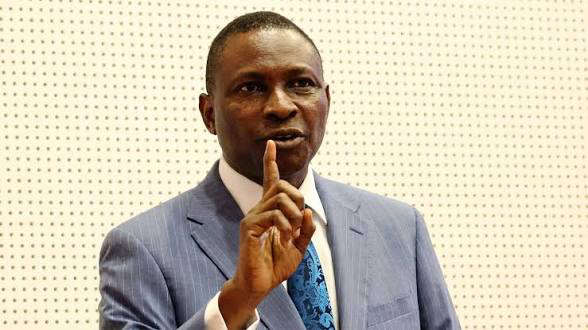
The Chairman of the Economic and Financial Crimes Commission, Olanipekun Olukoyede, has expressed deep concern over the high number of individuals bearing religious titles who are being investigated and prosecuted for financial crimes, revealing that the commission's case files are filled with suspects described as pastors, imams and other religious leaders, with some already convicted and serving jail terms. Olukoyede made the disclosure on Wednesday, September 23, 2026, at the 2026 Second Council Meeting of the Nigeria Inter-Religious Council, held in Abuja with the theme "Shared Sacred Flourishing in Nigeria." The EFCC chairman said the situation had prompted him to question the continued use of religious titles as a shield or source of identity when individuals are accused of criminal conduct.
"I advocated for a review of the titles we give to men of God. Maybe, if it is possible for us to remove those titles, pastor and imam. You know why? I have my case files full of these titles," Olukoyede said. According to him, EFCC case files contain instances of "pastor so-so-so" and "imam so-so-so" being indicted for financial crimes, adding that some had subsequently been convicted and imprisoned. "And some of them have been convicted and they are in jail. And while in jail, they still refer to them as pastor and imam. So it is something for us to really think about," he said. Olukoyede suggested that religious leaders should be judged by their conduct rather than the titles they carry. He said genuine men of God should be identified by their actions and commitment to doing what is right. "People who carry the spirit of God, who do the right thing. Because the spirit of God is by their fruits, not their appearance. Not what we call ourselves. It's by the fruits," he said.
The EFCC chairman illustrated his point with an encounter involving a suspect who was brought to the commission for investigation. He said the suspect, upon being allowed to meet him, introduced himself using several religious titles. "'I am Reverend Dr Bishop…' the suspect reportedly told him. I said, 'Wait there, don't bring that one here. Did you misappropriate money or not?'" he recounted. According to the EFCC chairman, the suspect had allegedly misappropriated funds and was subsequently facing five charges. He warned religious leaders that their positions would not protect them from investigation or prosecution if they became involved in financial crimes. "So if you think you're a Christian or you're a pastor here, and you commit financial crime, I will be your enemy. I won't be your friend," Olukoyede said. He called on religious leaders to demonstrate the values they preach by maintaining integrity and accountability, stressing that religious status should not be used to evade the law.
The disclosure is not the first time Olukoyede has raised the alarm over the involvement of religious leaders in financial crimes. In April 2026, during the Jerry Eze Foundation business grant award ceremony, the EFCC chairman revealed that several religious leaders, including pastors and imams, were in the commission's custody over alleged fraud-related offences. "I have a lot of them in my holding facility as I'm talking to you. I have a lot of them that are convicted for fraudulent practices," he said at the time. He maintained that wrongdoing should be viewed as an individual moral failure rather than a reflection of any religion or faith community, adding that the commission's experience had shown that honesty and corruption are matters of personal character, not titles, clerical status, or religious identity.
The EFCC's engagement with religious leaders has also taken a preventive dimension. At the NIREC meeting, Olukoyede unveiled an Inter-Faith Manual designed to help religious leaders promote anti-corruption messages among their congregations. The manual was unveiled by the Secretary to the Government of the Federation, George Akume, and was developed by Christian and Muslim religious leaders, covering anti-corruption issues that can be incorporated into sermons and other religious teachings. Olukoyede said corruption and financial crimes have no religious or ethnic identity, stressing that the effects of corruption are felt by Nigerians regardless of their faith. "When money meant for a hospital is stolen, the offence may be recorded as corruption, but its consequence may be a patient who cannot receive treatment. When education funds are diverted, the financial crime becomes a child without opportunity. When pension funds are stolen, corruption becomes an elderly Nigerian deprived of dignity after a lifetime of service," he said. He urged religious leaders to challenge the growing social acceptance of unexplained wealth and remind their followers that honest work and integrity should be valued.
The EFCC chairman's remarks have sparked widespread reactions, with many Nigerians taking to social media to share their views. Some expressed support for Olukoyede's position, arguing that religious titles have been weaponised by fraudsters to gain the trust of unsuspecting victims. Others questioned whether the EFCC was focusing on the right targets, arguing that the commission should prioritise the prosecution of politicians and public officials who loot public funds. The debate reflects a broader concern about the role of religious institutions in Nigeria, where pastors and imams wield significant influence over their followers. The involvement of religious leaders in financial crimes not only undermines public trust in religious institutions but also poses a challenge for law enforcement agencies, who must navigate the sensitive terrain of faith and accountability. As the EFCC continues its anti-corruption campaign, the case files that Olukoyede described will remain a sobering reminder that no title, however sacred, can shield anyone from the consequences of financial crime.
📩 Stone Reporters News | 🌍 stonereportersnews.com
✉️ info@stonereportersnews.com | 📘 Facebook: Stone Reporters News | 🐦 X (Twitter): @StoneReportNew | 📸 Instagram: @stonereportersnews
Add comment
Comments