

Reported by Ariajegbe Sylvia Esezobor
The Oyo State Command of the Nigerian Correctional Service has disclosed that drug-related offences account for the largest number of inmates in its custodial centres, underscoring the deepening link between substance abuse and criminal behaviour in one of Nigeria’s most populous states.
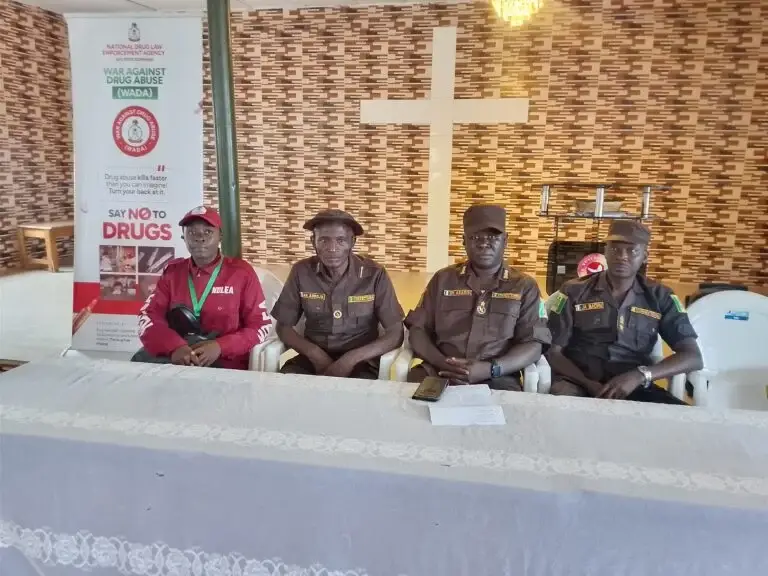
The Officer-in-Charge of the Medium Security Custodial Centre, Agodi, Ibadan, Deputy Controller of Corrections David Akadiri, made the disclosure on Wednesday during the third edition of the Inmates Debate Competition organised by the centre in Ibadan. The debate was themed “Drug Abuse is a Major Contributor to Criminal Behaviour,” with Team A and Team B arguing for and against the motion respectively. Akadiri described drug abuse as a bad phenomenon capable of taking addicts to undesirable places in life, explaining that the centre’s efforts were focused on advising and encouraging inmates to stay away from drugs. Team B won the debate with 84 points, while Team A scored 80 points.
Akadiri reaffirmed that custodial centres exist to make inmates better citizens by correcting and changing their mentality. He said the government had created an enabling environment for the Nigerian Correctional Service to achieve its mandate to reform, correct and rehabilitate inmates. “The government has created an enabling environment by establishing a school within the facility; workshops have been created here, and instead of them sitting idle, they can engage themselves in productive activities,” he said. “By the time they leave this place, they will be very useful to themselves, their families, and society at large.” Akadiri expressed optimism that the inmates would become good ambassadors for society by the time they were reintegrated.
The disclosure by the NCoS aligns with a broader pattern of drug-related arrests and convictions recorded by the National Drug Law Enforcement Agency in Oyo State in recent years. In 2025, the NDLEA Oyo State Command arrested 470 suspects over alleged drug-related offences between January and December, comprising 406 males and 64 females aged between 13 and 70 years. The suspects were arrested over alleged possession and dealing in drugs including cannabis sativa, tramadol, skoochies, diazepam, Colorado, rohypnol, methamphetamine, pentazocine, bromazepam, cocaine and beverages mixed with cocaine and sativa. A total seizure of over three tonnes of cannabis sativa and other narcotics and psychotropic substances was recorded during the period, while 70 of the suspects were charged to court and 53 were convicted, with jail terms ranging from six months to 54 years.
The trend has continued into 2026. The NDLEA Oyo State Command arrested 533 suspects for drug-related offences and seized drugs valued at N1.6 billion within six months of the assumption of office of the state commander, Lawal Adetula, in November 2025. The suspects comprised 407 males and 126 females arrested for offences involving cannabis sativa, cocaine, tramadol, diazepam, skuchies, rohypnol, Colorado, codeine, cannabis-infused chocolate and other psychotropic substances. Eighty-four suspects were charged to court, while 51 were convicted and sentenced to jail terms ranging from six months to two years. The command also destroyed a Colorado production factory in Ibadan, and the owner is currently being prosecuted.
The NDLEA has also recorded significant interceptions linked to Oyo State. In April 2026, a 33-year-old businessman excreted 45 pellets of cocaine following his arrest in Oyo State, with investigations showing he had travelled by road to evade airport detection and intended to smuggle the drugs through trans-Saharan routes via Algeria to Europe. In June 2026, the agency uncovered an industrial-scale methamphetamine laboratory in a forest in Oyo State and arrested five suspects, including a 56-year-old Mexican national recruited to provide technical expertise for large-scale production. In September 2026, NDLEA operatives in Oyo State arrested a wanted female drug kingpin who was a major illicit drug distributor in Ibadan.
The concentration of drug-related offences among inmates in Oyo State reflects a wider national challenge. The United Nations Office on Drugs and Crime has consistently linked drug abuse to property crime, violent crime and the erosion of social cohesion. For the Nigerian Correctional Service, the prevalence of drug offenders in custodial centres presents a dual challenge: managing inmates who may be experiencing withdrawal symptoms or continued substance dependence, and designing rehabilitation programmes that address the root causes of addiction rather than simply punishing the offence. The NCoS has repeatedly emphasised that its mandate is not merely punitive but reformative, and the Agodi centre’s debate competition is one of several initiatives aimed at engaging inmates intellectually and encouraging them to confront the issues that contributed to their incarceration.
The congestion crisis in Oyo State’s custodial facilities compounds the challenge. In April 2026, the Chief Judge of Oyo State, Justice Iyabode Yerima, ordered the release of 78 inmates from the Agodi and Abolongo custodial centres in an effort to reduce overcrowding. The Agodi Custodial Centre was holding 957 inmates despite a capacity of 390, while Abolongo had 414 inmates in a facility designed for only 160. The released inmates included individuals awaiting trial for bailable, non-capital offences who had spent more than four months in custody, as well as those awaiting trial for capital offences for over two years and inmates suffering from serious health conditions.
The NDLEA has consistently urged Nigerians to shun drug abuse and misuse to reduce crime to the barest minimum. Assistant Commander of Narcotics Godwin Mercy of the NDLEA Oyo State Command made the appeal during the debate competition, reinforcing the agency’s public education efforts. The NDLEA has also extended its sensitisation programmes to schools, communities and private organisations across Oyo State, participating in radio and television programmes weekly as part of its drug demand reduction strategy. The agency’s rehabilitation centre in Iseyin has continued to admit, rehabilitate and reintegrate persons who use drugs, though the number of those seeking treatment remains a fraction of the estimated population struggling with substance dependence.
For the Nigerian Correctional Service in Oyo State, the message from Wednesday’s debate was clear. Drug abuse is not merely a criminal justice issue but a public health and social development challenge that requires coordinated action from law enforcement, correctional authorities, health providers and communities. The centre’s efforts to educate and rehabilitate inmates represent one piece of a much larger puzzle. Whether the state can break the cycle of drug abuse and criminality that has filled its custodial centres will depend on sustained investment in prevention, treatment and reintegration, and on the willingness of society to confront a problem that extends far beyond the prison walls.
📩 Stone Reporters News | 🌍 stonereportersnews.com
✉️ info@stonereportersnews.com | 📘 Facebook: Stone Reporters News | 🐦 X (Twitter): @StoneReportNew | 📸 Instagram: @stonereportersnews
Add comment
Comments