

Reported by Ariajegbe Sylvia Esezobor
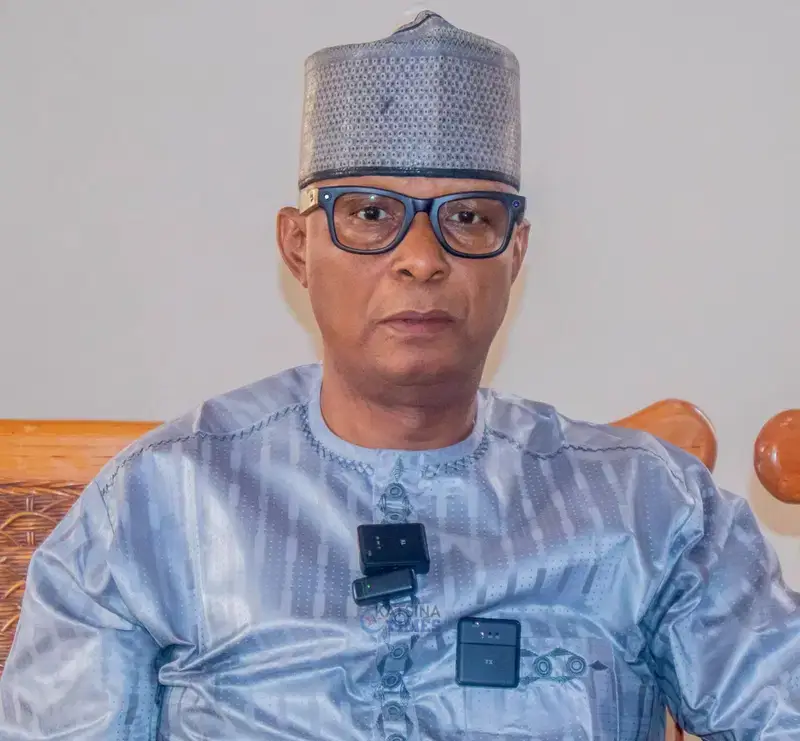
The Federal Government has commenced a nationwide assessment of abandoned housing estates, with the Minister of Housing and Urban Development, Engr. Muttaqa Rabe Darma, declaring that viable projects built with public funds will be completed, upgraded and allocated to Nigerians rather than left to deteriorate further.
Darma unveiled the initiative on Wednesday during an inspection of the abandoned National Housing Programme estate at Kubwa-Karsana in the Federal Capital Territory, describing the exercise as part of a systematic review of neglected Federal Government housing assets across the country. He expressed concern that estates constructed with taxpayers’ money had been left to rot, saying the government would no longer allow such assets to waste. “We cannot continue to allow housing projects that were started with public funds to remain abandoned. These are assets belonging to Nigerians, and our responsibility is to ensure that they are completed, functional and occupied by the people who need them,” Darma said. “Our target is clear. Where projects are viable, we will upgrade them, complete them and ensure that Nigerians can benefit from them. We are determined to deliver more homes and reduce the housing deficit before the end of 2026.”
The minister disclosed that approximately 250,000 housing units in abandoned projects nationwide had been identified for potential recovery and allocation, including to civil servants. He said the ministry was compiling statistics and conducting site visits across all 36 states, and was engaging state governors on the possibility of taking over or acquiring stalled estates for renovation and allocation to public sector workers. The assessment covers projects dating back several decades, including developments left incomplete since the administration of former President Olusegun Obasanjo. “We are taking stock of them. We are taking statistics. We are moving to each and every state where we have these abandoned properties,” Darma said.
The housing deficit remains one of Nigeria’s most persistent developmental challenges. The minister put the shortfall at approximately 16 million housing units, with about 110 million Nigerians either unhoused or living in inadequate shelter. A January 2026 assessment by the National Housing Data Technical Committee placed the deficit at 14.925 million units, while earlier estimates by the Federal Ministry of Housing and Urban Development ranged between 14.9 and 15.2 million units as of early 2026. Nigeria requires approximately 550,000 new homes annually to close the gap, yet annual delivery remains below 100,000 units, leaving a shortfall that compounds with each passing year.
Darma linked the housing crisis to broader economic and governance concerns, arguing that excessive rent burdens on workers create conditions that incentivise corruption. He said the government was working to ensure that Nigerian workers no longer spend between 40 and 60 per cent of their incomes on rent. “If people with families tend to spend their legitimate income on rent, they will have to source other means to take care of their families and schooling. That creates an impetus for corruption,” he said. He disclosed that the Federal Government’s planned social housing programme would target communities across all 774 local government areas, with the aim of making affordable homes accessible to low- and middle-income Nigerians. The strategy involves partnerships among federal institutions, state governments, mortgage institutions, developers and private investors, alongside access to the National Housing Fund and mortgage facilities for workers in the informal sector.
The focus on reviving abandoned estates represents a strategic shift in the government’s approach to housing delivery, prioritising the completion of existing assets over the initiation of new projects. Darma said restoring abandoned estates would complement new construction, allowing the government to maximise existing investments and deliver housing more efficiently while preventing the waste of public resources already committed to stalled developments. He assured that completed houses would be allocated transparently to deserving Nigerians in line with the objectives of the Renewed Hope Housing Agenda.
The minister’s inspection of the Kubwa-Karsana estate forms part of a broader pattern of federal efforts to address abandoned housing projects. In July 2026, the Independent Corrupt Practices and Other Related Offences Commission handed over a forfeited Abuja housing estate to the Federal Mortgage Bank of Nigeria for the completion of 962 affordable housing units abandoned for years. In May 2025, the ministry inaugurated a ministerial committee to plan the disposal of a 753-unit housing estate recovered by the Economic and Financial Crimes Commission. The Federal Housing Authority has also commissioned estates in Ibadan and other locations that had been abandoned since 2018, describing the completions as part of the Renewed Hope Agenda.
Darma, who was confirmed by the Senate in April 2026 and sworn in by President Bola Tinubu the same month, brought a mandate from the upper chamber to deploy pension funds, revive abandoned estates and slash the housing deficit. He holds a Doctor of Business Administration from the University of Liverpool and a PhD in Industrial Engineering from Atlantic International University, alongside a Bachelor’s degree in Mechanical Engineering from Bayero University, Kano, and a Master’s in Manufacturing Engineering from the University of Benin. His background in engineering and development practice has shaped his emphasis on technical assessment and systematic recovery of stalled projects.
The proliferation of abandoned government projects, including housing units, has remained a recurring concern, with many Nigerians questioning why investments funded with public resources are allowed to deteriorate without serving their intended purpose. Experts have estimated that over N9 trillion in building projects lie abandoned across the country, including major federal assets in Lagos such as the old Federal Secretariat Complex in Ikoyi and the 25-storey Independence Building at Onikan. In Bauchi State, at least 6,000 housing units are either completed but unoccupied or abandoned halfway through construction, while similar situations exist in Jigawa, Kwara and other states. The human cost of these abandoned projects is measured not only in wasted naira but in the millions of Nigerians who continue to live in inadequate housing while habitable structures stand empty.
For the families who have waited years for the homes promised by these projects, the minister’s announcement offers a measure of hope. For the government, the challenge lies in translating the nationwide assessment into completed, allocated and occupied housing units before the end of 2026. The coming months will determine whether the renewed push to recover and complete abandoned estates delivers on its promise or becomes another chapter in Nigeria’s long history of well-intentioned housing policies that failed at the point of implementation. As Darma put it, these are assets belonging to Nigerians, and the responsibility is to ensure they are completed, functional and occupied by the people who need them.
📩 Stone Reporters News | 🌍 stonereportersnews.com
✉️ info@stonereportersnews.com | 📘 Facebook: Stone Reporters News | 🐦 X (Twitter): @StoneReportNew | 📸 Instagram: @stonereportersnews
Add comment
Comments