

Reported by Ariajegbe Sylvia Esezobor
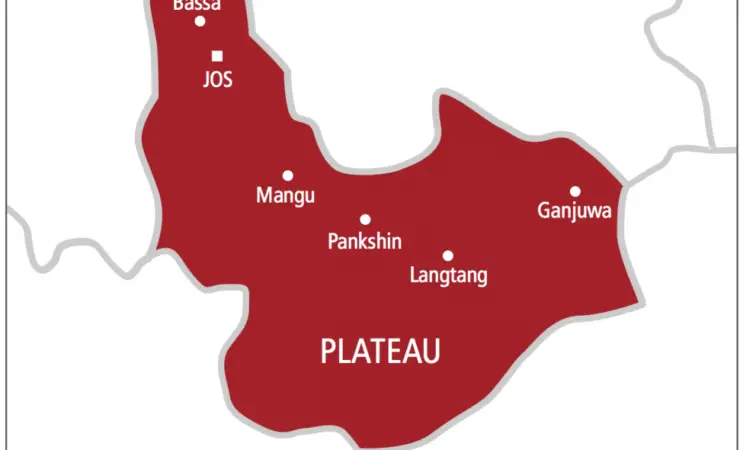
Four persons have died after a sand excavation pit collapsed on them in Tangur community, Bokkos Local Government Area of Plateau State, the latest in a grim series of mining tragedies that have claimed dozens of lives across the state in recent months.
The incident occurred on Tuesday, September 22, 2026, while the victims were excavating sand from a pit located along a riverbank in the community. According to security analyst Zagazola Makama, the collapse happened at about 2:20 p.m., and troops responded to a report of the incident involving suspected illegal miners. “Troops confirmed that four persons died in the incident,” Makama said. The deceased were identified as Falah Aliyu and three women whose identities had not been established at the time of reporting. Their bodies were subsequently recovered by relatives for burial rites.
Accounts of the victims’ identities varied slightly across sources. Christopher Luka, a youth leader in Bokkos, confirmed the incident and said the pit collapsed around 10 a.m. while the victims were working inside the tunnel. He stated that the victims included two men and two women. Daniel Tula, another Bokkos youth leader, told Channels Television that the victims comprised two men and two women, and that the four miners were trapped following the collapse of the pit and were later buried by their relatives. Another resident, Maren Jacob, corroborated the incident, saying the victims were engaged in sand excavation from a pit located around the riverbank. Luka said one victim was buried on Tuesday because he was Muslim, while the other three were buried the following day because they were Christian.
The Plateau State Police Command said it had not received any official report on the incident. Police Public Relations Officer SP Alfred Alabo told Channels Television that he had not been briefed about the reported deaths, noting that miners often fail to report such incidents to the police, making it difficult for the command to immediately ascertain what happened. He promised to provide further details once he received a formal briefing. Efforts to get the Bokkos Local Government Chairman to confirm the incident were unsuccessful, as he did not respond to calls seeking his reaction. During preliminary inquiries, troops engaged the community leader, who reportedly said he was unaware of illegal mining activities in the area. The troops have commenced further investigation to establish the circumstances surrounding the incident and determine the extent of unregulated mining in the area.
The tragedy underscores the persistent dangers of artisanal mining in Plateau State, where unregulated excavation sites, often poorly constructed and unstable, have claimed a devastating toll. The state has witnessed a string of similar disasters in 2026 alone. On August 13, seven miners lost their lives after a mining pit collapsed at Kassa community in Barkin Ladi Local Government Area. In February, at least 38 miners died at a mining site in Kampani Zurak community in Wase Local Government Area, with medical and environmental experts attributing the deaths to probable carbon monoxide exposure. In November 2024, 13 young people were killed in a mining pit collapse. The recurrence of these tragedies has raised urgent questions about the enforcement of safety standards and the effectiveness of government efforts to regulate mining activities in the state.
The Plateau State Government has taken a series of measures in response to the crisis. In February 2026, the Chairman of Bokkos Local Government Area, Amalau Samuel Amalau, ordered the immediate suspension of all mining activities, both legal and illegal, across the council, and imposed a daily curfew from 5 p.m. to 6 a.m. The Plateau State Government has also conducted joint operations to crack down on illegal mining, recovering equipment and issuing warnings to offenders. In April 2026, the state police command placed a blanket ban on all night grazing and illegal mining activities. Despite these measures, unregulated mining continues, driven by economic desperation and the absence of alternative livelihoods in communities where mineral deposits are abundant.
The Federal Government has also intervened. Following the Kassa pit collapse in August 2026, the Minister of Solid Minerals Development, Dr Dele Alake, warned illegal miners to stop risking their lives by extracting minerals from abandoned pits without licences. He disclosed that the ministry had rehabilitated 59 abandoned mine pits and was deploying advanced GIS satellite mapping to tackle the thousands of legacy pits across Plateau State. Alake also said the government had activated the Environmental Protection and Rehabilitation Fund to prevent the recurrence of abandoned mine sites, and called on investors to partner with the government to repurpose over 4,000 abandoned pits for energy, tourism and fishery projects.
The human and economic stakes extend beyond the immediate fatalities. Mining host communities across Plateau State depend on artisanal mining for their livelihoods, yet they are also the ones who bear the brunt of the safety failures that characterise the sector. The victims of Tuesday’s collapse were not employees of a registered mining company but informal workers, often referred to as illegal miners, who operate outside the regulatory framework that governs licensed operations. Their deaths add to the growing pressure on federal and state authorities to find a balance between enforcement and the economic realities that drive communities into unregulated mining in the first place.
The tragedy comes less than a week after the deaths of 37 suspected illegal miners in the custody of the Nigeria Security and Civil Defence Corps in Niger State, an incident that prompted the Federal Government to constitute a ten-member independent panel to investigate the circumstances of their arrest, detention and death. The confluence of these events has placed the welfare of artisanal miners at the centre of national discourse, raising questions about the treatment of informal workers, the enforcement of mining regulations and the responsibility of the state to protect those whose labour contributes to Nigeria’s mineral wealth but who remain largely invisible in official statistics and policy.
For the families of the four deceased in Tangur, the loss is compounded by the circumstances of the deaths, the speed with which they were buried and the absence of any official acknowledgement from the police or the local government. As investigations continue and the community mourns, the questions that have followed every previous mining tragedy in Plateau remain unanswered: how many more lives will be lost before the safety of artisanal miners is taken seriously, and what will it take to transform the sector from one defined by preventable death into one that sustains both livelihoods and lives.
📩 Stone Reporters News | 🌍 stonereportersnews.com
✉️ info@stonereportersnews.com | 📘 Facebook: Stone Reporters News | 🐦 X (Twitter): @StoneReportNew | 📸 Instagram: @stonereportersnews
Add comment
Comments