

Reported by: Oahimire Omone Precious | Edited by: Oravbiere Osayomore Promise.
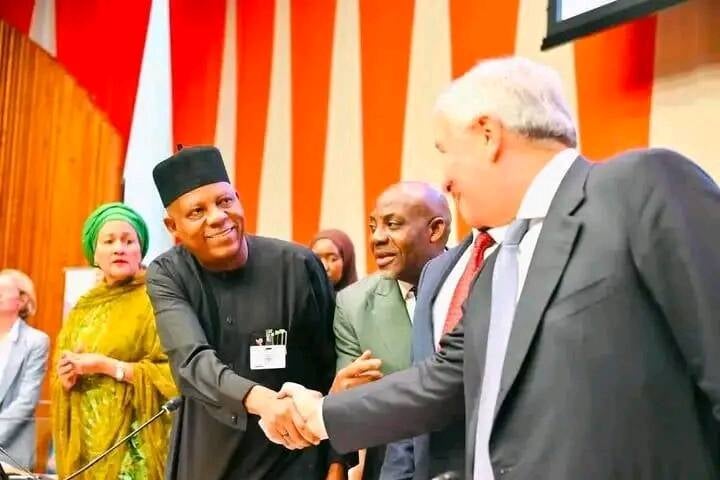
In a world where more than 270 million children are out of school and nearly 90 per cent of ten-year-olds in low-income countries cannot read a simple sentence, two nations have stepped forward to lead a global charge that could change the trajectory of a generation. Nigeria and Italy, co-hosting a high-level event on the margins of the 81st United Nations General Assembly in New York, have thrown their full weight behind a $5 billion financing campaign to transform learning for 750 million children worldwide. The event, tagged "Multiply Possibility: A New Era for Education Financing," was not just another diplomatic gathering. It was a declaration that the era of empty pledges and forgotten promises must end.
The campaign, led by the Global Partnership for Education, seeks to mobilise $5 billion and unlock an additional $10 billion in domestic education financing by 2030. If fully funded, the investment would add $840 billion to the global economy, lift 23 million people out of poverty, put 204 million more children in school, and ensure 105 million children learn better. These are not abstract numbers. They represent children who will one day become teachers, doctors, engineers, and leaders—if only the world gives them a chance.
President Bola Tinubu, in a video message to the gathering, made Nigeria's position clear. "We have a unique opportunity to equip a new generation with the tools to shape an Africa that leads, not follows, in the 21st century," he said. "Quality education is the pathway to inclusive growth and lasting peace. By funding the Global Partnership for Education, we empower dynamic and youthful nations like Nigeria to break down the barriers that keep our children, especially our girls, out of school and away from learning so they can achieve their full potential".
Vice President Kashim Shettima, who represented the President at the event, delivered a message that was both a commitment and a challenge. "For Nigeria, education is not an expenditure at the margins of our development agenda. It is an investment in our economic future, national productivity, and the prosperity and stability of our people," he declared. He outlined the tangible steps Nigeria has taken since Tinubu assumed office in 2023, including the expansion of the Nigerian Education Loan Fund and the HOPE-EDU programme, a $552.18 million initiative supported by the World Bank and GPE that is expected to reach approximately 29 million children and train 500,000 teachers across the country.
But Shettima also made it clear that Nigeria was not asking for charity. The government has directed that liquid funds recovered by the Economic and Financial Crimes Commission, once legally cleared, be channelled to the Nigerian Education Loan Fund. The Federal Executive Council has also approved the consideration of unclaimed dividends and dormant funds for the same purpose. "Domestic resources must remain the anchor, complemented by development assistance, concessional finance, philanthropy and innovative financing," Shettima said. The message was unmistakable: Nigeria is putting its money where its mouth is, and it expects others to do the same.
Italy's commitment was equally significant. Prime Minister Giorgia Meloni praised Tinubu's leadership and Nigeria's determination to improve educational outcomes, while the Italian government pledged €50 million for GPE programmes and interventions. Ambassador Roberto Mengoni, Italy's envoy to Nigeria, had earlier explained that the meeting was necessary for both countries, as co-chairs of the Global Partnership for Education, to agree on the date and venue for the forthcoming summit in Rome.
The urgency of the campaign cannot be overstated. By 2040, nearly 900 million young people across 91 GPE partner countries will enter the workforce. This represents an unprecedented opportunity—but only if these young people have the knowledge and skills they need to drive growth, stability, and innovation. "The answer to declining global aid must be smarter multilateralism: using scarce international resources to leverage much larger investments," Shettima said. He urged participants to ensure that the initiative was not merely a fundraising exercise but "a renewed compact for human capital, bringing together national leadership, international partnership and responsible financing so that every child has the opportunity to learn, thrive and contribute to their country's future".
The event drew support from across the global education community. UN Deputy Secretary-General Amina Mohammed thanked partners for their interest in improving education financing in developing countries, noting that the changes sought by stakeholders should begin with the choices governments make. She called on international financial institutions to support committed countries in finding the fiscal space needed to improve educational outcomes, including capacity building for teachers. Dr Jakaya Kikwete, Chair of the GPE Board of Directors, underscored the need for accelerating education financing, noting that education remained central to the attainment of human rights, security, and peace.
The campaign's targets are ambitious but achievable. The "Multiply Possibility" campaign had already raised more than $50 million in early pledges from sovereign donors, foundations, and philanthropists by September 2025, and the momentum has only grown since then. The road to the Global Education Summit in Rome, Italy, in September 2026 is now clear. The question is whether other nations will step up and match the leadership shown by Nigeria and Italy.
For Nigeria, the stakes are deeply personal. With one of the largest youth populations in the world, the country's future depends on its ability to educate its children. The HOPE-EDU programme, which covers all 36 states and the Federal Capital Territory, is designed to strengthen foundational literacy and numeracy, improve teaching quality, and expand access to quality basic education. It is a results-based financing model that rewards measurable improvements in learning outcomes, ensuring that every naira spent translates into real gains for children.
But the success of this campaign will ultimately be measured not in dollars pledged, but in children educated. The world has the resources. What it needs is the will. As Shettima reminded the gathering, Nigeria is not participating "merely to seek greater international investment" but "to demonstrate that we are doing our part". The challenge now is for other nations to follow suit. The children of the world are waiting. They have waited long enough.
📩 Stone Reporters News | 🌍 stonereportersnews.com
✉️ info@stonereportersnews.com | 📘 Facebook: Stone Reporters News | 🐦 X (Twitter): @StoneReportNew | 📸 Instagram: @stonereportersnews
Add comment
Comments