

Reported by: Ijeoma G | Edited by: Oravbiere Osayomore Promise.
A federal judge in Washington, D.C., has ordered President Donald Trump to immediately restore White House access for journalists from CNN, MS NOW, and Politico, ruling that the ban was likely unconstitutional and that the administration had failed to provide the outlets with adequate due process before revoking their hard passes.
The ruling, issued early Thursday, September 24, 2026, by U.S. District Judge Timothy J. Kelly, is a major setback for the president in one of his most aggressive confrontations with the news media. The judge ordered the Trump administration to immediately return the outlets' press passes and issued a temporary restraining order blocking officials from enforcing the ban for 14 days, allowing the legal challenge to proceed.
The conflict began on September 18, when Trump announced on his Truth Social platform that CNN, MS NOW, and Politico would be banned from the White House, accusing them of "constantly" writing "FICTION and LIES" about his administration. "Other Fake News Media Outlets to follow," he warned. The following morning, reporters from all three organizations arrived at the White House to find their credentials deactivated. Their press passes were confiscated, and they were denied entry to the grounds.
The White House defended the move by claiming access to the premises is a "privilege, not a right." In court filings, Justice Department lawyers argued that the president has the authority to suspend access and cited national security concerns, alleging that the outlets' reporting on the Iran war, the East Wing ballroom construction, and other sensitive matters threatened national security and spread falsehoods. They also accused the news organizations of relying too heavily on anonymous sources and failing to give the White House enough time to comment before publication.
Judge Kelly rejected those arguments. "The record lacks factual support for defendants' contention that the revocation of plaintiffs' hard passes will in fact protect national security or that national security will be endangered if the court orders their passes reinstated while this litigation proceeds," he wrote. The judge noted that Trump himself had stated the ban was due to the outlets' "alleged lack of truthfulness and negativity," a rationale that does not meet the legal threshold for restricting press access.
During a hearing on Wednesday, Kelly signaled that the core issue was not the First Amendment but due process. He told attorneys that two precedents from the U.S. Court of Appeals for the D.C. Circuit made clear that journalists are entitled to due process before their White House press passes can be revoked. The White House, he said, had not given the targeted outlets a meaningful opportunity to contest the decision before their credentials were pulled. "That process wasn't played out here," Kelly said. "I just say to both sides that's where I am."
The judge also expressed skepticism about letters the Justice Department sent to the outlets on Tuesday, after the ban was already in place and the lawsuit had been filed, outlining examples of reporting that allegedly violated White House standards. The letters, the DOJ argued, provided the notice and opportunity to respond that the outlets claimed they had been denied. Kelly noted that the letters were sent after the revocation occurred and appeared to be a post-hoc justification rather than a genuine attempt at due process.
Lawyers for the news organizations argued that their clients were banned without legally required advance notice or an opportunity to contest the decisions, which they described as unprecedented, unreasonable, and severe punishments. A coalition of press freedom groups and dozens of news organizations, including Reuters, The Washington Post, and Fox News, filed a legal brief on Wednesday supporting the three outlets. They asserted that "stripping journalists and news outlets of their rights because of perceived editorial viewpoint violates decades of Supreme Court jurisprudence."
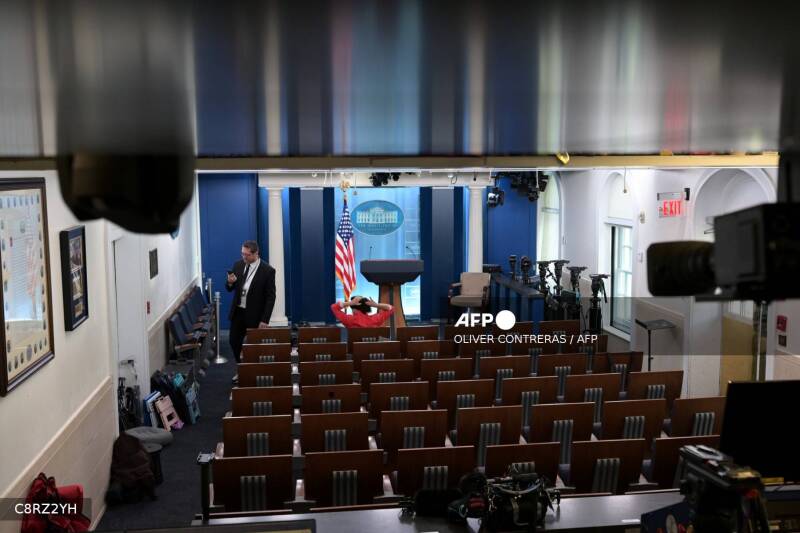
The ban had sparked a remarkable display of solidarity across the American news industry. In the days following the White House's move, the remaining members of the White House television pool suspended their coverage of Trump's official engagements. Major networks, including Fox News, ABC, CBS, and NBC, refused to participate in pooled events. The boycott meant there was no network TV footage of Trump boarding Air Force One or arriving in New York to attend the United Nations General Assembly, a striking visual absence for a president who thrives on televised coverage.
In response to the boycott, the White House launched its own streaming channel, "Trump TV," operating a 24/7 feed of clips of the president. Trump dismissed the boycott during a press conference later, saying, "They said they were going to boycott me, but they never boycott me, so I wasn't very worried about that. Look at all that press." The White House Correspondents' Association had earlier condemned the ban, with its president, Jacqui Heinrich, stating that courts have repeatedly held that once the White House provides access to journalists, it cannot deny that access arbitrarily or based on the content of their reporting.
The ruling comes just weeks before the November 3 midterm elections, in which Trump's Republican Party is fighting to retain control of Congress. The president's job approval ratings are at record lows in opinion polls amid concerns over the Iran war and inflation. The legal battle is one of the most high-profile attacks on the press during Trump's two terms in office, and the judge's decision to block the ban represents a significant legal check on the president's power to control media access to the White House.
While the restraining order is temporary and the case will continue, the ruling sends a clear message: the White House cannot revoke press credentials without due process, and it cannot use national security as a pretext to punish outlets for coverage it dislikes. For CNN, MS NOW, and Politico, the decision is a victory not just for their reporters but for the principle that the government does not decide what the press reports. For the Trump administration, it is a reminder that even the president's authority over his own house is not absolute—it must be exercised within the bounds of the Constitution.
📩 Stone Reporters News | 🌍 stonereportersnews.com
✉️ info@stonereportersnews.com | 📘 Facebook: Stone Reporters News | 🐦 X (Twitter): @StoneReportNew | 📸 Instagram: @stonereportersnews
Add comment
Comments