

Reported by: Ijeoma G | Edited by: Oravbiere Osayomore Promise.
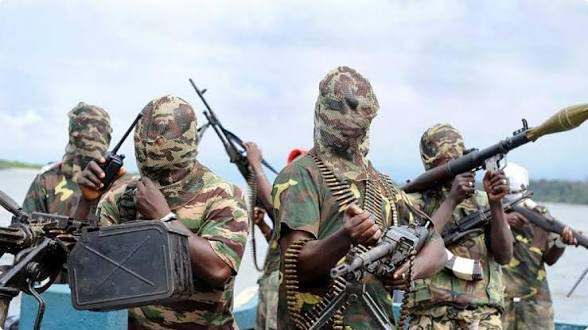
A vigilante commander and four civilians have been killed in a coordinated attack by suspected Boko Haram and Islamic State West Africa Province terrorists on Wumbi community in Kala-Balge Local Government Area of Borno State. Scores of others sustained injuries in the attack, which occurred on Monday, September 21, 2026, but was only reported days later due to the lack of telecommunications services in the remote border community.
The Borno State Police Command confirmed the attack on Wednesday, September 23. The command's spokesperson, ASP Kenneth Daso, said the vigilante leader and four other persons were killed during the incident. He said further details would be provided when available. The police confirmation came after reports of the attack began to filter out from the community, which sits on the border with Cameroon.
Wumbi is an agrarian community that had been largely deserted because of persistent insecurity. Many residents had fled across the border into Cameroon, returning only to cultivate their fields under the protection of the Civilian Joint Task Force and local vigilantes. That fragile arrangement was shattered on Monday when the terrorists struck.
According to sources familiar with the attack, the assailants arrived in large numbers, armed with rifles, improvised explosive devices, and other weapons. Many farmers fled when the attackers arrived. The vigilante commander, however, remained behind, apparently to hold off the attackers and allow others to escape. He was surrounded and killed.
What followed was a calculated act of cruelty designed to maximise casualties. The attackers allegedly placed the commander's remains on an improvised explosive device before fleeing the scene. When fellow vigilantes, CJTF members, and civilians later mobilised to evacuate the body, the device was detonated. Four additional people were killed in the explosion, and scores of others were injured.
A fellow vigilante, who spoke on condition of anonymity, gave a graphic account of the commander's final moments. He said the assailants realised that gunfire could not penetrate the commander's protective charms, so they resorted to breaking his neck before setting the booby trap. The claim about protective charms could not be independently verified, but it reflects the deep-rooted traditional beliefs that often shape the operations of local vigilante groups in the region.
The attack underscores the persistent threat posed by Boko Haram and ISWAP in Borno State, particularly in remote border communities where security presence is thin and telecommunications infrastructure is nonexistent. The delay in reporting the incident, caused by the lack of network coverage, highlights the communication challenges that continue to hamper security operations and information flow in parts of the North-East. In Wumbi, the absence of telecommunications meant that news of the attack took days to reach the state capital, Maiduguri, and the rest of the country.
The APC candidate for the Bama/Ngala/Kala-Balge Federal Constituency in the 2027 general elections, Hon. Mustapha Babani, visited the community to commiserate with the affected families. In a statement issued by his campaign team, Babani described the attack as "tragic and cowardly" and expressed his condolences to the bereaved families, the injured, and the people of Wumbi. He donated N200,000 each to the families of the deceased and to those who sustained injuries. "This attack is not just an attack on Wumbi; it is an attack on the entire people of Bama/Ngala/Kala-Balge and on our shared humanity," Babani said. "In this moment of grief, I stand with you. I share in your pain. Your tears are my tears."
The attack on Wumbi is a stark reminder of the human cost of the insurgency that has ravaged Borno State and the wider North-East for more than a decade. Vigilantes and CJTF members have played a critical role in complementing the efforts of the military, often at great personal risk. They operate with limited resources, inadequate training, and little protection, yet they remain on the frontlines of a war that has killed tens of thousands and displaced millions. The commander who died in Wumbi was one of many local security volunteers who have paid the ultimate price in the fight against terrorism.
The use of booby traps and IEDs has become an increasingly common tactic employed by Boko Haram and ISWAP. In recent months, security forces have reported multiple incidents of terrorists planting explosives on roads, in buildings, and on the bodies of their victims to target first responders and community members who come to recover the dead. The tactic is designed not only to inflict casualties but also to sow fear and discourage communities from cooperating with security agencies. It is a hallmark of the insurgency's evolving strategy, even as the military claims to have degraded the groups' capabilities.
The Nigerian military has not issued an official statement on the Wumbi attack. However, the incident is likely to intensify pressure on the government to strengthen security in border communities and improve telecommunications infrastructure that is essential for timely reporting and coordination. The lack of network coverage in Wumbi and similar communities means that attacks often go unreported for days, allowing attackers to escape and making it difficult for security forces to respond in real time.
For the families of the deceased and the injured, the attack has brought fresh grief to a community that has already suffered enormously. Wumbi's residents have endured years of displacement, violence, and uncertainty. Many had only recently begun to return, cautiously rebuilding their lives and farming their land with the protection of vigilantes and the CJTF. That sense of security was shattered on Monday. The vigilante commander who died was a symbol of the community's determination to protect itself in the absence of a robust state security presence. His death, and the deaths of the four others who rushed to recover his body, is a devastating blow.
As the community mourns and the injured receive treatment, questions remain about how the attackers were able to operate so freely and why it took days for news of the attack to emerge. The military and other security agencies have not yet released details of any operations to pursue the perpetrators. The Borno State Police Command's confirmation of the incident is a start, but for the people of Wumbi, words are not enough. They want justice, and they want protection. Until both are delivered, the cycle of violence that has consumed their community will continue, and the vigilantes who stand guard over their fields will remain targets in a war that shows no sign of ending.
📩 Stone Reporters News | 🌍 stonereportersnews.com
✉️ info@stonereportersnews.com | 📘 Facebook: Stone Reporters News | 🐦 X (Twitter): @StoneReportNew | 📸 Instagram: @stonereportersnews
Add comment
Comments