

Reported by: Ijeoma G | Edited by: Oravbiere Osayomore Promise.
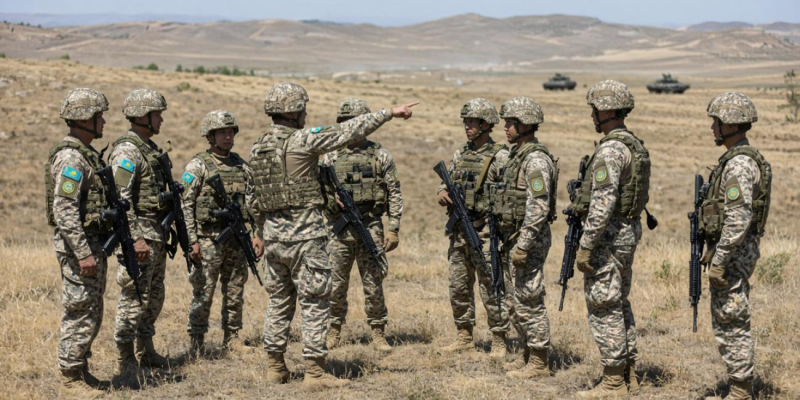
Fourteen Kazakh soldiers drowned in the Caspian Sea on September 24, 2026, after being swept away by waves while disembarking from a patrol boat during naval exercises. The incident occurred 43 kilometres from the city of Aktau in the Mangystau Region of western Kazakhstan, during the Khazar Qorgany – 2026 drills that had begun on September 22. Seventeen servicemen were caught in the water when weather conditions suddenly deteriorated. Three were rescued. Fourteen did not survive. One of the rescued soldiers was hospitalised.
The Kazakh Ministry of Defence confirmed the recovery of all 14 bodies on September 25, ending a search operation that had gripped the nation. The soldiers were disembarking from the Qaisar boat when strong winds and a sharp deterioration in weather conditions swept them into the open sea. They were weighed down by their combat gear. The Caspian Sea, despite its name, is a body of water that can turn lethal in minutes when the wind picks up, and on that day it did. The men never had a chance.
President Kassym-Jomart Tokayev declared September 25 a national day of mourning. Flags flew at half-mast across the country. Concerts and entertainment programmes were cancelled. Tokayev instructed a government commission to take all necessary measures to clarify the circumstances of the accident and to ensure that those responsible are held accountable. Russian President Vladimir Putin sent his condolences to Tokayev, a gesture that underscored the gravity of the loss.
But condolences and mourning days do not bring back the dead. And they do not answer the question that every Kazakh is asking: how did this happen?
The answer, according to investigators, lies in decisions made before the soldiers ever stepped onto that boat. Kazakhstan’s Interior Ministry announced on September 25 that five senior officials of the Armed Forces had been detained on suspicion of criminal offences related to negligence in the performance of their duties and violations of navigation rules. The detainees include the Chief of Staff and First Deputy Commander-in-Chief of the Naval Forces, two commanders of military units, the commander of a marine infantry company, and the commander of the boat involved in the incident. All five have been placed in a temporary detention facility in Aktau. A pre-trial investigation is being conducted by a military investigative unit of the Interior Ministry.
The investigation is examining the decisions made during the organisation and execution of the combat training mission. It is looking at whether safety requirements were complied with, whether hydrometeorological conditions were properly considered, the technical condition of the boat, and the actions of officials responsible for conducting the exercises and ensuring personnel safety. The Prosecutor General’s Office has taken special oversight of the case. More than 30 servicemen have given testimony, and 12 separate expert examinations have been initiated. The prosecutors have stated that the officials are suspected of failing to take the necessary control and safety measures to protect personnel, and of failing to organise rescue operations properly.
The Khazar Qorgany – 2026 exercises involved over 500 military personnel, naval ships and boats, hydrographic vessels, and Coast Guard units from the National Security Committee. The scale of the drills was significant. The safety failures that led to the deaths of 14 men were not minor oversights. They were systemic. Someone decided that the training mission would proceed despite the weather. Someone decided that the risk was acceptable. Someone was wrong, and 14 families are now planning funerals.
Kazakhstan operates a small navy of approximately 3,000 personnel in the Caspian Sea region. Its primary responsibilities are protecting maritime borders and offshore energy infrastructure. The Caspian is a strategic body of water for Kazakhstan, home to major oil and gas fields and a key artery for trade. But it is also a dangerous environment, subject to sudden storms and unpredictable conditions. Training in such waters requires meticulous planning, strict adherence to safety protocols, and a willingness to abort a mission when the weather turns. The fact that the exercises continued long enough for 17 men to be swept into the sea suggests that those protocols were not followed.
The detention of the Chief of Staff and First Deputy Commander-in-Chief of the Naval Forces is significant. It signals that the investigation is not going to stop at the lower ranks. The Kazakh government appears determined to demonstrate that accountability will be enforced, that the deaths of these soldiers will not be dismissed as an unfortunate accident, and that those who made the decisions that cost 14 lives will face the consequences. President Tokayev’s decision to declare a national day of mourning and to order a government commission reflects the gravity with which the state is treating the incident.
But accountability after the fact is not the same as prevention. The question that will haunt the Kazakh military in the months ahead is why the training was not halted when the weather began to deteriorate. Why were 17 men allowed to disembark from a boat in conditions that were clearly dangerous? Why were rescue operations not immediately launched? These are the questions the investigation must answer, and the answers will determine whether the deaths of these 14 soldiers lead to meaningful reform or become another tragic footnote in a long list of military accidents.
For the families of the dead, the pain is immeasurable. They sent their sons, brothers, and husbands to serve their country. They did not expect them to drown during a training exercise. They did not expect them to be swept away because someone failed to check the weather forecast. They did not expect to receive their bodies in coffins.
Kazakhstan has declared a day of mourning. The flags are at half-mast. The concerts are cancelled. But the grief will last far longer than a day. And the demand for justice will not fade with the lowering of the flags. The five detained officers will face a legal process that will determine their guilt or innocence. But regardless of the outcome, the 14 soldiers who drowned in the Caspian Sea will never return. Their deaths are a tragedy. But they are also a warning. Training is supposed to prepare soldiers for war. It is not supposed to kill them. When it does, the failure is not the weather. The failure is the people who decided to proceed anyway.
📩 Stone Reporters News | 🌍 stonereportersnews.com
✉️ info@stonereportersnews.com | 📘 Facebook: Stone Reporters News | 🐦 X (Twitter): @StoneReportNew | 📸 Instagram: @stonereportersnews
Add comment
Comments