

Reported by Ariajegbe Sylvia Esezobor
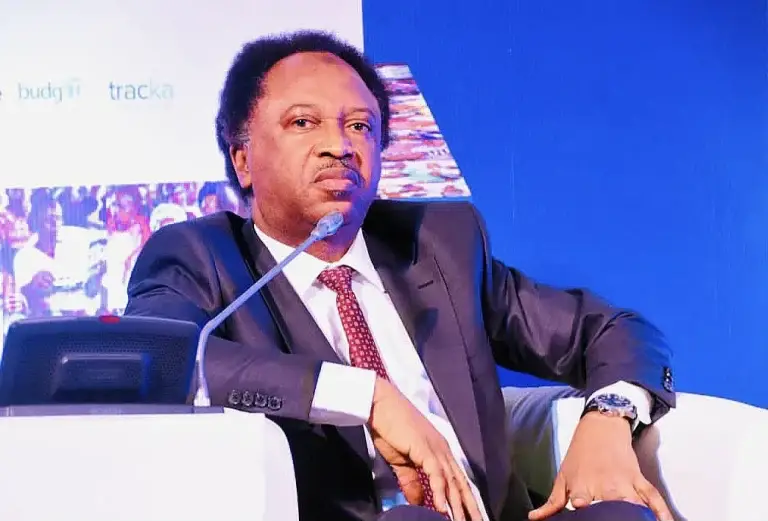
A former Senator representing Kaduna Central, Shehu Sani, has said that a victory for the African Democratic Congress presidential candidate, Atiku Abubakar, in the 2027 election would signal the end of the informal principle of rotational presidency in Nigeria, warning that it would provoke hard and bitter feelings from the southern part of the country and create a presidency presiding over animosity and conflict.
Sani made the declaration on Friday during an appearance on Channels Television's Politics Today programme, reiterating a position he has held since September 17, when he first argued that the 2027 presidential contest should be left to southern candidates to allow the South to complete an eight-year tenure before power returns to the North in 2031. "If Atiku wins, it means that is the end of rotational presidency in Nigeria," Sani said. "And there is going to be hard and bitter feelings from the Southwestern part of Nigeria or Southern part of Nigeria. And I don't think anyone would like to preside over a country with full of hate, animosity, and conflict."
At the heart of Sani's argument is a distinction between constitutional eligibility and political equity. He acknowledged that Atiku has the constitutional right to contest the presidency, but insisted that political considerations should guide the 2027 contest. "I never said Atiku should not run. Constitutionally, he has the right to run for any election. But what I said was that the southern part of Nigeria should be allowed to have its eight-year tenure in office, just like the way the North has from 2015 to 2023," he said. He said southern candidates across the major parties, including the Nigeria Democratic Congress candidate Peter Obi, the Allied Peoples Movement's Seyi Makinde, and other southern contenders, should be allowed to compete for the presidency in 2027. "All the parties. Like the ADC now, they're supposed to field Amaechi. That is what's supposed to be. The NDC should field Peter Obi, and the APM, field Makinde. Let the South struggle it out and see who wins, and for four years. And when the tenure is done by 2031, the North shall have its unchallengeable opportunity to produce leadership of the country," he said.
Sani's intervention draws on Nigeria's political history, where the presidency has rotated between the North and the South under an informal arrangement designed to promote national unity and balance. Olusegun Obasanjo, a southerner, served two terms from 1999 to 2007. Umaru Yar'Adua, a northerner, served from 2007 until his death in 2010, and was succeeded by Goodluck Jonathan, a southerner, who completed the term and won a full term in 2011. Muhammadu Buhari, a northerner, served two terms from 2015 to 2023, before power returned to the South with President Bola Tinubu's election in 2023. Sani cited Buhari's eight years and noted that the South did not mount a serious challenge to his presidency during that period. "Buhari had his eight years in office; there is no serious challenge from the southern part of Nigeria to his government. And despite all that President Tinubu has faced from 2015 to 2023, he never thought of raising any challenge to Buhari's presidency. So, I think it's going to be fair to this country and to our political system, that when the South has its eight years, the North should have its eight years," he said.
The former lawmaker acknowledged that rotational presidency is not provided for in the Constitution, but argued that political actors should consider it in the interest of fairness and national unity. "And it's very important, because we should look at our history where we come from. There are things that are not written in our constitution, but in the interest of justice, fairness, equity, and peace, we need to consider all these things here," he said. He warned that those who dismiss the principle of rotation in 2027 should not expect it to be respected when power is due to return to the North in 2031. "Those who say there shouldn't be respect for the principle of Rotation of power in 2027, should know that it WILL NOT be respected in 2031," he stated in an earlier post on X.
The Independent National Electoral Commission's final list of candidates for the January 16, 2027 presidential election, released on September 12, 2026, includes 18 candidates, five of whom are northerners. They are Atiku Abubakar, Ada Elizabeth Fredrick Okwori, Aliyu Abass-Bin, Kabiru Yusuf and Peter Ada Agada. The remaining 13 candidates, including President Tinubu of the All Progressives Congress, Peter Obi of the NDC, Seyi Makinde of the APM, Omoyele Sowore, Donald Duke and Adewole Adebayo, hail from the southern part of the country. Sani's position aligns with the argument that the concentration of northern candidates, particularly Atiku's candidacy, complicates the rotational arrangement that has governed presidential succession since 1999.
Atiku has previously expressed support for rotational presidency, pledging in April and September 2026 to pursue a constitutional amendment to embed the principle in law if elected. He admitted that he made a mistake by opposing the proposal by the late former Vice-President Alex Ekwueme during earlier constitutional debates, saying he blocked the amendment at the time because he and others controlled a majority of delegates. "In hindsight, when I attended his funeral, I admitted that I made a mistake. I should have supported that amendment, and the presidency would have rotated to all regions of the country," Atiku said. He argued that constitutional rotational presidency remains the most equitable way to manage Nigeria's diversity and ensure balanced national representation. Sani's warning, however, suggests that Atiku's advocacy for rotational presidency does not resolve the immediate political question of whether his own candidacy in 2027 is consistent with the principle he now champions.
Sani's stance has been consistent since he first raised the issue. On September 17, he posted on X that the 2027 political contest should be between Tinubu, Peter Obi, Sowore, Makinde, Adebayo, Duke and other southern candidates. "The South should complete its eight years. It's not constitutional but it's equitable. We should not bury our heads in the sand and deny the realities and complexities of our history," he said. He has also criticised Atiku's pledge to restore fuel subsidy, describing it in August 2026 as a "political Trojan horse" aimed at winning votes ahead of the election. Sani, who is contesting the Kaduna Central senatorial seat on the platform of the All Progressives Congress in 2027, has positioned himself as a voice for the principle of power rotation even as he campaigns for the ruling party's candidate at the presidential level.
The debate over rotational presidency has intensified as the 2027 general elections approach, with the presidential and National Assembly elections scheduled for January 16, 2027, and the governorship and state assembly elections for February 6, 2027. President Tinubu is seeking a second term on the APC platform, while Atiku is contesting on the ADC ticket with former Rivers State Governor Rotimi Amaechi as his running mate. Peter Obi is flying the flag of the NDC with Senator Rabiu Kwankwaso as his running mate, and Seyi Makinde is running on the APM platform with former DSS Director-General Lawal Daura. The contest has also prompted debates over zoning within the NDC, with Kwankwaso claiming that Obi signed an agreement to serve only one term and hand over to a northerner, a claim that has fuelled further controversy over the rotation question.
For Sani, the stakes are both political and moral. His argument rests on the proposition that informal arrangements, even when not constitutionally codified, are essential to holding Nigeria's diverse federation together and that abandoning them would deepen regional grievances and undermine national stability. Whether voters accept that framing or view it as an attempt to constrain the field in favour of southern candidates will be tested at the polls. What is certain is that the rotational presidency debate has become one of the defining issues of the 2027 campaign, and Sani has placed himself at the centre of it with a clear and unapologetic position: Atiku has the right to run, but his victory would end the principle of rotation, and the consequences would be felt for years to come.
📩 Stone Reporters News | 🌍 stonereportersnews.com
✉️ info@stonereportersnews.com | 📘 Facebook: Stone Reporters News | 🐦 X (Twitter): @StoneReportNew | 📸 Instagram: @stonereportersnews
Add comment
Comments