

Reported by Ariajegbe Sylvia Esezobor
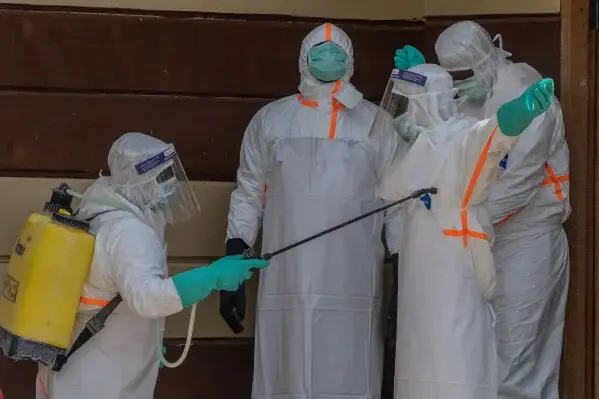
The Bundibugyo virus disease outbreak in the Democratic Republic of the Congo has expanded to 63 health zones across seven of the country's 26 provinces, with the World Health Organization reporting 7,890 confirmed cases and 3,799 deaths as of September 23, 2026, a crude case fatality ratio of 48.1 per cent.
The latest geographic expansion followed the identification of infections in two additional health zones: Bulu in Sud Ubangi province, located in the north-west of the country, and Dungu in Haut-Uélé province, which borders South Sudan. The WHO said the expansion increased the risk of cross-border transmission, particularly with the detection of cases in areas close to international borders. The outbreak now affects Bas-Uélé, Haut-Uélé, Ituri, North Kivu, South Kivu, Sud Ubangi and Tshopo provinces.
Since the previous Disease Outbreak News was published on September 11, an additional 1,133 confirmed cases, including 532 confirmed deaths, have been reported. A total of 1,966 patients have recovered. Confirmed cases have been reported from 63 health zones, with 48 health zones from six provinces reporting at least one case in the last 21 days. Ituri remains the epicentre, accounting for 6,032 confirmed cases since the start of the outbreak, followed by North Kivu with 1,480 cumulative cases, 567 of which were reported in the last 21 days.
The WHO said the outbreak remains uncontrolled and increasingly geographically dispersed despite a modest decline in infections nationwide, warning that the expansion was putting further pressure on already stretched response resources. The agency continues to assess the risk of further spread within the DRC as very high and the risk to neighbouring countries sharing land borders as high. "The outbreak remains uncontrolled and increasingly geographically dispersed," the WHO said. "At the national level, the number of new cases reported each day remains high. However, the situation varies across the country, with some provinces and health zones experiencing much higher levels of transmission than others."
The continued high case fatality ratio, coupled with persistent community deaths, underscores the severity of the outbreak and the challenges in detecting cases early. The WHO said delays in diagnosis and access to adequate treatment could contribute to preventable deaths while allowing transmission to continue within households, communities and healthcare facilities. In North Kivu, the second most affected province, treatment facilities are operating above capacity. A treatment centre in Butembo with 29 beds is consistently operating above 100 per cent occupancy, and staff report that they are recording more new positive cases daily than suspected ones. "Our capacity is 29 beds, yet we are consistently operating above 100 percent occupancy. We also run a transit centre for unconfirmed cases, but the needs remain significant," a health official said.
The outbreak, declared in May 2026, has since become the country's largest and deadliest Ebola epidemic on record and the second-largest globally, behind the 2014-2016 epidemic in West Africa. The situation has prompted a major international response. At the G20+ Foreign Ministers Meeting on Accelerating Collective Action to Defeat Ebola in New York this week, world leaders pledged $2.9 billion in cash and in-kind assistance to help fight the outbreak, according to the Africa Centres for Disease Control and Prevention. The United States pledged an additional $267 million in health and humanitarian assistance, bringing its total contribution to $887 million.
However, Africa CDC Director-General Jean Kaseya warned that financial commitments alone would not end the outbreak. "We thank the US for this leadership and sense of solidarity. But pledges alone will not stop Ebola. We must be able to trace every single dollar—from commitment to disbursement, from implementing partner to expenditure, and ultimately to the services delivered to affected communities," Kaseya said. The agency has called for full transparency and traceability of every dollar committed to the response.
Contact tracing remains a critical weakness. The Africa CDC chief said tracing efforts were falling far short of what was required to contain the virus, with only a fraction of contacts being followed up in some of the most affected areas. The gap in surveillance and case detection means the true toll is likely higher than reported figures, a concern echoed by Médecins Sans Frontières, which said the outbreak was the largest ever recorded in the DRC and that assuming it was under control would be a mistake.
The geographic spread has also raised alarm beyond the DRC's borders. Nigeria has placed its health authorities on high alert, with the Nigeria Centre for Disease Control and Prevention activating surveillance measures at points of entry and issuing advisories to states. The WHO has warned that the risk to neighbouring countries is high, particularly given the porous nature of borders in the region and the movement of people across them. Uganda, Rwanda, Burundi and South Sudan are among the countries considered most at risk, and each has intensified screening and preparedness measures in recent weeks.
The outbreak response faces a combination of challenges that have compounded one another: weak health infrastructure in conflict-affected eastern provinces, insecurity that limits access to affected communities, community resistance to treatment and safe burial practices, and the sheer scale of the geographic dispersion. The Bundibugyo strain of the virus, which causes the current outbreak, has no approved vaccine or specific treatment, making containment reliant on classic public health measures: early detection, isolation, contact tracing, safe burials and community engagement.
For the people of the DRC, the outbreak has brought grief, fear and disruption to daily life. Schools and markets have been closed in some affected areas, and health workers are stretched beyond capacity. The international response, while substantial, has yet to turn the tide. As Kaseya put it, pledges alone will not stop Ebola; what matters is whether the money reaches the communities where it is needed most, and whether the systems required to contain the virus are strengthened before it spreads further. The coming weeks will determine whether the outbreak can be brought under control or whether it continues to expand, with consequences not only for the DRC but for the wider region.
📩 Stone Reporters News | 🌍 stonereportersnews.com
✉️ info@stonereportersnews.com | 📘 Facebook: Stone Reporters News | 🐦 X (Twitter): @StoneReportNew | 📸 Instagram: @stonereportersnews
Add comment
Comments