

Reported by Ariajegbe Sylvia Esezobor
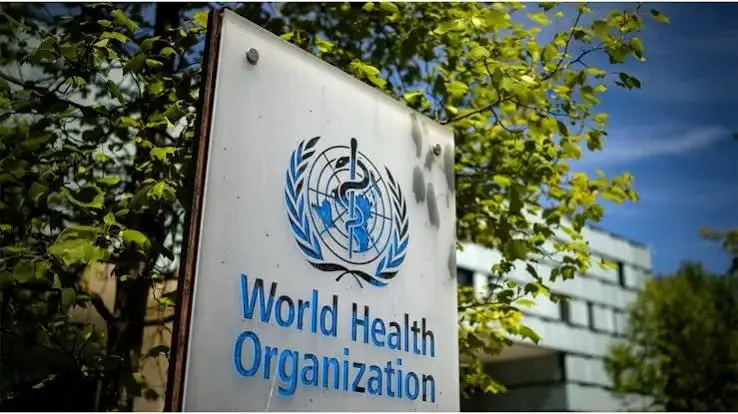
The World Health Organisation has warned that continued action and investment are needed to sustain progress and better prepare the world to respond to future pandemic threats, as political leaders meeting at the United Nations General Assembly renewed their commitment to making the world safer from future pandemics, stressing the need for sustained and more equitable investment and action on pandemic prevention, preparedness and response.
The warning was delivered by WHO Director-General Dr Tedros Adhanom Ghebreyesus on Friday at the second United Nations General Assembly High-Level Meeting on Pandemic Prevention, Preparedness and Response in New York. The meeting followed the first High-Level Meeting in 2023, which was held in response to the challenges posed by the COVID-19 pandemic and gaps in global health security. The second meeting reviewed progress since then and underscored the need for global action building on lessons from COVID-19 and recent advances in international health cooperation.
Tedros said the COVID-19 pandemic was linked to more than 20 million excess deaths between 2020 and 2023 and wiped more than $10 trillion from the global economy, adding that the political commitment shown at the meeting reflected those painful lessons. "The COVID-19 pandemic exposed and exacerbated the fault lines of global health security, and taught the world many painful lessons," he said. "The political commitment shown today reflects those lessons, and includes important commitments to concrete, measurable and urgent action to build and strengthen local and national capacities, to invest in resilient health systems, and to expand equitable access to products, tools and resources."
Countries recognised progress made over the past three years to strengthen global systems for detecting, preparing for and responding to pandemic threats, including the adoption of the WHO Pandemic Agreement and amendments to the International Health Regulations of 2005. Capacities and infrastructure for pandemic prevention, preparedness and response have also been scaled up with the establishment of global centres dedicated to epidemic and pandemic surveillance, sharing of pathogens, and local manufacturing of vaccines, treatments and diagnostics.
However, countries stressed the urgent need to successfully finalise negotiations on an annex to the WHO Pandemic Agreement to establish the Pathogen Access and Benefit-Sharing system, which is currently being negotiated by member states. The purpose of the annex is to operationalise a system for the timely sharing of pathogens with pandemic potential and the benefits arising from their use, enabling research, development and timely and equitable sharing of vaccines, medicines, diagnostics and other health products. Adoption of the annex at the coming World Health Assembly in May 2027 is necessary for member states to begin national consideration to ratify the Pandemic Agreement.
"The Pathogen Access and Benefit Sharing System, under negotiation, is critical to unlocking the full potential of the WHO Pandemic Agreement. There is no time to waste," said Amina Mohammed, the United Nations Deputy Secretary-General, speaking on behalf of UN Secretary-General António Guterres. "I call on Member States to accelerate these actions. Let's get it done. Let's deliver the Pandemic Agreement the world is waiting for."
The declaration underscored that national health security can only be achieved with global solidarity, and that international cooperation is essential for protecting communities and countries from cross-border threats. Recognising that preventing pandemics begins long before an outbreak, the declaration highlighted the importance of a One Health approach that addresses the connections between human, animal and environmental health. Leaders stressed that strengthening pandemic prevention, preparedness and response is not a health issue alone but requires a whole-of-government and whole-of-society approach, with the involvement of communities and all relevant sectors.
The call for sustained investment was echoed at a high-level side event during the 81st UN General Assembly, where the Pan American Health Organisation and the Africa Centres for Disease Control and Prevention, together with countries and partners from Africa and the Americas, called for sustained investment in pandemic prevention, preparedness and response and stronger cooperation between the two regions. "Preparedness is not a cost we pay during an emergency. It is an investment we make before one strikes – an investment in public health, certainly, but equally in our economic resilience, our social stability and our collective security," said PAHO Director Dr Jarbas Barbosa. "We already have the diagnostic tools, the risk assessments, and the action plans. The real challenge is sustained financing. We must translate priorities into predictable, long-term investments – nationally, regionally, and globally – and maintain those investments during the quiet periods between crises."
Dr Jean Kaseya, Director-General of Africa CDC, said the next pandemic would not wait for the world to mobilise after a crisis begins. "We must invest before emergencies strike, with countries setting the priorities and strong regional institutions able to act quickly. Africa and the Americas carry immense experience, scientific expertise and response capacity. By connecting these strengths, sharing knowledge and building predictable financing around country priorities, we can strengthen health security across both regions and contribute to a safer world," he said.
The urgency of the message was underscored by the ongoing Ebola outbreak in the Democratic Republic of the Congo, which the WHO has said remains uncontrolled and increasingly geographically dispersed. The country had recorded 7,733 confirmed cases, including 3,732 deaths, as of Sunday, according to the WHO Regional Office for Africa. The agency has assessed the risk of further spread within the DRC as very high and the risk to neighbouring countries as high, and warned that the expansion was putting further pressure on already stretched response resources. The outbreak has served as a stark reminder of the consequences of inadequate preparedness and the need for sustained investment in surveillance, laboratory capacity, early warning systems, emergency coordination and other core capacities.
The Pandemic Fund, established with the World Bank to strengthen national capacities, has allocated $499.6 million to 20 projects in its third funding round, mobilising $4 billion in additional financing from domestic and international resources. The fund has supported 128 countries across six regions and has provided accelerated support for the Ebola response, including up to $220.6 million in grant financing. However, the WHO has warned that the organisation itself faces a budget deficit of nearly $1.9 billion for 2026-2027, and a projected annual financing gap of $10.5 billion for pandemic preparedness and response capacities globally. The gap between the commitments made at the United Nations and the resources available to implement them remains a central challenge.
For the world's most vulnerable populations, the stakes could hardly be higher. The COVID-19 pandemic demonstrated that pathogens do not respect borders and that the absence of preparedness in one region is a threat to all. The Ebola outbreak in the DRC is a reminder that the threat is not theoretical but present and evolving. As Tedros put it during his remarks, "no one is safe until everyone is safe." The declaration adopted at the meeting reflects that spirit, and the coming months will determine whether the political commitment expressed in New York translates into the sustained investment required to make the world safer from the pandemics that will inevitably come.
📩 Stone Reporters News | 🌍 stonereportersnews.com
✉️ info@stonereportersnews.com | 📘 Facebook: Stone Reporters News | 🐦 X (Twitter): @StoneReportNew | 📸 Instagram: @stonereportersnews
Note on sourcing: This report is based on a World Health Organisation news release issued on Friday, September 25, 2026, and supporting materials from the WHO, PAHO, Africa CDC and the Pandemic Fund.
Add comment
Comments