

Reported by Ariajegbe Sylvia Esezobor
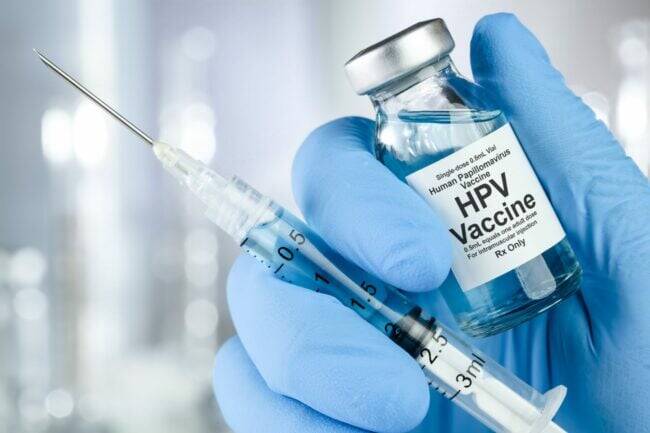
The Federal Government has vaccinated more than 18 million adolescent girls against the Human Papillomavirus, representing about 76 per cent of the country's target population, as Nigeria intensifies efforts to eliminate cervical cancer, the National Primary Health Care Development Agency announced on Tuesday, September 29, 2026.
The Director of Disease Control and Immunisation at the NPHCDA, Dr Rufai Garba, disclosed the milestone at a strategic policy roundtable in Abuja organised by pharmaceutical company MSD in partnership with Africa Health Business. The meeting, themed "Accelerating Cervical Cancer Elimination in Nigeria: Uniting Public and Private Sectors for Equitable Access," brought together government officials, public health experts and private-sector stakeholders to discuss expanding HPV vaccination, improving screening and treatment access, and strengthening collaboration. "Today, we are around 76 per cent coverage of our target, but in terms of numbers, we have crossed 18 million adolescent girls, which is equivalent to three countries in Africa," Garba said.
The scale of the achievement becomes clear when set against the programme's launch. Nigeria introduced the HPV vaccine into its routine immunisation system in October 2023, initially targeting 7.7 million girls aged nine to 14 in the first phase. The rollout, supported by Gavi, UNICEF, the World Health Organisation and other partners, was expanded nationwide. By mid-2026, the Federal Ministry of Health reported that over 17 million girls had been reached. The figure has now climbed past 18 million, cementing Nigeria's position as one of Africa's most ambitious implementers of HPV vaccination.
But the government is making clear that vaccination alone will not be sufficient to eliminate cervical cancer. Garba stressed that efforts must extend beyond immunisation to screening, early diagnosis, treatment and follow-up. "We see around 12,000 new cases every year in Nigeria, and we lose close to 8,000 women on a yearly basis. So, that's how serious it is," he said. "If it is not diagnosed early, if it is not treated early, it leads to death. So, that's what all of this is about—not just the vaccination, which NPHCDA does, but also how we are able to get women to screen them, to catch them early, treat them and follow them up till they actually get better."
The context behind those figures is stark. The International Agency for Research on Cancer estimated 13,676 new cervical cancer cases and 7,093 deaths in Nigeria in 2023. The World Health Organisation's global elimination strategy sets a 90-70-90 target: 90 per cent of girls fully vaccinated against HPV by age 15, 70 per cent of women screened by ages 35 and 45, and 90 per cent of women with pre-cancer or invasive cancer receiving appropriate treatment. While Nigeria has made significant progress on the first pillar, the second and third remain substantial challenges that the policy roundtable sought to address.
The NPHCDA director identified a key operational challenge: getting healthy nine-year-old girls into health facilities for preventive vaccination. "You know that it's very difficult to get a child into a facility when they're well. This is like putting a needle into somebody that is very okay, running up and down and dancing, and you say, 'Come, we want to protect you for 10 years, for your lifetime,'" he said. To bridge this gap, the agency has adopted school-based vaccination, outreach campaigns and the Maternal, Newborn and Child Health Week. Garba also called for stronger adolescent-friendly health services, saying, "We need to start looking at adolescent healthcare a lot more seriously, having a safe space where adolescents can actually come to the public health facilities and have somebody to talk to and they will not be judged."
The private sector is being asked to play a larger role. Vuyo Mjekula, External Affairs Director for sub-Saharan Africa at MSD, said while Nigeria had laid a strong foundation through vaccination, the next phase required broader collaboration. "What we were trying to explore together is, how do we build on the firm foundation that has already been built within Nigeria and work towards accelerating cervical cancer elimination in Nigeria?" she said. Mjekula called for greater private-sector participation in the national cervical cancer task force and relevant technical working groups. "The different sectors of society and stakeholders are not competing with each other. There's a huge opportunity to break down fragmentation, galvanise and integrate resources so that the resources can be deployed to the most impactful areas," she said. She also advocated a shift towards integrated women's healthcare, arguing that opportunities to screen women for cervical cancer should not be missed when they present at health facilities for other services.
On vaccine supply concerns, Garba said the NPHCDA monitored stock levels and consumption through a logistics dashboard, allowing vaccines to be redistributed to states with higher demand. He explained that the decision to make nine years the routine vaccination age was designed to protect girls before sexual activity, noting that "98 per cent of the time the infection is from sexual intercourse."
The roundtable comes ahead of the 2026 International Day of Peace and amid a broader government push on cancer control. In August 2026, the Federal Government reaffirmed its commitment to eliminating cervical cancer as a public health problem by 2030. The National Plan for Cervical Cancer Elimination in Nigeria (2026-30) is being implemented under the coordination of the National Task Force for Cervical Cancer Elimination. The Minister of State for Health, Dr Iziaq Salako, has said the inclusion of HPV vaccination in the routine immunisation schedule was a major step, in addition to expanding cervical cancer screening and improving public awareness. The government has also strengthened global partnerships to accelerate cancer control, with the National Institute for Cancer Research and Treatment expanding treatment infrastructure across the country.
For the 18 million girls already vaccinated, the programme represents a lifetime of protection against a virus responsible for the overwhelming majority of cervical cancer cases. For the thousands of Nigerian women diagnosed each year, the expansion of screening and treatment services offers a chance at early detection and survival. For the government, the milestone is both an achievement to celebrate and a reminder of the work that remains. As Mjekula put it, vaccination alone cannot eliminate cervical cancer. The next phase — screening, diagnosis, treatment and follow-up — will determine whether Nigeria converts its vaccination success into a meaningful reduction in the deaths that still claim nearly 8,000 women every year.
📩 Stone Reporters News | 🌍 stonereportersnews.com
✉️ info@stonereportersnews.com | 📘 Facebook: Stone Reporters News | 🐦 X (Twitter): @StoneReportNew | 📸 Instagram: @stonereportersnews
Add comment
Comments