

Reported by: Ijeoma G | Edited by: Oravbiere Osayomore Promise.
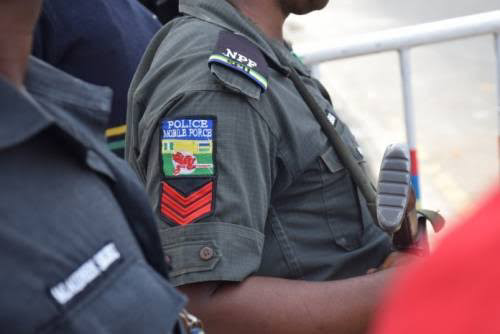
Policemen attached to the 26 Police Mobile Force Squadron in Uyo, Akwa Ibom State, have alleged that their commanders routinely demand N25,000 from each officer after special counter-insurgency operations in Maiduguri, Borno State, describing the payment as a “transit fee” for their return journey.
The allegation was contained in a report published by SaharaReporters on Monday, October 5, 2026, following accounts from serving personnel who spoke anonymously over fears of administrative victimisation.
According to the officers, personnel from the special force unit are deployed to Maiduguri for what they described as national assignments involving Mobile Police Force operations in the troubled North-East.
They alleged that after completing their duties, officers are required to pay N25,000 individually before they are transported back to their base in Uyo.
One serving officer told SaharaReporters that the alleged practice had continued across several batches of personnel deployed for the assignment, raising questions among the officers about why they should personally finance transportation after being sent on official national security duties.
“Our men come for special operations, MOPOL operations in Maiduguri, Borno State. People from the special force. When we come, they pack us here, and after the work is finished, when we want to go back, they demand N25,000 from each person to use as transit before conveying us back,” the officer alleged.
The officer questioned the justification for the payment, particularly given the risks associated with counter-insurgency deployments in the North-East.
He said officers were being asked to pay despite having completed assignments in an area where security personnel face significant operational risks.
“How can we come for a national assignment, suffer, and some lose their lives, only for them to ask us to pay N25,000 each before conveying us back?” the officer asked, according to the report.
The current group deployed to Maiduguri reportedly comprised 27 personnel. The officers alleged that almost all members of the batch had paid the N25,000 before leaving Maiduguri on Sunday, October 4.
“At as it stands now, almost everybody has paid; only one or two persons have not paid. We left Maiduguri on Sunday, October 4. Even the batch we replaced paid this money, and those before them also paid,” another officer alleged.
The claim suggests that the alleged payment is not an isolated incident involving the latest deployment. The officers said personnel from previous batches had also allegedly made similar payments before being transported back to Akwa Ibom.
Another whistleblower alleged that officers generally comply because of concerns about possible disciplinary consequences if they refuse.
According to the source, personnel who challenge the payment risk being subjected to punitive measures by their superiors.
“They do not explain why they are tasking us to pay for our transport fares. If anyone speaks out, they will find a way to punish the person,” the officer alleged.
The source further claimed that officers who refuse to comply could face disciplinary action that they may not immediately understand or be able to challenge.
The allegations have raised questions about the management of personnel deployed for national security assignments and whether transportation arrangements for such deployments are properly funded and accounted for within the police structure.
The officers also questioned whether senior police authorities, including the Inspector-General of Police and other members of the force's management, were aware of the alleged levy.
The payment was described by the officers as an illegal levy, although there had been no official determination by the police authorities establishing that the alleged demand constituted extortion.
SaharaReporters said it contacted the Police Public Relations Officer of the Akwa Ibom State Command, DSP Timfon John, for a response to the allegations.
However, according to the publication, the police spokesperson did not respond to phone calls or a text message sent to her line at the time of publication.
The absence of an official response means the allegations remain unsubstantiated claims by serving personnel and have not been independently confirmed by the police authorities.
The allegations come against the broader backdrop of continued deployment of police personnel to Nigeria's North-East, where security agencies have maintained operations against insurgent and terrorist groups.
Maiduguri, the Borno State capital, remains a major operational centre for security agencies involved in efforts to contain insurgency in the region. Mobile Police Force personnel are among the security personnel deployed for various national assignments.
For the Akwa Ibom officers who made the allegations, however, the issue goes beyond the amount involved. Their complaints centre on why officers sent away from their home command for dangerous national assignments should allegedly be required to personally fund their transportation back after completing their duties.
The N25,000 demanded from each of the 27 personnel would amount to N675,000 if every member of the batch made the alleged payment.
The officers' claims also raise questions about whether similar payments have been collected from previous batches and how such funds, if collected, are recorded and accounted for.
No evidence of an official police directive authorising the alleged N25,000 payment was contained in the report, and no police authority was quoted as confirming that such a fee exists.
The allegations therefore remain subject to investigation and clarification by the Nigeria Police Force, particularly the relevant command structures responsible for the deployment and movement of personnel.
The officers who spoke out appealed, in effect, for senior police authorities to examine the circumstances surrounding the alleged payments and determine whether personnel are being subjected to unauthorised financial demands.
They also expressed concern that fear of retaliation could prevent affected personnel from formally reporting the matter.
Until the police authorities respond or an independent investigation establishes what occurred, the claims should be treated as allegations rather than proven misconduct. The central question now is whether the N25,000 payment was an officially approved transportation contribution, an unauthorised demand by individual commanders, or the result of another arrangement within the deployment structure.
The Akwa Ibom Command had not publicly provided an explanation on the allegation as of the publication of the SaharaReporters report on October 5, leaving the claims awaiting an official response.
📩 Stone Reporters News | 🌍 stonereportersnews.com
✉️ info@stonereportersnews.com | 📘 Facebook: Stone Reporters News | 🐦 X (Twitter): @StoneReportNew | 📸 Instagram: @stonereportersnews
Add comment
Comments