

Reported by: Ijeoma G | Edited by: Oravbiere Osayomore Promise.
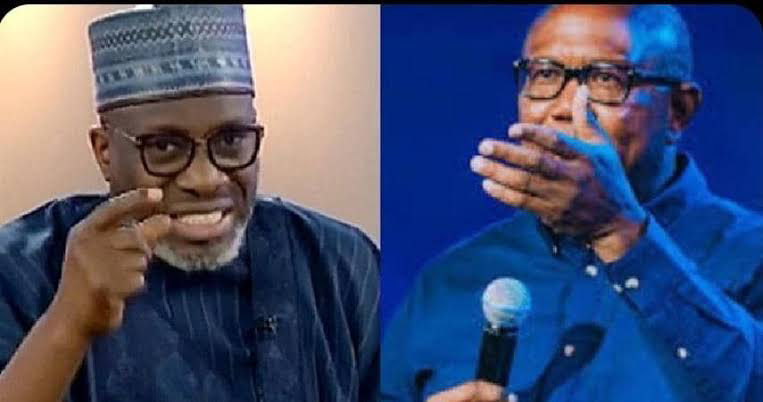
Former Peoples Democratic Party chieftain Segun Sowunmi has told Peter Obi that a presidential candidate cannot rely on personal popularity alone to contest a major election, stressing the importance of a strong political structure ahead of the 2027 general elections.
Sowunmi, convener of The Alternative movement, made the remarks during an interview with News Central on Tuesday, October 6, 2026, while responding to a question on whether Obi, the presidential candidate of the Nigeria Democratic Congress, posed a threat ahead of the 2027 election.
According to Sowunmi, presidential elections require political alliances, organisational structures and support across different levels, arguing that Obi should not approach the 2027 contest as an individual candidate operating without sufficient political machinery.
“As for Peter, there are seasons and there are times you have to know you are not going to singularly run into an election that requires structure,” Sowunmi said.
He added that political actors needed to recognise the realities of the electoral system rather than assuming that personal appeal could replace established political structures.
Sowunmi also drew attention to the political situation in the South-East, where Obi's political base is concentrated. He argued that the positions taken by governors in the region and the benefits they believe their states are receiving from the Federal Government could influence political calculations ahead of 2027.
“If you have five governors in your zone, which is the South-East zone, and all of them are saying, from what we can see, from the resources we’re getting, from the construction that is going on, from the integration, let’s keep it there,” he said.
Sowunmi also referred to ongoing Federal Government infrastructure projects in the South-East, particularly projects being overseen by the Minister of Works, as part of the factors he believes political actors may consider.
He said such developments could affect the political calculations of voters and leaders in the region.
However, Sowunmi stressed that his argument should not be interpreted as a call to prevent Obi or any other candidate from contesting the election.
“Nobody has the right to force anybody not to go into the field to lose an election,” he said.
His comments come amid increasing political activity ahead of the 2027 presidential election, with parties, support groups and political movements working to build structures across the country.
Obi, who left the PDP in 2022 and contested the 2023 presidential election on the Labour Party platform, is now the presidential candidate of the Nigeria Democratic Congress for the 2027 election. He has also been involved in political efforts with former Kano State Governor Rabiu Kwankwaso.
Questions surrounding political structure have already featured prominently in the activities of groups supporting Obi and Kwankwaso. In September, the Obi-Kwankwaso Movement unveiled a 59-member campaign council with coordinators across Nigeria and directors responsible for areas including mobilisation, strategy, security, legal affairs and administration.
The development, however, triggered disagreements with some NDC state chairmen, who argued that support groups could not operate parallel structures without the approval of the political party.
Sowunmi further advocated cooperation among regions, saying political negotiations and alliances would remain important as Nigeria approaches the 2027 election.
He argued that political power could rotate between regions and called for cooperation while the current administration completes its term.
On the broader democratic process, Sowunmi said electoral contests would inevitably produce both winners and losers, stressing that candidates should be prepared to accept the outcome of elections.
“Democracy needs somebody to lose. That’s why you need people to also contest elections. So the winner will win, and the losers will lose,” he said.
Obi has continued to position his 2027 campaign around issues including insecurity, poverty, food insecurity, unemployment, infrastructure and economic production. In August, he called on presidential candidates to present their records and plans to Nigerians for public scrutiny.
With political parties and presidential contenders increasingly mobilising ahead of 2027, the debate over grassroots organisation, party structures and alliances is expected to remain a major feature of the emerging campaign.
📩 Stone Reporters News | 🌍 stonereportersnews.com
✉️ info@stonereportersnews.com | 📘 Facebook: Stone Reporters News | 🐦 X (Twitter): @StoneReportNew | 📸 Instagram: @stonereportersnews
Add comment
Comments