

Reported by Ariajegbe Sylvia Esezobor
The Edo State Government has launched a statewide debulking exercise aimed at transitioning communities from bulk electricity billing to individual customer accounts and, ultimately, individual metering, in what officials describe as a comprehensive effort to address one of the most persistent grievances of electricity consumers in the state.
The exercise, which commenced on Thursday, October 8, 2026, is being coordinated by the Ministry of Power under the leadership of the Commissioner, Paul Usenbor. It covers all 18 local government areas of the state and is designed to create a more transparent and accountable electricity supply system. Usenbor said many communities are currently supplied and billed on a bulk basis, leaving individual households without separate customer accounts and meters, a situation that has fuelled disputes over estimated billing, collective debt and arbitrary charges for years.
At the heart of the initiative is the enumeration and validation of customers, the separation of community-level accounts into individual customer accounts, and the eventual installation of meters in every household. The debulking exercise is intended to ensure that each electricity consumer has a distinct account number, receives bills that reflect actual consumption and is no longer held liable for the consumption or debts of neighbours. The government said the measure would eliminate the cycle of bulk billing that has been a source of conflict between communities and the Benin Electricity Distribution Company, which supplies electricity to most parts of the state.
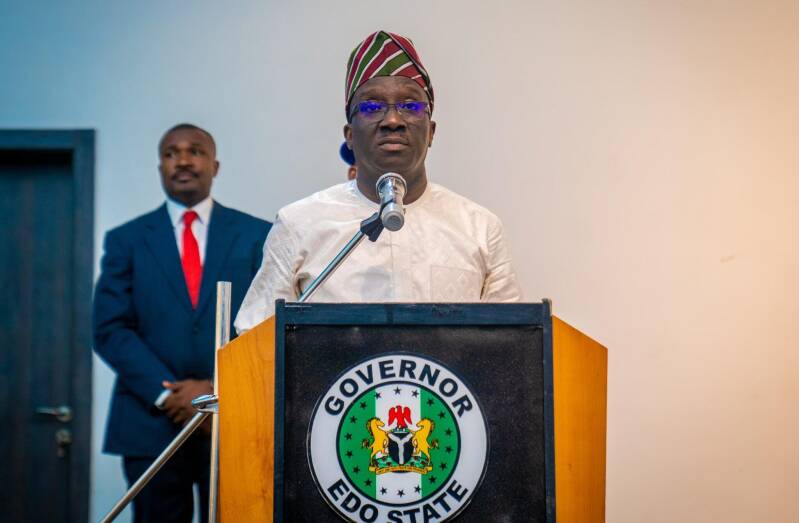
The problem of bulk billing has deep roots in Edo State. Under the practice, an entire community is treated as a single account, and the distribution company bills the community as a whole rather than individual customers. The community then struggles to collect payments from residents, leading to accumulated debts, disconnections and prolonged blackouts. The Nigerian Electricity Regulatory Commission abolished bulk billing in 2016, and Section 29(6) of the Customer Protection Regulations prohibits the practice, yet it has persisted in many rural and peri-urban communities across the state. In March 2026, residents of Benin City took to the streets to protest persistent blackouts and the billing methods of the Benin Electricity Distribution Company, carrying placards with inscriptions such as "No light, no bill" and "Edo people say no to bulk billing." Governor Monday Okpebholo joined the protesters, promising a stakeholder meeting to address the crisis and challenging the distribution company to publish the names of beneficiaries of its metering programmes.
The debulking exercise builds on earlier efforts by the state government to reform the electricity sector. In February 2025, the state enacted its own Electricity Law, a step that paved the way for the establishment of a state electricity market and the creation of an Edo State Electricity Regulatory Commission. The law was enacted under the provisions of the Electricity Act 2023, which empowers states to establish their own electricity markets and regulatory frameworks. In February 2026, the state received 75,000 free electricity meters from the Federal Government under the National Mass Metering Programme, with Edo State allocated over 38,000 meters distributed across the Benin, Sapele and Ondo operational regions of the Benin Electricity Distribution Company. Commissioner Usenbor reaffirmed the state government's commitment to improving electricity supply and announced plans to establish a meter assembly plant in the state, describing it as a mandate from the Governor. In July 2026, the African Union Commission invited Usenbor to speak at a continental forum in recognition of the state's power sector reforms, including advanced plans for the Edo State Metering Assembly.
The push for individual metering is taking place against the backdrop of a broader transition in Nigeria's electricity regulatory landscape. In May 2026, the Nigerian Electricity Regulatory Commission transferred the responsibility for handling metering and billing disputes to state electricity regulators in 15 states, including Edo, as part of the implementation of the amended Constitution, which moved electricity from the exclusive legislative list to the concurrent list. The establishment of state electricity regulators has given states like Edo the legal authority to address consumer complaints that were previously handled by the federal regulator. The Edo State Judiciary also adopted the Edo State High Court Practice Directions 2026, aimed at expediting the resolution of state electricity market disputes. These developments have created a framework within which the debulking exercise can be implemented, with the state positioned to enforce consumer protection standards and resolve disputes that arise during and after the transition.
The political context of the initiative is significant. The 2027 general elections are less than four months away, with the presidential and National Assembly elections scheduled for January 16, and the governorship and state assembly elections for February 6. Governor Okpebholo, who was elected on the platform of the All Progressives Congress in 2023, is expected to seek a second term, and his administration's handling of the electricity crisis will be a key issue in the campaign. The Governor has consistently framed electricity reform as a central pillar of his SHINE Agenda, which prioritises Security, Healthcare, Infrastructure, Natural Resources and Agriculture, and Education. His decision to join the protest against the Benin Electricity Distribution Company in March 2026 signalled a willingness to align himself with residents' grievances, and the debulking exercise represents the administration's attempt to translate that alignment into concrete action.
For the residents of Edo State, the debulking exercise offers the prospect of an end to the disputes and uncertainties that have characterised bulk billing. Individual metering would mean that households pay only for what they consume, that they can monitor their usage and that they are no longer collectively punished for the non-payment of others. For the state government, the exercise is a test of its capacity to implement a complex administrative reform across all 18 local government areas, requiring coordination with the distribution company, community leaders and residents. For the Benin Electricity Distribution Company, the transition to individual metering represents both an opportunity to improve revenue collection and a challenge to manage the logistical demands of installing thousands of meters. The coming months will determine whether the debulking exercise delivers the transparent and accountable electricity supply system that the government has promised, or whether the challenges of implementation delay the benefits that consumers have long awaited.
📩 Stone Reporters News | 🌍 stonereportersnews.com
✉️ info@stonereportersnews.com | 📘 Facebook: Stone Reporters News | 🐦 X (Twitter): @StoneReportNew | 📸 Instagram: @stonereportersnews
Add comment
Comments