

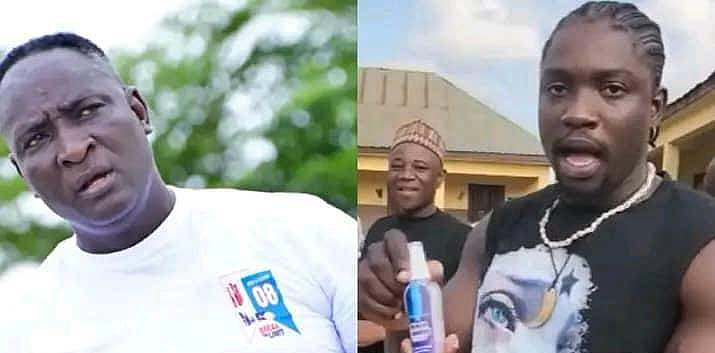
Nigerian social media activist Martins Vincent Otse, popularly known as VeryDarkMan, has renewed his public criticism of Prophet Jeremiah Omoto Fufeyin, warning the cleric against selling religious products advertised as possessing miraculous powers. The latest confrontation follows a video in which Fufeyin expressed concern about divisions among Christians and warned against celebrating attacks on fellow believers. VeryDarkMan responded by insisting that his objections concern the commercial promotion of supposed miracle products rather than the cleric's right to preach.
The latest exchange was reported on Thursday, October 1, 2026, after videos involving both men circulated on social media. Fufeyin, founder of Christ Mercyland Deliverance Ministry in Warri, Delta State, had addressed a controversy involving VeryDarkMan and Apostle Arome Osayi. Referring to criticism previously directed at him, Fufeyin described an experience involving what he called a bullet and warned Christians against similar attacks. VeryDarkMan subsequently responded through his Instagram account, identifying himself as the person being referenced and renewing his opposition to the sale of miracle water and soap.
In his response, VeryDarkMan declared, “Na me be the bullet, no problem,” acknowledging the expression used by the prophet. He said his primary concern remained the promotion and sale of religious products presented as having supernatural benefits, including miracle water and miracle soap. The activist maintained that he would continue challenging such activities whenever they came to his attention.
VeryDarkMan also criticised Fufeyin's preaching and interpretation of the Bible, although he made clear that those matters were not the principal reason for his intervention. He argued that religious sermons were different from commercial activities involving products marketed with claims of extraordinary healing or other benefits. His comments continued a disagreement that first attracted widespread public attention in 2024.
The confrontation followed a video in which Fufeyin urged Christians to demonstrate greater solidarity when religious leaders faced criticism. The cleric expressed concern that some believers appeared to celebrate controversies involving fellow Christians instead of offering support. He maintained that the Christian community should remain united, particularly when individuals associated with the church were experiencing public opposition.
Fufeyin specifically referred to his previous experience with criticism and suggested that similar challenges could confront other Christians. He warned against celebrating another person's difficulties, presenting his message as an appeal for unity within the church. His remarks came amid a separate public disagreement involving VeryDarkMan and Apostle Arome Osayi, which had attracted attention online.
The prophet's comments did not directly address the scientific validity of miracle products or provide new evidence concerning their advertised properties. Instead, his message concentrated on the conduct of Christians towards one another during controversies. VeryDarkMan interpreted the reference to previous attacks as relevant to his longstanding dispute with the cleric and responded accordingly.
The disagreement between the two men became prominent in 2024 when VeryDarkMan questioned products promoted by Fufeyin's ministry. The activist challenged claims associated with items described as miracle soap and healing water, asking whether the products had received appropriate regulatory approval. His criticism focused particularly on the distinction between religious belief and claims made while marketing products to members of the public.
VeryDarkMan also called attention to the National Agency for Food and Drug Administration and Control, the federal agency responsible for regulating several categories of consumer products in Nigeria. He questioned whether regulatory approval had been obtained and whether claims about the products' effectiveness could be substantiated. These questions formed an important part of his campaign against what he regarded as misleading commercial practices.
The dispute subsequently developed into legal proceedings, with reports indicating that Fufeyin initiated a defamation action seeking substantial damages against the activist. The case attracted attention because it brought together questions concerning reputation, religious expression and public criticism of products associated with a prominent ministry. Reports in September 2026 stated that the cleric had withdrawn the lawsuit, although the precise procedural status requires confirmation from court records.
Earlier in the controversy, VeryDarkMan publicly challenged the healing claims associated with Fufeyin's products. In one widely reported episode, he visited a facility accommodating people with disabilities in Abuja and distributed water he said had been obtained from the prophet's ministry. He subsequently questioned whether the product demonstrated the extraordinary effects associated with its promotion.
That demonstration attracted considerable attention but did not constitute a controlled medical investigation. The absence of an immediately observable improvement during such an exercise cannot, by itself, establish every property of a product. Equally, claims that a product can treat medical conditions require appropriate evidence and should not be treated as medically established simply because they are associated with religious practices.
The controversy therefore extends beyond the personal disagreement between VeryDarkMan and Fufeyin. It concerns the responsibilities of individuals and organisations making commercial claims about products, particularly where those claims relate to health, fertility or other matters affecting vulnerable consumers. Regulatory approval, product safety and evidence supporting advertised benefits are separate questions that require examination under applicable standards.
Fufeyin has maintained his religious ministry and public preaching despite the criticism, while VeryDarkMan has continued to challenge practices he considers questionable. Their latest exchange shows that the reported withdrawal of the earlier lawsuit has not ended their disagreement. Neither man's public statements establish wrongdoing by the other, and any disputed commercial or legal claims require evidence before conclusions can be drawn.
The renewed confrontation has also highlighted the distinction between freedom of worship and consumer protection. Nigerians are entitled to practise their religious beliefs, while products offered commercially remain subject to relevant laws and regulatory requirements. Religious convictions and medical claims are not interchangeable, particularly when consumers may rely on advertised benefits when making decisions about their health.
As the exchange continues, VeryDarkMan's latest position remains that he will oppose the sale of products promoted as having miraculous powers. Fufeyin, meanwhile, has appealed for unity among Christians facing criticism. The disagreement remains a public dispute over religious practices, commercial claims and accountability, with no new court ruling established by the latest exchange.
📩 Stone Reporters News | 🌍 stonereportersnews.com ✉️ info@stonereportersnews.com | 📘 Facebook: Stone Reporters News | 🐦 X (Twitter): @StoneReportNew | 📸 Instagram: @stonereportersnews
Add comment
Comments