

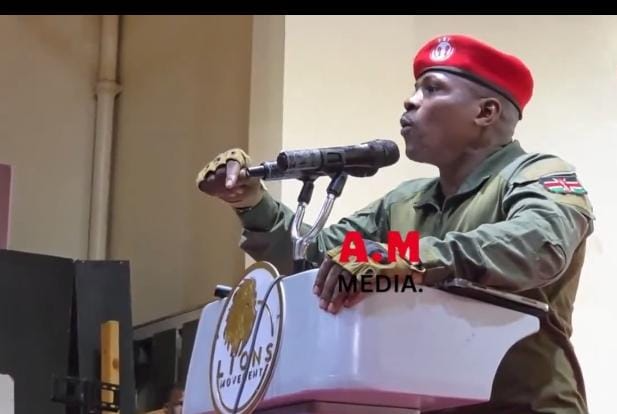
Former Kenya Defence Forces soldier and 2027 presidential aspirant Patrick Nyambaka Osoi has reportedly warned Nigerian billionaire Aliko Dangote against proceeding with his multibillion-dollar oil refinery project in Kenya, declaring that he would favour Kenyan investors if elected president. The statement attributed to Osoi comes amid growing scrutiny of the proposed investment, with questions being raised about its ownership, financing arrangements, environmental implications and the government's commitments to the project.
Osoi's reported remarks concern the Dangote East Africa Petroleum Refinery and Petrochemicals project in Lamu County, Kenya, where President William Ruto and Dangote participated in a groundbreaking ceremony on September 30, 2026. The proposed refinery, valued at approximately $16 billion, is designed to process 700,000 barrels of crude oil daily. The exact date and original recording of Osoi's alleged warning have not been independently verified, although his presidential ambitions and the refinery's development are documented.
In the statement attributed to him, Osoi urged Dangote not to rush into developing the facility, arguing that Kenyan entrepreneurs possess the capacity to undertake such an investment themselves.
He reportedly declared that, upon assuming the presidency in 2027, he would require the Nigerian industrialist to return to his home country.
The remarks represent an asserted political position rather than an existing government directive. Osoi is not Kenya's president, and his reported declaration does not establish that any future administration would lawfully cancel the investment.
Osoi is a former military officer who has publicly presented himself as a presidential aspirant for Kenya's 2027 general election. His campaign materials emphasise national sovereignty, accountability, security and economic reform.
Kenyan media have also documented his previous involvement in the Fighting Brutality and Impunity movement, established to campaign against alleged abuses by security agencies.
His political activities have attracted national attention, including reports of his arrest and subsequent court appearance in July 2025 over allegations involving preparations to commit a felony and unlawful firearm possession.
Those earlier proceedings are separate from the current debate concerning Dangote's investment and do not establish any wrongdoing in connection with the refinery.
The proposed Lamu refinery is among the largest industrial investments announced in East Africa.
According to Kenya's Ministry of Defence, the project is expected to support petroleum processing, industrial development, employment and regional energy security.
The groundbreaking ceremony attracted several African leaders, including Ugandan President Yoweri Museveni, alongside representatives from other countries.
The facility is intended to supply refined petroleum products to Kenya and neighbouring markets, potentially reducing reliance on imported finished fuels.
However, the project remains at the development stage. The groundbreaking ceremony does not mean the refinery has commenced commercial production.
Construction, financing, environmental compliance and operational approvals remain important elements of its implementation.
President Ruto has presented the investment as part of a broader ambition to strengthen African industrialisation by processing raw materials within the continent.
Dangote has similarly described the project as an opportunity to expand African refining capacity and support regional economic integration.
Their position places the refinery within an industrial strategy intended to increase local value addition rather than relying exclusively on imported petroleum products.
Nevertheless, the involvement of a foreign investor in a strategic energy project has generated demands for greater transparency about the government's obligations.
On October 6, Kiharu Member of Parliament Ndindi Nyoro called on President Ruto to disclose the investment agreement and the identities of shareholders involved in the refinery's Kenyan corporate structure.
Nyoro gave the president 14 days to release the documents, arguing that citizens should understand the commitments being made on their behalf.
His intervention focused on transparency and public accountability rather than establishing that the refinery agreement was unlawful.
The dispute has also reached the Kenyan courts.
On October 6, the High Court certified as urgent a petition seeking disclosure of agreements and public commitments associated with the refinery.
The case raises questions about potential public expenditure, land arrangements, taxation and guarantees connected with the project.
Justice David Mburu directed the relevant parties to respond within seven days.
The court's decision to hear the matter urgently does not constitute a ruling that the investment violates Kenyan law.
Rather, it establishes a judicial process through which the disputed information and associated legal questions can be examined.
Environmental and land-related concerns have also emerged around the Lamu development.
Reports indicate that some residents have challenged aspects of the project, including land ownership, compensation and possible effects on the surrounding marine environment.
These concerns are particularly relevant because Lamu is a coastal region where fishing, tourism and other activities depend on environmental conditions.
The existence of such objections does not automatically prevent industrial development, but it places importance on environmental assessments, lawful land acquisition and consultation with affected communities.
The scale of the refinery makes these processes significant for both the investor and public authorities.
Osoi's reported position introduces another dimension to the controversy: whether major industrial projects should be undertaken primarily by domestic investors or through partnerships involving foreign capital.
Kenyan businesses already participate in energy, infrastructure, manufacturing and financial services. However, establishing a refinery capable of processing 700,000 barrels daily would require substantial financing, technical expertise, regulatory approvals and long-term commercial arrangements.
The claim that Kenyan investors could independently deliver the project would therefore require examination of available capital, industrial capacity and the feasibility of an alternative investment structure.
Similarly, replacing an existing investor would raise questions about contractual rights, applicable investment laws and any financial obligations already undertaken by the government.
An electoral promise alone would not automatically invalidate binding agreements or remove an investor's legal protections.
The refinery's development also has implications beyond Kenya. Its proposed capacity and regional supply arrangements connect the investment to broader East African energy markets.
Uganda, for example, has maintained plans for its own refinery while participating in discussions surrounding the Lamu development.
These overlapping projects demonstrate the importance of regional coordination in petroleum processing, infrastructure and energy supply.
For Dangote, the proposed Kenyan facility represents an extension of his industrial interests beyond Nigeria, where his group has already developed substantial petroleum refining operations.
For Kenya, the investment presents potential industrial opportunities alongside questions concerning transparency, public participation and environmental protection.
Osoi's reported warning has not been independently authenticated through a complete original recording or an official statement. No verified response from Dangote specifically addressing the alleged remarks has been established.
The confirmed developments are that the refinery project has been launched, Kenyan lawmakers have demanded greater disclosure, and legal proceedings concerning the investment arrangements are underway.
As Kenya approaches its 2027 general election, the Lamu refinery has become part of a wider discussion about national economic interests, foreign investment and government accountability.
The project's future will depend on lawful agreements, regulatory requirements, financing and implementation decisions rather than political declarations alone.
📩 Stone Reporters News | 🌍 stonereportersnews.com ✉️ info@stonereportersnews.com | 📘 Facebook: Stone Reporters News | 🐦 X (Twitter): @StoneReportNew | 📸 Instagram: @stonereportersnews
Add comment
Comments