

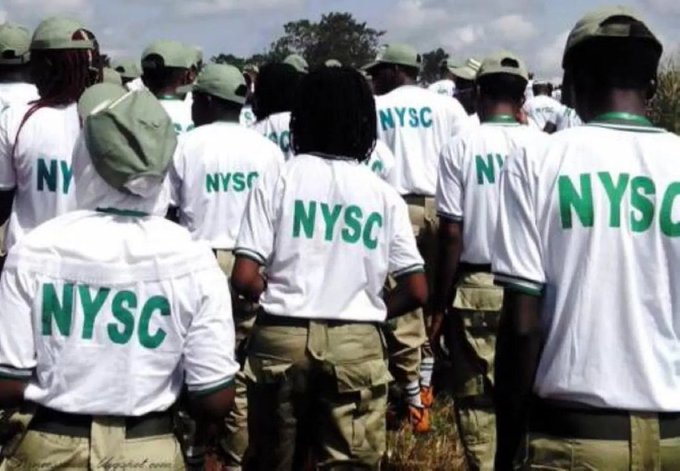
The safe return of 20 prospective National Youth Service Corps (NYSC) members abducted while travelling to their orientation camps has prompted renewed demands for the Federal Government to protect young Nigerians undertaking compulsory national service. A mother whose daughter survived the ordeal has called for organised air transportation or adequate security escorts for corps members travelling across the country, arguing that graduates should not face life-threatening journeys simply because they have been deployed to serve Nigeria.
The appeal was made on Thursday, October 8, 2026, in Ibadan, Oyo State, by Faith Felicia Abiala, whose daughter was among the 20 prospective corps members kidnapped on October 1 along the Owerri-Onitsha Road near Umunoha, Mbaitoli Local Government Area of Imo State. The victims were travelling from Ibadan to orientation camps in Abia and Akwa Ibom states when armed men intercepted their vehicles. They regained freedom on October 7 after nearly a week in captivity.
Speaking following her daughter's return, Abiala described the emotional suffering her family endured while awaiting news of the abducted graduates. She said the experience demonstrated the urgent need for authorities to reconsider how prospective corps members travel to their assigned states, particularly when journeys involve long distances and highways exposed to kidnapping and other violent crimes.
“My advice to the government is that when Corps members are posted to their service states, they should ensure proper security arrangements, or allow them to travel by air to avoid these kinds of dangerous road journeys,” she said.
Abiala recalled being unable to eat after learning about her daughter's abduction. She expressed gratitude that the young woman survived and acknowledged the efforts of the Department of State Services (DSS) and security personnel from Oyo and Imo states who participated in efforts to secure the victims' freedom.
Another relative, Alhaja Alimot Akande, expressed similar relief, explaining that confirmation of the graduates' release finally allowed affected families to sleep peacefully. Her reaction reflected the uncertainty experienced by parents who had spent several days seeking assistance from government officials, security agencies and traditional authorities.
Details surrounding the attack indicate that the victims were travelling in two buses operated by Uko Akwa Ibom Motors Nigeria Limited. The company's managing director, Isiah Akpan, explained that the vehicles departed Ibadan on September 30 but encountered heavy traffic around Benin, Edo State. The passengers subsequently spent the night in the Onitsha area before continuing their journey the following morning.
According to the transport operator, gunmen intercepted the vehicles shortly after they entered Imo State. The drivers escaped and alerted security personnel, while several passengers were taken into surrounding bushland. Initial accounts differed over the number abducted, but authorities subsequently confirmed that 20 prospective corps members were recovered.
The Imo State Police Command launched search operations following the attack. Commissioner of Police Audu Bosso disclosed that surveillance technology had helped security personnel locate a suspected kidnappers' camp, although intelligence suggesting the presence of improvised explosive devices complicated efforts to approach the location safely.
Bosso said additional equipment, including armoured personnel carriers and bulldozers, was being deployed to support the operation. Deputy Inspector-General of Police Shehu Umar Nadada, who coordinated security efforts in the state, also assured families that authorities were working towards the safe recovery of the victims.
The incident attracted the attention of prominent traditional and political leaders. The affected families approached the Olubadan of Ibadanland, Oba Rashidi Ladoja, seeking his intervention. Ladoja subsequently confirmed the graduates' release after receiving information from Imo State Governor Hope Uzodimma during a telephone conversation.
Governor Uzodimma commended the cooperation between security agencies and the governments of Imo and Oyo states. He explained that officials had exercised caution in releasing operational information because protecting the captives remained their immediate priority.
The NYSC Director-General, Brigadier General Olakunle Oluseye Nafiu, visited the rescued graduates at a DSS medical facility in Owerri, where they underwent medical assessments. Following their return to Ibadan, the victims were also taken to the DSS headquarters in the Aleshinloye area for debriefing.
However, questions have emerged concerning the circumstances surrounding their freedom. Police attributed the recovery to coordinated security operations, while some parents subsequently reported paying millions of naira to kidnappers. Individual families described payments ranging from approximately ₦3 million to ₦6 million. These accounts have not independently established the precise circumstances of every victim's release.
Earlier, relatives reported receiving ransom demands reaching ₦50 million per captive, potentially amounting to ₦1 billion for the 20 victims. The reported demands placed considerable pressure on families, including parents who said they lacked the financial resources to meet such enormous sums.
Among those who publicly appealed for intervention was Mrs Oladosu, whose daughter, Greatness, was travelling towards Uyo when the attack occurred. She described receiving communication from the kidnappers and seeing distressed captives during a video call. Another family reported that prospective corps member Akande Farouq managed to send a brief warning through a WhatsApp group before communication stopped.
The kidnapping has revived wider concerns about the transportation arrangements supporting Nigeria's national service programme. Established in 1973, the NYSC was designed to encourage national integration by deploying eligible graduates to serve outside their familiar communities, strengthening cooperation and understanding among Nigerians from different regions.
For many participants, however, reporting to an orientation camp requires travelling considerable distances, sometimes through unfamiliar areas. The Imo attack illustrates how security incidents along inter-state routes can disrupt that journey before graduates even begin their official assignments.
Abiala's proposal raises practical questions for the Federal Government, NYSC management and security authorities. Providing air transport nationwide would require substantial funding and logistical planning, while organised security escorts would involve coordination between deployment authorities and agencies responsible for protecting major highways.
The incident also highlights the financial and emotional consequences of kidnapping for ordinary households. Beyond the immediate danger faced by victims, families may experience prolonged uncertainty, demands for ransom and difficulties arranging assistance across state boundaries.
Although the graduates have returned safely, the broader issue identified by their families remains unresolved. No nationwide airlift programme or new security escort arrangement has been confirmed in response to this incident.
For Abiala and other affected parents, the immediate relief of welcoming their children home is accompanied by a demand that future graduates receive stronger protection. Their appeal places renewed attention on the responsibility of public institutions to ensure that participation in national service does not expose young Nigerians to preventable dangers during their journeys.
📩 Stone Reporters News | 🌍 stonereportersnews.com ✉️ info@stonereportersnews.com | 📘 Facebook: Stone Reporters News | 🐦 X (Twitter): @StoneReportNew | 📸 Instagram: @stonereportersnews
Add comment
Comments