

Reported by: Oahimire Omone Precious | Edited by: Oravbiere Osayomore Promise.
A decisive legal opinion clearing former Senate President Bukola Saraki of any role in the 2018 Offa bank robbery has reignited one of Nigeria’s most contentious criminal and political sagas, setting off a fierce exchange between the All Progressives Congress (APC) and the Peoples Democratic Party (PDP) in Kwara State while reviving national scrutiny of a case that once dominated headlines.
The Director of Public Prosecutions (DPP) in Kwara State concluded that there is no credible evidence linking Saraki to the gang responsible for the coordinated attacks on banks in Offa, a commercial town that was plunged into chaos on April 5, 2018. The report, which followed a review of case files and evidence presented by investigators, stated that the threshold required to prosecute Saraki was not met, effectively removing him from any legal liability connected to the crime.
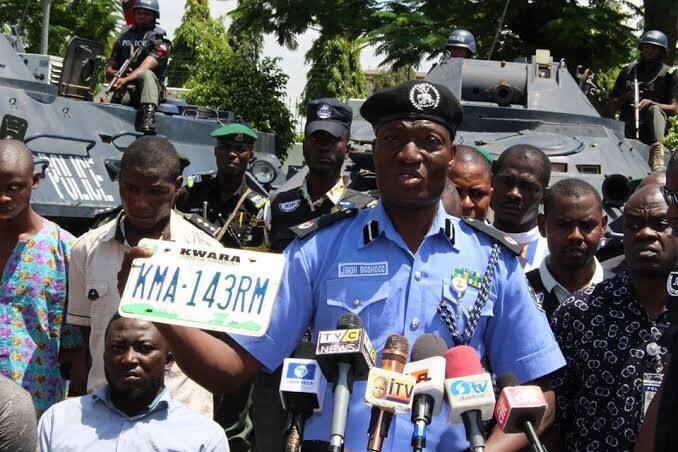
The Offa robbery itself remains one of the deadliest organized attacks in Nigeria’s recent history. Armed men, numbering dozens, stormed several banks in broad daylight, engaging security forces in prolonged gun battles. The assailants operated with alarming coordination, blocking roads, overpowering police units, and reportedly using military-grade weapons. By the end of the assault, more than 30 people had been killed, including police officers, bank staff, and civilians caught in the crossfire. The brutality of the incident triggered national outrage and led to an intense manhunt by the Nigeria Police Force.
In the weeks that followed, police announced the arrest of several suspects, some of whom were said to have confessed to participating in the robbery. During the investigation, authorities alleged that certain political figures had connections to members of the gang. Saraki’s name emerged prominently after police claimed that some suspects identified him as a sponsor. The allegation immediately escalated the case from a criminal investigation into a politically charged controversy.
Saraki consistently denied the claims, insisting that he had no relationship with the suspects beyond coincidental or superficial contacts. He publicly called for an independent and transparent investigation, arguing that the accusations were politically motivated and intended to weaken his influence ahead of the 2019 general elections. At the time, Saraki was one of the most prominent opposition figures in the country, having defected from the APC to the PDP amid a deepening political rift.
The police maintained their position during the early stages of the investigation, even inviting Saraki for questioning. The development intensified public debate, with critics accusing law enforcement of politicizing the case, while others argued that no individual, regardless of status, should be shielded from investigation.
Legal proceedings against the arrested suspects moved forward, with charges filed in court. However, the question of Saraki’s involvement remained unresolved for years, lingering as a cloud over his political career and serving as a major talking point in Kwara State politics. During the 2019 elections, the APC capitalized on the controversy, contributing to a significant shift in the state’s political landscape as Saraki’s longstanding dominance was challenged.
The newly released DPP report appears to close that chapter. By determining that the available evidence does not support prosecution, the legal authority responsible for deciding whether charges should be filed has effectively exonerated Saraki within the framework of criminal law. The report underscores that confessional statements alone, particularly when not corroborated by independent evidence, are insufficient to sustain a case of such magnitude.
Reacting to the development, Saraki described the outcome as a long-overdue affirmation of his innocence. He reiterated that the allegations had caused significant personal and political damage, and called on those who propagated them to acknowledge the findings. His allies within the PDP echoed this stance, framing the report as proof that the case had been manipulated for political purposes.
The APC, however, has challenged that narrative, arguing that the DPP’s conclusion does not erase the seriousness of the initial allegations or the need for accountability. Party representatives have questioned the process that led to the report, suggesting that the matter should not be considered entirely settled. The party has also emphasized that the focus should remain on securing justice for the victims of the robbery rather than engaging in political point-scoring.
The renewed dispute highlights the enduring political significance of the Offa robbery case in Kwara State. For many residents, the incident is not just a matter of criminal justice but also a symbol of broader concerns about governance, security, and political responsibility. The attack exposed vulnerabilities in law enforcement response and raised questions about the ability of security agencies to prevent and manage large-scale criminal operations.
Security experts continue to reference the Offa robbery as a case study in organized crime, noting the level of planning and execution involved. The attackers reportedly exploited gaps in intelligence and response coordination, enabling them to carry out the operation over several hours without immediate containment. In the aftermath, authorities pledged reforms aimed at strengthening policing and improving inter-agency collaboration, though assessments of progress remain mixed.
For the families of those killed, the legal and political debates offer limited solace. Many have continued to seek justice and closure, expressing frustration over the slow pace of trials and the shifting focus of public discourse. While some suspects have faced prosecution, the complexity of the case and the number of individuals involved have contributed to prolonged legal proceedings.
Civil society organizations have responded to the latest developments by calling for restraint and a renewed focus on justice. They emphasize that the DPP’s report should be respected as part of the legal process, while also urging authorities to ensure that all aspects of the case are handled transparently. The groups warn against allowing political rivalry to overshadow the need for accountability and support for victims.
The Kwara State government has yet to issue a comprehensive statement on the report, but officials have previously reiterated their commitment to upholding the rule of law. Observers note that the handling of the case will continue to influence public trust in both legal institutions and political leadership in the state.
As the immediate legal question surrounding Saraki appears resolved, attention is likely to remain on the broader implications of the Offa robbery. The incident continues to resonate as a stark reminder of the human cost of insecurity and the challenges of delivering justice in complex, high-profile cases. Whether the DPP’s findings will ease tensions or deepen political divisions in Kwara State remains to be seen, but the legacy of the Offa robbery endures as a defining moment in Nigeria’s recent history.
📩 Stone Reporters News | 🌍 stonereportersnews.com
✉️ info@stonereportersnews.com | 📘 Facebook: Stone Reporters News | 🐦 X (Twitter): @StoneReportNew | 📸 Instagram: @stonereportersnews
Add comment
Comments