

Reported by: Ijeoma G | Edited by: Oravbiere Osayomore Promise.
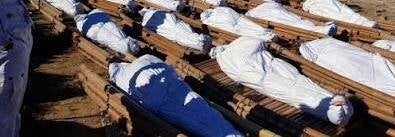
In a brazen show of force that has exposed the fragility of the region's security, suspected bandits killed at least seven people in the Matazu Local Government Area of Katsina State on Thursday, June 25, 2026, defying a state government ban on motorcycle movement and other security measures imposed to curb their activities.
The attack targeted the Sayaya community in the Matazu/Musawa axis, a region that has become a hotspot for banditry. Residents said the assailants stormed the village in the early hours of the morning, firing sporadically and triggering widespread panic as families fled their homes in search of safety.
"We were asleep when we heard heavy gunfire," a resident, who requested anonymity for security reasons, told Daily Trust. "People were screaming, children were crying, and everyone was running in different directions. By the time the gunmen left, seven of our people were lying dead".
The victims, identified by community sources as Lawal Chiki, Abdullahi Mustapha, Yalili Mai Ruwa, Isau Maharba, Salma Tasi'u, and Ibrahim Uncle—who was said to be mentally ill—were buried the same day in accordance with Islamic rites. A woman was also among the deceased.
The attack occurred despite a raft of security measures imposed by Governor Dikko Umaru Radda's administration, including a total ban on the use of motorcycles in Matazu and Musawa Local Government Areas—a measure specifically aimed at restricting the movement of bandits and kidnappers who rely on motorcycles to carry out attacks and evade security forces. The Executive Order also banned the sale, purchase, transportation, and storage of petroleum products in jerrycans across the state and shut down Point of Sale (POS) businesses and phone charging centres in the affected areas.
However, reporters gathered that the restrictions have yet to stop deadly attacks in the affected communities, with armed assailants still operating with impunity in the Matazu/Musawa area. The incident has further raised concerns over worsening insecurity in Katsina communities, where residents continue to face recurring attacks despite security measures imposed by authorities.
Locals alleged that the attack was led by a notorious bandit kingpin, Kachallah Muhammad Fulani (also referred to as Kachallah Fulani Muhammad), whose name has long been linked to deadly raids and abductions across Matazu and neighbouring communities.
"This is the same man who has terrorised our villages for years. He was the one who abducted Major General Rabe and his wife. Anytime we hear his name, we know trouble is coming," a resident, Alaramma Jibrin, told Daily Trust.
The mention of Major General Rabe Abubakar (retd) is particularly significant. The retired army general was abducted alongside his wife, Hajiya Amina, in Matazu LGA on May 30, 2026. He later died in captivity, sparking public outrage and renewed calls for intensified efforts to end banditry.
Residents linked the renewed violence to the recent withdrawal of troops attached to Operation Fansan Yamma, a military operation launched to combat banditry in the North-West. They alleged that security personnel had been deployed to Matazu and neighbouring communities after the abduction of the retired general, but the Thursday attack occurred shortly after troops were pulled out.
"When the soldiers were here, we could sleep peacefully. But once they left, the bandits came back with more aggression. It feels like we have been abandoned," a community elder told Daily Trust.
Another resident added: "When the soldiers were here, we could sleep with our eyes closed. But once they left, the bandits came back with more anger. It feels like we have been abandoned".
Residents further alleged that the same group had recently blocked the Karaduwa–Rimaye road in broad daylight, abducting travellers and assaulting others without resistance.
In Matazu town, grief engulfed the community as mourners gathered to bury the victims. Families struggled to come to terms with the tragedy.
"This is not just a tragedy for Sayaya; it is a tragedy for the entire local government. We have lost innocent lives, and this pain will remain with us for a long time," a community leader said.
Fear has forced many residents to flee. Entire families have reportedly abandoned Sayaya, seeking refuge in Matazu town and other nearby communities, uncertain whether it is safe to return. "We cannot stay and wait to be killed," a displaced woman said while relocating her children. "At least in town, we can sleep without hearing gunshots".
Farmers now fear going to their fields, traders avoid highways, and parents worry constantly about the safety of their children. "Our farms are there, but our lives are more important," a farmer said. "If we go to the bush, we may not return".
The attack has shattered the fragile calm that Sayaya had begun to enjoy after the deployment of security forces. Residents are appealing to both the state and federal governments to intensify efforts to end banditry, but for the families of the seven victims, the promise of peace has come too late.
📩 Stone Reporters News | 🌍 stonereportersnews.com
✉️ info@stonereportersnews.com | 📘 Facebook: Stone Reporters News | 🐦 X (Twitter): @StoneReportNew | 📸 Instagram: @stonereportersnews
Add comment
Comments