

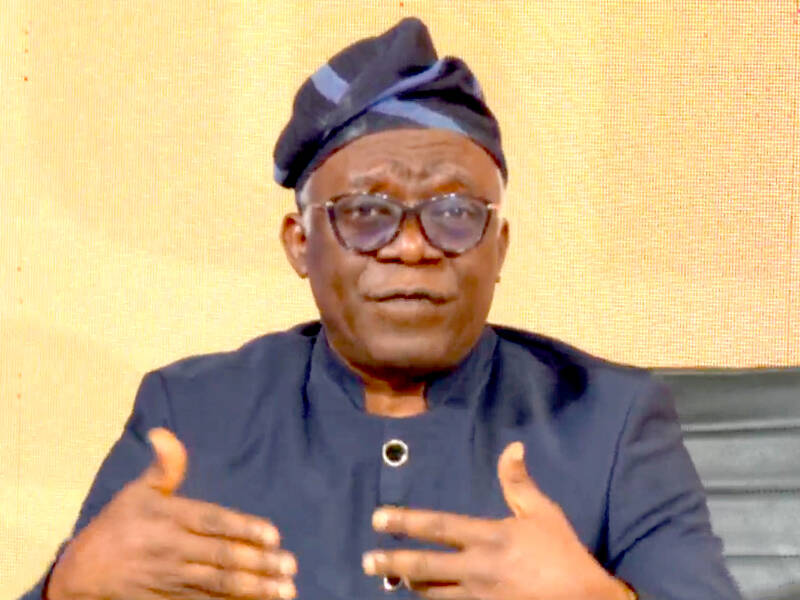
Human rights lawyer Femi Falana has said Nigeria’s insecurity cannot be solved by policing reforms alone, arguing that the country must address unemployment, poverty, and weak social protection if it hopes to reduce crime and violence.
Speaking during an interview on Channels Television’s political programme, Falana said public discussions around security often focus too heavily on police structure while ignoring the economic conditions pushing many young Nigerians toward criminal activity.
According to Falana, many Nigerians assume policing reform simply means building more police stations, recruiting more officers, and expanding security infrastructure.
He said while those measures may strengthen law enforcement capacity, they fail to address deeper structural problems that fuel criminality across the country.
Falana argued that the debate over state police should not be limited to whether governors should control police formations or whether decentralised policing would improve intelligence gathering.
Instead, he said policymakers must confront the socio-economic realities driving rising insecurity in both urban and rural communities.
“Whenever we discuss policing in Nigeria, people tend to think only in terms of police architecture,” Falana said.
He explained that this mindset reduces security discussions to physical infrastructure and personnel numbers.
According to him, security goes beyond weapons, uniforms, patrol vehicles, or police stations.
Falana stressed that another crucial but often neglected aspect of security is social security.
He said governments at all levels must ask difficult questions about why increasing numbers of young men are turning to crime.
He questioned why policy conversations rarely focus on the root causes of youth involvement in armed robbery, kidnapping, cultism, banditry, and cybercrime.
“Why are more young men taking to criminality?” he asked.
Falana said this question should be central to every national security discussion.
He argued that widespread joblessness has created frustration among millions of young Nigerians.
According to him, when youths remain unemployed for years despite education or skills, many become vulnerable to criminal recruitment.
He said criminal networks often exploit economic hardship to recruit desperate young people.
Falana warned that poverty and inequality create conditions where crime can flourish regardless of policing models.
He noted that without economic opportunities, simply increasing police presence may only treat symptoms rather than the underlying disease.
The senior advocate said job creation should be considered a major pillar of national security.
He argued that employment programmes, youth empowerment schemes, vocational training, and economic inclusion are essential crime-prevention tools.
According to Falana, governments must invest in sectors capable of absorbing large numbers of unemployed youths.
He said agriculture, manufacturing, technology, and small business development could significantly reduce youth vulnerability.
Falana also raised concerns about the absence of strong welfare systems in Nigeria.
He said many countries combine law enforcement with social support mechanisms to reduce crime rates.
Such systems, he noted, include unemployment benefits, community rehabilitation programmes, education support, and targeted poverty alleviation.
He said when citizens feel abandoned economically, social tensions often rise.
Falana warned that insecurity cannot be separated from economic realities.
His comments come amid growing national debate over the proposed establishment of state police, following recent legislative moves to decentralise policing in Nigeria.
Supporters of state police argue that localised policing could improve intelligence gathering and faster response to crimes such as kidnapping, terrorism, and banditry.
Critics, however, fear state police could be abused by political actors to intimidate opponents or suppress dissent.
Falana acknowledged that policing reforms are important but maintained they are not sufficient on their own.
He insisted that no policing structure—whether federal or state—can fully succeed in a society struggling with severe unemployment and poverty.
For Falana, the real solution lies in balancing security reforms with economic justice.
He said Nigeria must build not only stronger policing institutions but also a society where young people have genuine hope, opportunities, and reasons to stay away from crime.
📩 Stone Reporters News | 🌍 stonereportersnews.com
✉️ info@stonereportersnews.com | 📘 Facebook: Stone Reporters News | 🐦 X (Twitter): @StoneReportNew | 📸 Instagram: @stonereportersnews
Add comment
Comments