

Reported by: Ijeoma G | Edited by: Oravbiere Osayomore Promise.
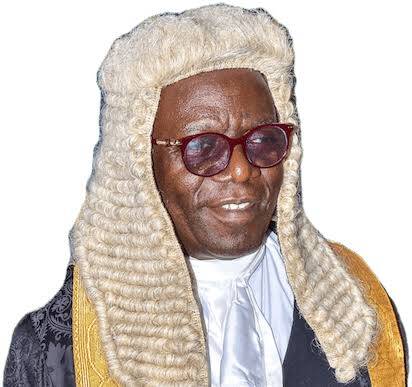
Human rights lawyer and Senior Advocate of Nigeria, Femi Falana, has issued a stark warning that the creation of state police will not resolve Nigeria's deepening insecurity unless the government simultaneously tackles the poverty and unemployment driving millions of young people into criminality. Appearing as a guest on Channels Television's Politics Today on Thursday, June 25, 2026, Falana questioned the national fixation on security architecture while social and economic conditions that fuel crime remain neglected.
His comments came just 24 hours after the Senate passed the landmark State Police Bill, a constitutional amendment that seeks to replace the existing Nigeria Police Force with a dual structure comprising a Federal Police Service and State Police Services. The bill, transmitted to the National Assembly by President Bola Tinubu on Tuesday, empowers state governors to appoint commissioners of police for their respective states, subject to confirmation by state Houses of Assembly. Lawmakers incorporated safeguards intended to protect civil liberties and prevent political misuse of the proposed policing structure.
Falana, however, argued that the debate has been framed too narrowly. "We always reduce the problem of insecurity to security architecture, in fact structure. How do we have more police stations? How do we employ more policemen and women without considering social security?" he queried. He pointed to the root causes of crime that have been conspicuously absent from the national conversation. "Why are more young men taking to criminality? Why are we not talking about creating employment for young people? Why are we not giving assistance to Nigerians that are vulnerable, extremely poor or dimensionally poor?" According to the senior advocate, unless these problems are addressed holistically, "creating a state police or local government police will not address the crisis of insecurity in the country".
The lawyer's intervention comes at a time when Nigeria's youth unemployment rate is estimated at over 42 per cent, a figure that has fundamentally altered the dynamics of the job market and left millions of young graduates without viable livelihoods. Projections suggest unemployment could remain stuck near 22.6 per cent in 2026, underscoring the structural nature of the crisis. Falana stressed that increasing the number of police formations or recruiting more officers would have limited impact if authorities fail to address widespread poverty and joblessness. He maintained that insecurity would persist regardless of whether the country adopts state police or local government police if the root causes of crime remain unaddressed.
While acknowledging that decentralised policing is not new to Nigeria, Falana recalled that regional police operated during the First Republic before being scrapped due to widespread abuses by political authorities. He stressed that before returning to a similar structure, the country must first address the concerns that led to its abolition. "If we now want to go back to the status quo ante bellum, we must ask questions. The fears that were entertained, the problem that led to the abolition of the dual policing system, have they been taken care of?"
The senior advocate also raised concerns about the adequacy of safeguards against abuse in the current bill, describing the legislation as "sketchy". He questioned whether many state governments possess the financial capacity to sustain independent police services, noting that several states already struggle to meet obligations such as salaries and pensions. Falana urged policymakers to adopt a broader approach to security reform by combining effective policing with economic policies aimed at reducing poverty, creating jobs and supporting vulnerable citizens. His remarks serve as a powerful reminder that Nigeria's security crisis cannot be solved by police alone, and that the war against insecurity must be fought on the economic and social fronts as well.
📩 Stone Reporters News | 🌍 stonereportersnews.com
✉️ info@stonereportersnews.com | 📘 Facebook: Stone Reporters News | 🐦 X (Twitter): @StoneReportNew | 📸 Instagram: @stonereportersnews
Add comment
Comments