

Reported by: Ijeoma G | Edited by: Oravbiere Osayomore Promise.
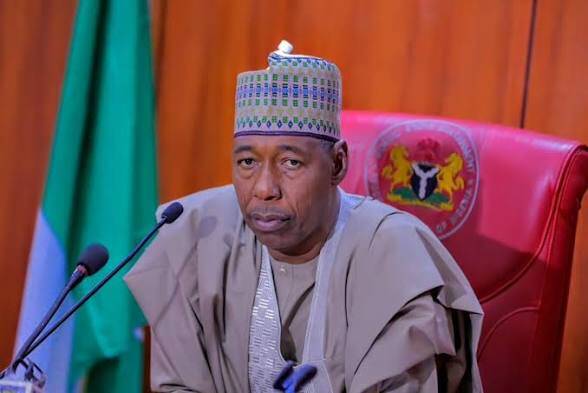
Borno State Governor, Professor Babagana Umara Zulum, has ordered the immediate closure of the Internally Displaced Persons (IDP) camp in Bama, the largest displacement facility outside the state capital, Maiduguri, citing the infiltration of criminal elements, a surge in illicit activities, and the alarming discovery of a significant number of "fake" displaced persons exploiting the camp for humanitarian aid. The governor made the announcement on Thursday, June 25, 2026, during an assessment visit to the Government Secondary School IDP camp in Gwoza, where he also revealed that the Gwoza camp would be shut down within the next two to three weeks.
Zulum, who has made the resettlement of displaced communities a cornerstone of his administration, declared that the Bama camp would cease operations by noon on Thursday, following a comprehensive screening and profiling exercise conducted the previous day. "We visited Bama yesterday and supervised the screening of IDPs, and by 12 noon, the Bama IDP camp should be closed," the governor stated. Addressing residents in Gwoza, he added, "Today we are here in Gwoza, we have profiled all of them, and insha Allah, in the next two or three weeks, this camp will also be closed".
The governor attributed the decision to the relative peace that has returned to many communities previously ravaged by the Boko Haram insurgency, noting that thousands of displaced residents had already been successfully resettled. Over the past seven years, the Borno State Government has facilitated the return of families to communities including Darajamal, Nguro Soye, Goniri, Banki, Abbaram, Ngoshe, Kirawa, and Warabe, among others across the state.
However, Zulum expressed deep concern over the deteriorating security situation within the camps themselves, warning that the facilities had become hotspots for social vices and were increasingly vulnerable to infiltration by terrorists. "In our camps now, there is ongoing criminality; we have identified all of them, and they will be resettled based on their localities and to their community heads. Otherwise, Boko Haram/ISWAP are gradually infiltrating the camps," he said. The governor's remarks highlight a troubling paradox: while the Boko Haram insurgency has been significantly degraded in many rural areas, the camps established to shelter victims have themselves become breeding grounds for crime and extremist recruitment.
Perhaps the most startling revelation was the discovery of a significant number of individuals fraudulently posing as internally displaced persons. Zulum raised the alarm over a disturbing trend of residents who had already returned to their homes abandoning them to resettle in camps, solely to collect relief items from non-governmental organisations (NGOs). The screening exercise uncovered that many occupants of the Gwoza camp were not genuine IDPs but residents of the town who had moved back to take advantage of humanitarian handouts. "One year ago, this was almost a ghost camp with not more than about 400 households. It is surprising that about 3,000 households are back in the camp, and most of them are residents living within the town," the governor lamented. He stressed that the government could not sustain the maintenance of camps under such circumstances, describing the trend as economically draining and morally indefensible.
The governor's directive signals a significant shift in the state's approach to the long-running displacement crisis. Since the peak of the Boko Haram insurgency, IDP camps across Borno have housed hundreds of thousands of people, becoming symbols of both humanitarian need and administrative inertia. The Bama camp, in particular, has been one of the largest, serving as a temporary home for families from the most devastated parts of the state. Its closure marks the beginning of what Zulum has indicated will be a phased shutdown of several other camps before the end of his tenure.
The closure, however, is not without its challenges. Humanitarian organisations have warned that while the return of peace to some areas is welcome, the resettlement process must be sustainable and accompanied by adequate support for returnees to rebuild their lives. Many displaced families have been in camps for over seven years, and their ancestral homes and farmlands remain destroyed or inaccessible. The governor has assured that the returns would be sustainable, with the government committed to providing the necessary support for returnees to reintegrate into their communities.
Zulum's decision has been met with cautious optimism by some residents and security analysts, who view it as a necessary step to restore dignity to displaced populations and to dismantle the patronage networks that have sustained the camps. However, critics have raised concerns about the welfare of genuine IDPs who may be caught in the crossfire of the crackdown on "fake" occupants. The governor's announcement that the Gwoza camp would follow in the coming weeks signals that the state government is determined to push ahead with its resettlement agenda, even as it grapples with the complex realities of post-insurgency recovery.
The closure of the Bama IDP camp represents a significant milestone in Borno State's recovery from the Boko Haram insurgency, but it also raises difficult questions about the future of humanitarian assistance, the integrity of the displacement system, and the long-term stability of communities struggling to rebuild. As the Bama camp gates close, the hope is that the 3,000 households that have returned home will find not just shelter, but a sustainable path to recovery. For Zulum, the message is clear: the era of indefinite displacement is over, and the time for return and rebuilding has begun.
📩 Stone Reporters News | 🌍 stonereportersnews.com
✉️ info@stonereportersnews.com | 📘 Facebook: Stone Reporters News | 🐦 X (Twitter): @StoneReportNew | 📸 Instagram: @stonereportersnews
Add comment
Comments