

Reported by: Oahimire Omone Precious | Edited by: Oravbiere Osayomore Promise.
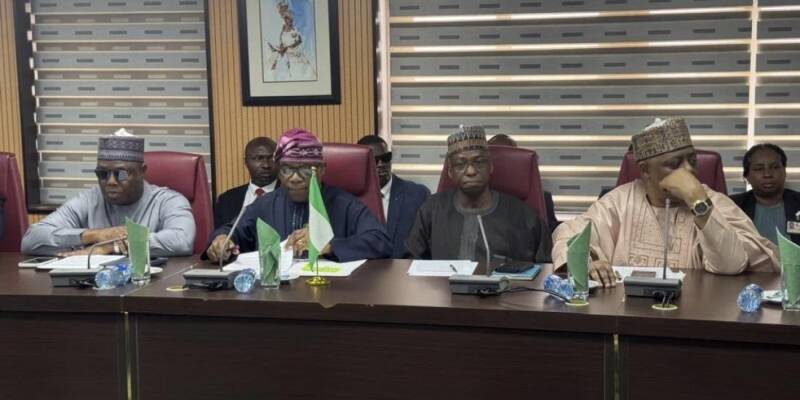
Nigeria has issued a blunt warning to South Africa, demanding that authorities arrest suspected criminals rather than resorting to extrajudicial killings, as diplomatic tensions escalated over persistent xenophobic attacks targeting Nigerians and other African migrants. The warning came during high-level talks in Abuja on Monday, July 27, 2026, between Nigerian officials and a South African delegation led by Special Envoy and International Relations Minister Ronald Lamola, who was dispatched by President Cyril Ramaphosa amid growing concerns over the safety of foreign nationals in South Africa.
President Bola Tinubu declined to personally receive the South African delegation, directing them instead to meet with the Minister of State for Foreign Affairs, Ambassador Sola Enikanolaiye. According to Presidency sources, the South African envoys arrived in Abuja on Friday, July 24, without prior notice of a meeting with the President. The Minister of Foreign Affairs, Ambassador Bianca Odumegwu-Ojukwu, who was in Addis Ababa, Ethiopia, at the time, advised that it was inappropriate for President Tinubu to receive the envoys while attacks on Nigerians and their businesses were still ongoing. Nigeria is also insisting that South Africa ratify and present the signed Memorandum of Understanding on the Early Warning Mechanism, which both countries signed in Abuja on October 22, 2025, before further high-level diplomatic engagement can proceed.
Receiving the South African delegation on behalf of the President, Ambassador Enikanolaiye opened the meeting by making clear Nigeria's deep frustration over the recurring violence. "We have seen a pattern that has become a concern to the Nigerian government," he said, citing outbreaks of anti-migrant violence dating back to 1995. He disclosed that official records showed 98 Nigerians had been killed in mob attacks and hate-related violence in South Africa since 2022 alone. Enikanolaiye warned that the continued attacks could damage the long-standing strategic relationship between Africa's two largest economies.
In his strongest remarks, the minister stressed that Nigeria would not defend citizens involved in drug trafficking or other criminal activities. However, he insisted that suspects must be arrested and prosecuted through the legal system rather than subjected to mob violence. "If there are criminals, the solution is not to kill them. Get them arrested, prosecuted," Enikanolaiye declared. He added that Nigerian authorities had documented cases in which police appeared unwilling to intervene, raising "issues of complicity if the state authorities are unwilling or not able" to protect foreign nationals.
The minister also reminded the South African delegation of Nigeria's historic role in the struggle to dismantle apartheid, insisting that Afrophobic attacks cannot be justified or condoned under any circumstance. He described receiving evacuees as an emotional experience, noting that many returned home without their possessions. "I shed tears when I received the first batch of evacuees. I saw children, women and the elderly returning home with almost nothing after their properties had been looted and destroyed. That is not the Africa we want," he said. The Federal Government has evacuated more than 1,500 Nigerians from South Africa following the latest wave of violence.
Responding on behalf of the South African government, Lamola said President Ramaphosa remains firmly opposed to xenophobia, racism and all forms of discrimination. "We have been outspoken against any intolerance, including xenophobia, racism, homophobia, violence and discrimination directed at individuals within our borders," he said. Lamola also acknowledged Nigeria's sacrifice during the anti-apartheid struggle, stating: "We remain deeply indebted to the people of Nigeria for their sacrifice". However, the South African delegation also stressed that the country has the sovereign right to enforce its immigration laws and deal decisively with irregular migration and criminality, including drug trafficking and wire fraud allegedly involving some immigrants.
The diplomatic snub came less than 24 hours after the reported killing of a Nigerian national, Chika Ibe, who was allegedly picked up from his residence in Bellville, Cape Town, and tortured to death by personnel of the South African Police Service. The incident has further heightened concerns over the safety of Nigerians in South Africa. At the recent ECOWAS Summit in Sierra Leone, Vice President Kashim Shettima, who represented President Tinubu, condemned the attacks and pledged that Nigeria would push for stronger measures against xenophobia at the African Union.
Both delegations ultimately condemned xenophobia, racism and related forms of intolerance, agreeing that public frustration over crime cannot justify vigilante violence or attacks on foreign nationals. They also agreed to continue diplomatic engagements aimed at easing tensions. However, the unresolved issues—including South Africa's failure to ratify the Early Warning Mechanism agreement and its refusal to compensate victims of xenophobic attacks—suggest that tensions between Africa's two largest economies are far from over. For Nigeria, the message to South Africa is clear: arrest criminals, but do not kill innocent Nigerians.
📩 Stone Reporters News | 🌍 stonereportersnews.com
✉️ info@stonereportersnews.com | 📘 Facebook: Stone Reporters News | 🐦 X (Twitter): @StoneReportNew | 📸 Instagram: @stonereportersnews
Add comment
Comments