

Reported by: Ijeoma G | Edited by: Oravbiere Osayomore Promise.
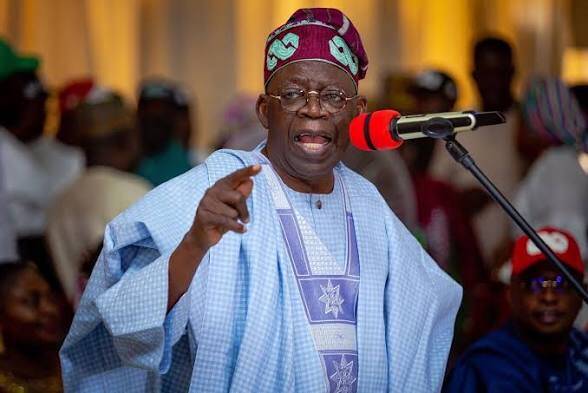
President Bola Ahmed Tinubu has directed the Economic and Financial Crimes Commission (EFCC) to immediately return to court and vacate the order freezing the bank accounts of the Osun State Government, describing the timing of the anti-graft agency's action as "deeply embarrassing" and potentially damaging to public confidence in the democratic process just days before the state's governorship election. The President issued the directive in a personally signed statement from the State House on Thursday, August 6, 2026, after the EFCC secured a court order on August 5, 2026, freezing the state's statutory allocation account as part of an investigation into the alleged mismanagement of about N11 billion in Ecology Funds, Intervention Funds, and Federal Account Allocation Committee allocations.
Tinubu, who had remained publicly silent on the matter for 24 hours, broke his silence with a carefully worded statement that both defended the independence of anti-corruption agencies and firmly rebuked the EFCC's timing. "I must state that I feel deeply embarrassed not by the EFCC's exercise of its mandate backed by a court order, but by the timing of the agency's action," the President declared. He acknowledged that actions taken by federal institutions are often attributed to him as President, "even when I may not have had any prior knowledge of the action." While reiterating his commitment to allowing anti-corruption agencies to operate independently, Tinubu stressed that the proximity of the Osun governorship election—scheduled for August 15, 2026—made the action "inauspicious" and required his intervention.
"Osun State is only a few days away from its gubernatorial election. Therefore, nothing ought to be done to give an impression that the EFCC or indeed any other agency of the federal government is being used to interfere with the election," Tinubu said. He added that he had "deliberately refrained from directing or interfering in the operational activities of the EFCC or any other investigative or prosecutorial agency" because he believes strong democratic institutions are indispensable to good governance. However, he argued that the protection of Nigeria's democratic process required decisive action, and on that basis directed the commission to seek the immediate discharge of the freezing order and discontinue all legal actions against the Osun State Government.
The EFCC had defended its decision, stating that it froze the account after observing suspicious movements of funds from the state government's accounts into what it described as suspicious corporate accounts, detected from August 2, 2026. The commission said it had been investigating the Osun State Government since March 2026 over the alleged fraudulent handling of the funds, and that the temporary restriction was imposed in line with its investigative powers under the EFCC Act and the Money Laundering (Prevention and Prohibition) Act. The agency insisted that its action was not politically motivated, despite the timing ahead of the August 15 governorship election, and that it had the authority to place restrictions on accounts suspected to be linked to financial crimes.
The freeze had sparked widespread outrage and legal challenges. The Nigerian Bar Association president, Afam Osigwe, warned that restricting withdrawals from a state government's accounts without an express court order could effectively cripple governance and amount to an abuse of power. Governor Ademola Adeleke, who is seeking re-election on the platform of the Accord Party, had demanded an explanation from the EFCC chairman and instructed his Attorney General to challenge the action at the Federal High Court in Osogbo. The African Democratic Congress (ADC) described the freeze as "political terrorism," while former Vice President Atiku Abubakar condemned it as a "dangerous assault on democracy" and accused the Tinubu administration of developing a pattern of targeting opposition-controlled states through the selective deployment of federal institutions.
The President's intervention marks a significant reversal of the EFCC's action and a direct rebuke to the anti-graft agency, which had insisted that its actions were within the law and necessary to prevent the alleged diversion of public funds. By ordering the EFCC to return to court and vacate the order, Tinubu has effectively overruled his own anti-corruption agency, signalling that the integrity of the electoral process takes precedence over the commission's investigative timeline. The directive comes just nine days before Osun residents head to the polls to elect their next governor, in a contest that has been marked by heightened political tensions and accusations of violence and intimidation.
As the EFCC prepares to comply with the President's directive, the people of Osun State and the wider Nigerian public await the outcome of the legal process that will officially unfreeze the state's accounts. The controversy has exposed the deep fault lines in Nigeria's anti-corruption architecture and raised uncomfortable questions about the independence of federal agencies in politically sensitive periods. For now, President Tinubu has made his position clear: the timing of anti-corruption actions must not undermine the credibility of democratic elections, and the integrity of the electoral process must be protected at all costs.
📩 Stone Reporters News | 🌍 stonereportersnews.com
✉️ info@stonereportersnews.com | 📘 Facebook: Stone Reporters News | 🐦 X (Twitter): @StoneReportNew | 📸 Instagram: @stonereportersnews
Add comment
Comments