

Reported by: Oahimire Omone Precious | Edited by: Oravbiere Osayomore Promise.
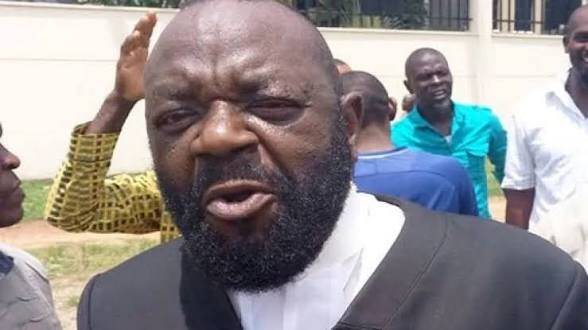
Aloy Ejimakor, the Special Counsel to detained Indigenous People of Biafra leader Nnamdi Kanu, has launched a blistering attack on the Nigerian government, declaring that his client is a victim of "prosecutorial overkill" and that the state hoodwinked the judiciary into securing a life sentence against the separatist agitator. In a post on his official X account on August 9, 2026, Ejimakor insisted that the central issue in Kanu's case was never terrorism or treason but rather his political agitation for a separate Biafran state. The statement marks the latest escalation in a long-running legal and political battle that has seen Kanu's case become one of the most polarising in Nigeria's contemporary history.
"From day one, the bone of contention wasn't terrorism or treason, but agitation for a separate state," Ejimakor wrote. He quoted Kanu's consistent position: "He has always said that Biafra is a means to an end, if you don't treat us well equally as Nigerians, then you let us go and have a separate state, that's what Nnamdi Kanu was saying". The lawyer then delivered his most explosive accusation: "MNK is a victim of prosecutorial overkill by the State and the judiciary was hoodwinked. What remains is the fix, and it shall come, sooner than later".
Ejimakor's allegations strike at the heart of Nigeria's judicial integrity, suggesting that the government manipulated the legal process to secure a conviction against Kanu on charges that were never the true basis of his prosecution. The special counsel has long argued that Kanu's agitation was fundamentally political, rooted in grievances over the perceived unequal treatment of Nigerians from the South-East, rather than any violent or terrorist activity. He maintained that Kanu's advocacy for self-determination was a response to systemic inequality, not a call to arms.
The background to this controversy is a legal saga that has spanned more than a decade. Kanu was first arrested on October 14, 2015, in Lagos by the Department of State Services over his activities with Radio Biafra and allegations of treasonable felony. He was arraigned before an Abuja Magistrate Court in November 2015, followed by trial at the Abuja Federal High Court. On April 28, 2017, Justice Binta Nyako of the Federal High Court granted Kanu bail on health grounds. However, he left Nigeria following a military raid on his Abia State residence, leading to the revocation of his bail.
On June 26, 2021, Kanu was arrested in Kenya and subjected to extraordinary rendition back to Nigeria, where he was initially detained by the DSS and subsequently rearraigned before the Abuja Federal High Court. After a prolonged legal battle, Justice James Omotosho of the Abuja Federal High Court sentenced Kanu to life imprisonment on November 20, 2025. The government has since filed a cross-appeal seeking to increase the punishment to death by hanging, a move Ejimakor has warned could hurt Nigeria's foreign relations.
Ejimakor's latest comments indicate that Kanu's legal team remains determined to challenge the outcome of the case and pursue what it considers appropriate legal remedies. The special counsel has previously called on President Bola Tinubu to handle the "Biafra conundrum" through dialogue rather than prosecution. He has also urged South-East governors to intervene by pursuing a political resolution to Kanu's case. The Nigerian government, for its part, has consistently maintained that Kanu's prosecution was based on alleged offences against the state and national security.
The debate over Kanu's case reflects deeper tensions in Nigeria's federal structure and the unresolved grievances of the South-East region. Ejimakor's accusation that the judiciary was "hoodwinked" raises uncomfortable questions about the independence of Nigeria's courts and the extent to which political considerations may influence judicial outcomes. While the government has not issued an immediate response to Ejimakor's August 9 statement, it has previously argued that justice in Kanu's case resides in the courts, not in public agitation. As the legal battle continues, Ejimakor's declaration that "the fix" will come "sooner than later" suggests that Kanu's legal team is preparing for further challenges. Whether those challenges will succeed in overturning the life sentence or securing a political resolution remains to be seen. What is certain is that the case of Nnamdi Kanu will continue to test the limits of Nigeria's legal system and its capacity to reconcile national security with the demands of justice and political accommodation.
📩 Stone Reporters News | 🌍 stonereportersnews.com
✉️ info@stonereportersnews.com | 📘 Facebook: Stone Reporters News | 🐦 X (Twitter): @StoneReportNew | 📸 Instagram: @stonereportersnews
Add comment
Comments