

Reported by: Ijeoma G | Edited by: Oravbiere Osayomore Promise.
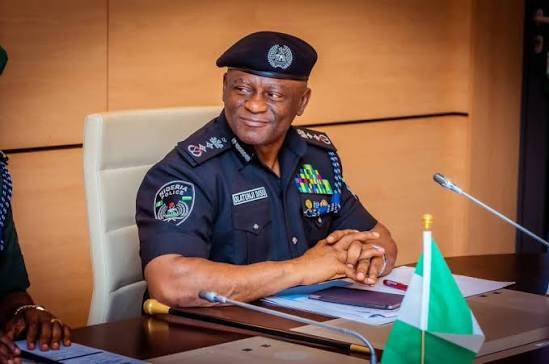
The Inspector-General of Police, Tunji Disu, has made a stunning admission that has sent shockwaves through Nigeria's political landscape, declaring that he ordered the Osun State Commissioner of Police, Ibrahim Gotan, to step aside because political parties and politicians had complained that they no longer trusted him. Speaking on Friday, August 7, 2026, during a meeting with civil society organisations led by the Executive Director of YIAGA Africa, Samson Itodo, in Abuja, Disu laid bare the political calculations behind one of the most consequential security decisions ahead of the August 15 governorship election.
"Certain groups of politicians or parties have been complaining that they no longer trust the Commissioner of Police. So the Commissioner of Police was asked to stand aside, while the Electoral Commissioner of Police took over," Disu declared. The IGP, however, insisted that the decision was not a disciplinary action against Gotan but rather a confidence-building measure to reassure political stakeholders of the force's neutrality before, during and after the election.
The controversy surrounding Gotan's tenure had been simmering for months. Political parties, civil society organisations and even lawmakers had repeatedly called for his redeployment over allegations of partisanship and bias. The Accord Party had been particularly vocal, demanding Gotan's removal and accusing him of compromising the credibility of the governorship poll. In June 2026, the Network of Osun Civil Society Groups gave the IGP a 72-hour ultimatum to restructure the state police command and redeploy Gotan. Lawmakers from Osun State had also lost confidence in the police commissioner and urged Disu to replace him without delay.
The decision to remove Gotan came just weeks before the election, following a July 30, 2026 wireless signal marked "Most Immediate" that posted him to the Force Headquarters in Abuja on special duty. The internal police communication, circulated to commands nationwide, ordered Gotan to report to the Commissioner of Police, Communications Operations, Force Headquarters, Abuja. But the situation quickly became complicated. Within days, reports emerged that Gotan had been reinstated, allegedly following pressure from All Progressives Congress stakeholders. The Imole Campaign Council of Governor Ademola Adeleke expressed concern over what it described as Gotan's "controversial" return, alleging that the IGP was pressured by the ruling APC.
Disu, however, sought to clarify the arrangement during the August 7 meeting. He explained that the substantive CP, Ibrahim Gotan, remained in office but had been directed to step aside specifically for election duties. The Electoral Commissioner of Police, CP Samuel Erale Etaifo, had been deployed to take charge of election security operations in the state. The IGP also revealed that an Assistant Inspector-General of Police would relocate to Osun to coordinate election security, strengthening the existing command structure. According to Disu, the police took the decision after intelligence indicated an increase in political violence in the state, with rival cult groups allegedly linked to political actors implicated in some of the unrest.
The IGP also announced what could be one of the largest police deployments for a single off-cycle governorship election, revealing that the force intended to station at least four officers at each of the state's 3,673 polling units. With 30 local government areas and 332 wards, Disu said the deployment would amount to at least 14,692 police officers, excluding personnel from other security agencies supporting the operation. He added that senior officers assigned to the election would not know their specific local government areas until the eve of the poll or on election day to prevent politicians from influencing or compromising security personnel.
The IGP's admission that he removed a police commissioner because politicians complained has raised troubling questions about the independence of Nigeria's security institutions and the extent to which political pressure can influence operational decisions. Critics argue that such admissions undermine public confidence in the police and signal that security agencies are susceptible to partisan manipulation. The Accord Party, which had long demanded Gotan's removal, welcomed the decision but continued to raise concerns about police harassment of its members. Governor Adeleke's camp also welcomed the redeployment, with his Special Assistant on Digital Media, Oni Gbenga Lawrence, declaring: "The Commissioner of Police in Osun State has been removed. We thank the Inspector General of Police for listening to the voice of the people".
But the political drama is far from over. The Imole Campaign Council has continued to press for Gotan's complete removal from the state, alleging that his presence compromises the integrity of the election. Meanwhile, the APC has accused the police of targeting its supporters, adding another layer of complexity to an already volatile political environment. As Osun State braces for the August 15 election, the question on many lips is whether the police can truly remain neutral when its own leadership has admitted to bowing to political pressure. The IGP has insisted that the force has no candidate, no political party and no vested interest in the outcome other than ensuring that the lawful choice of the people prevails. But his own words have cast a long shadow over that assurance.
For now, the people of Osun can only hope that the massive deployment of officers and the presence of an Electoral Commissioner will guarantee a peaceful and credible process. But the IGP's startling confession that politicians' complaints dictated a change in police leadership has already done irreparable damage to public trust. In a state where 13 local government areas have been classified as high-risk and 34 election-related deaths have already been recorded, the stakes could not be higher. The coming days will reveal whether the police can rise above the politics that brought them to this point, or whether the election will be decided not by the ballot, but by the very forces the IGP claims to have contained.
📩 Stone Reporters News | 🌍 stonereportersnews.com
✉️ info@stonereportersnews.com | 📘 Facebook: Stone Reporters News | 🐦 X (Twitter): @StoneReportNew | 📸 Instagram: @stonereportersnews
Add comment
Comments