

Published by Osasere Edomwonyi Ikpoba
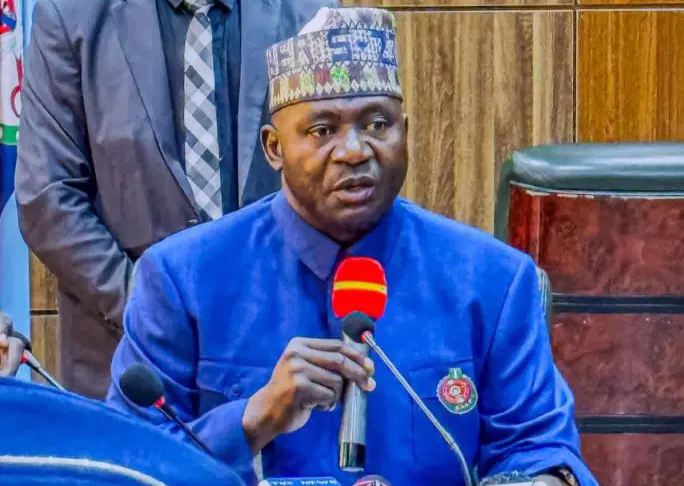
The Minister of Defence, retired General Christopher Musa, has declared that Nigeria's defence architecture must undergo a fundamental transformation to address the complex and evolving security threats facing the nation, calling for the aggressive adoption of artificial intelligence, unmanned systems, and other emerging technologies. Speaking on Thursday in Abuja at the opening of the Ministry of Defence's 2nd Policy Colloquium, themed “Securing the Frontier: Strategic Defence Architecture, Emerging Technologies and Democratic Integrity in Nigeria,” Musa warned that the country can no longer rely solely on conventional military capabilities to protect its sovereignty.
The minister painted a stark picture of a strategic frontier no longer limited to physical borders but now extending into cyberspace, satellite networks, automated systems, and information ecosystems. He stressed that the complexity and changing character of contemporary threats demand renewed strategic thinking, institutional adaptation, and sustained national commitment. “Our defence architecture must remain agile and forward-looking, with the capacity to anticipate threats, respond decisively and protect Nigeria's territorial integrity and vital national interests,” Musa declared.
Musa identified artificial intelligence, unmanned systems, surveillance and reconnaissance, and cyber capabilities as the key technologies reshaping modern warfare and the wider strategic environment. He noted that rapid advances in these fields were already transforming military operations globally, and warned that Nigeria risked losing its operational advantage if it failed to keep pace. “Nigeria must therefore remain at the forefront of these developments by investing in relevant technologies and strengthening the human, doctrinal and institutional capacity required to integrate them into our defence capabilities,” he said.
Beyond acquiring technology, the minister emphasised the need to develop the human capital, military doctrine, and institutions required to deploy such tools effectively. He also linked technological modernisation to the development of Nigeria's defence industrial base, arguing that greater domestic capacity would reduce vulnerabilities and ensure sustainable access to critical military capabilities. “The advancement of technology also underscores the strategic importance of strengthening Nigeria's defence industrial base,” he added.
The minister's call comes as security threats facing Nigeria and the wider West African region become increasingly transnational, with terrorism, banditry, arms trafficking, cybercrime, human trafficking, and other forms of organised crime exploiting weaknesses across national borders. Rather than operating in separate domains, Musa said Nigeria's security institutions needed to develop the capacity to coordinate responses across land, sea, air and cyberspace. Addressing these challenges, he said, requires a more integrated defence posture, supported by effective intelligence coordination, joint operations, and interoperability across the Armed Forces and other relevant security institutions.
The colloquium, which brought together defence strategists, policymakers, technologists, academics, civil society leaders, and media practitioners, was described by the Special Adviser to the Minister on Media, Leah Katung-Babatunde, as “an urgent call to action”. She noted that modern defence was no longer purely reactive but must be predictive, integrated, and strategically resilient. “Artificial intelligence, cyber infrastructure, geospatial analytics, and autonomous capabilities present unmatched opportunities to protect our national footprint,” she said. “However, without clear policy governance, ethical oversight, and local technological depth, these same tools introduce novel vulnerabilities”.
The minister reaffirmed President Bola Ahmed Tinubu's commitment to strengthening national security and equipping the armed forces to protect sovereignty, democratic institutions, and drive national development. He expressed confidence that the colloquium would produce practical recommendations to strengthen the nation's defence posture. Also speaking, the Minister of Information and National Orientation, Mohammed Idris, warned that artificial intelligence was creating new threats such as deepfakes and coordinated disinformation capable of manipulating public opinion, deepening divisions, and weakening trust in democratic institutions.
As Nigeria confronts a security environment that is increasingly complex and multi-dimensional, the Minister of Defence's call for the adoption of AI and other emerging technologies signals a significant shift in the country's approach to national security. The challenge now lies in translating this vision into concrete action—investing in the right technologies, building the necessary human and institutional capacity, and ensuring that Nigeria transitions from being a passive consumer of security technology to an active driver of technological sovereignty. With the 2027 elections on the horizon and security threats showing no signs of abating, the urgency of this transformation could not be greater.
📩 Stone Reporters News | 🌍 stonereportersnews.com
✉️ info@stonereportersnews.com | 📘 Facebook: Stone Reporters News | 🐦 X (Twitter): @StoneReportNew | 📸 Instagram: @stonereportersnews
Add comment
Comments