

Reported by: Oahimire Omone Precious | Edited by: Oravbiere Osayomore Promise.
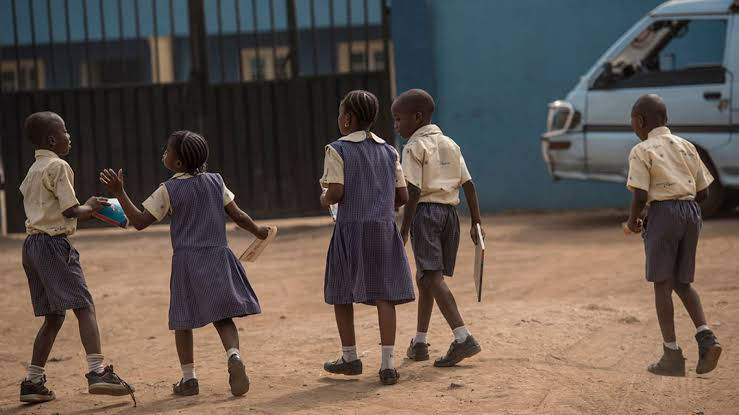
The long vacation has ended, but for millions of Nigerian parents, the return to school has brought little relief. Instead of the familiar excitement of new uniforms and fresh exercise books, the reopening of schools across the country has ushered in a season of anxiety, calculations, and difficult financial decisions. As primary, secondary, and tertiary institutions resume for the 2026/2027 academic session, parents and guardians are confronting a stark reality: the cost of educating a child has risen sharply, and for many families, the burden is becoming unbearable.
The numbers tell a sobering story. A survey of 140 parents across the country found that 85.7 per cent reported tuition increases for the upcoming term, with some schools raising fees by more than 40 per cent. In Lagos, a parent whose child attends Honeyland School saw fees jump from N350,000 to N500,000 for primary, a 43 per cent increase, while the secondary school cadre rose from N550,000 to N720,000, a 31 per cent hike. At Kembos Schools, fees climbed from N340,000 to N500,000, a 47 per cent rise. Yems Montessori School increased its nursery fees from N100,000 to N120,000, a 20 per cent jump, while another school raised fees from N210,000 to N325,000, a staggering 55 per cent increase, with parents expected to pay before September resumption. In Bauchi, parents lamented tuition hikes from N25,000 to N35,000. In Edo State, secondary school fees rose from N63,000 to N70,000, while workbooks previously sold for N2,000 now cost N3,000.
The reasons for these increases are not difficult to trace. School operators point to a perfect storm of rising operational costs. Persistent grid instability has forced heavy reliance on expensive diesel and generators. Commercial rents have soared, with landlords demanding more from school owners. Teacher salaries have had to be adjusted to retain staff in a competitive environment. Municipal levies and facility maintenance costs continue to climb. Iyabo Nnokam, a school owner in Rivers State, said many schools are on the verge of winding up because of the rising costs of running a school business, making fee increases difficult to avoid. Elizabeth Ohaka, proprietress of Redwood Academy in Lagos, described the environment as deeply unfriendly to school business owners, citing high overhead costs, teacher scarcity, and the broader insecurity crisis as factors making it tough to navigate the path of running a school.
But the fees are only the beginning. For parents, the cost of preparing a child for school extends far beyond tuition. Textbooks in core subjects at the basic and senior secondary levels have risen by between 25 and 30 per cent. A bookseller in Agege, Lagos, explained that English, Mathematics, and Science textbooks are the worst hit. The situation, he said, stems from a combination of factors: the Federal Ministry of Education's textbook ranking policy, which has limited the number of recognised authors and publishers; the rising cost of printing; and the dominance of old and established publishers who can afford the new assessment fees. For one parent in Abuja, textbooks for a single child would cost more than N100,000, excluding fees, uniforms, school bags, shoes, and other charges. A full set of senior secondary textbooks for major subjects can reach N25,000 to N50,000 per child every year, and junior secondary books are not much cheaper.
Hostel accommodation has also become a major financial burden. A private school in Agbado, Lagos, increased its hostel fee by about 50 per cent, citing inflation and the higher cost of maintaining facilities. At Lagos State University, a bed space in the on-campus hostel now costs N520,000, up from N320,000 the previous session. The increase has driven up rents in surrounding communities as students seek alternatives, further stretching family budgets. For parents with children in boarding schools, the additional cost of food items and supplies required by the schools compounds the burden.
Transportation, already a significant expense for many families, has added to the strain. Following consecutive spikes in fuel pump prices, school bus fares have nearly doubled in major urban centres. One parent paid N90,000 for his two children's bus fare last term; the new price is N130,000. Another parent in Festac, Lagos, saw her son's bus fare rise from N60,000 to N117,000. For families living far from schools, particularly in rural areas, daily attendance has become an exhausting and costly obligation.
The pressure is not limited to private schools. Parents whose children attend public primary and secondary schools in Lagos State but who are not employed in organisations where they can obtain tax clearance certificates are required to pay a special tax of N20,000 per child, up from N10,000 previously. The state government's increase has added another layer of financial strain for families already struggling to make ends meet.
For many parents, the response has been a combination of sacrifice and desperate coping strategies. Some are cutting household budgets, tapping into cooperative savings, and taking on extra jobs. Others are moving their children from private to public schools, where fees run closer to N5,000 to N25,000 a term. In Benue, families are considering moving their children to schools closer to home to cut transportation costs. In Kano, parents are reducing household spending and contemplating transfers to cheaper schools. Single mothers are among the hardest hit. Samuel Mary, a single mother of two in Abuja, said the beginning of the academic year is always difficult, but this year is worse because both of her children are changing schools. Mrs Adetunji, a teacher and mother, said she had been forced to consider another source of income to supplement her salary.
The human cost of these increases is visible in the decisions families are making. An Abuja-based parent, Mrs Peace Terver, said her children could not resume on Monday because she had been unable to raise enough money to provide some of their basic school requirements. She said she did not want her children to return to school without the necessary materials, adding that when you calculate school fees, bags, books, uniforms, and other things for more than one child, the amount becomes overwhelming. Another parent, Mr Collins Moji, said his three children might not return to school until after the second week of the new academic session because of additional expenses arising from a recent change of accommodation. He said moving the children to new schools would create another round of expenses, including admission fees, school fees, uniforms, and books, which the family was not financially prepared to handle.
The broader economic context has made the crisis worse. The removal of fuel subsidies in 2023 triggered a sharp increase in transportation costs and the price of goods and services, eroding household incomes and stretching family budgets to breaking point. Headline inflation remains high, and the cost of food, rent, and basic necessities continues to climb. For many parents, the choice is no longer between a good school and a better one; it is between keeping their children in school and putting food on the table.
The Federal Government has taken some steps to address the crisis. In July 2026, it suspended a proposed increase in WAEC and NECO examination fees from N27,000 to N50,000 following widespread criticism from parents, education stakeholders, and the general public. The Kano State House of Assembly passed a bill capping private school fee hikes at 10 per cent. But these interventions, while welcome, have done little to address the underlying structural pressures driving up the cost of education. For millions of Nigerian families, the return to school remains a season of anxiety rather than excitement, a reminder that the promise of education is increasingly out of reach for those who need it most. As one parent put it, "It's not easy, but they have to go to school. That's the sacrifice we have to make for them to get educated."
📩 Stone Reporters News | 🌍 stonereportersnews.com
✉️ info@stonereportersnews.com | 📘 Facebook: Stone Reporters News | 🐦 X (Twitter): @StoneReportNew | 📸 Instagram: @stonereportersnews
Add comment
Comments