

Reported by: Ijeoma G | Edited by: Oravbiere Osayomore Promise.
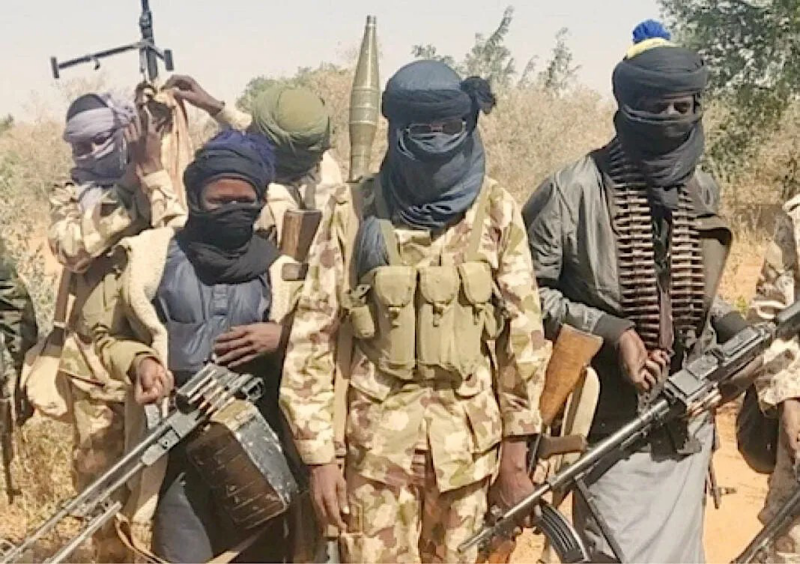
The terrorists did not hide. They did not send a message through a courier or a phone call. They walked into the open market in Talata Mafara Local Government Area of Zamfara State, stood before the traders and the farmers and the mothers who had come to buy and sell, and delivered their demands with the casual confidence of men who own the place. Fifty million naira. Fifty cows. Fifty sheep. Seven days. If the demands were not met, they said, the community would face another attack. Then they left, and the market returned to the uneasy rhythm of people who have learned to keep living even when death is standing in the doorway.
The ultimatum, confirmed by residents who spoke with SaharaReporters on Thursday, September 10, 2026, is not an isolated incident. It is the latest chapter in a long and bloody story that has seen terrorists seize farmlands, rustle cattle, and kill farmers in this part of Zamfara State with what residents describe as little or no resistance from security forces. “This is happening because the government and security agencies have failed to stop these terrorists from attacking us,” one resident said. “They have come here several times, and nothing has been done to prevent them from coming back.” The words are not an exaggeration. In July 2026, terrorists killed 22 farmers working on their farmlands in communities under Sauna Ward of the same local government area. The attackers moved in large numbers on motorcycles, crossing the Anka-Mayachi highway and travelling through Ruwan Gora, Zauren Gora, Tulluwa, Unguwar Shanu, Tsangaya and Tundun Namali before reaching their targets. The operation began at about 2 p.m. and lasted until around 5 p.m., in broad daylight, across a distance of almost 50 kilometres. Residents said they watched and waited for the Nigerian Air Force to respond. No response came.
That massacre, and the dozens of others that have come before it, is the reason why the terrorists now feel comfortable walking into a market and giving orders. “They have taken our farmlands and rustled our cattle, but we have not seen any serious response from the security agencies,” another resident said. “Now they have become so bold that they can enter our market and give us a deadline to bring them money and animals.” The residents said the apparent lack of response had emboldened the terrorists to return openly to the community and issue demands to the same people they had previously attacked. “They are now behaving as if they own this community. They attack us, take our farms and animals, and leave without being stopped. That is why they have the confidence to come back and tell us what we must pay.” One resident put it more bluntly: “They have become very boastful because every time they attack, there is no decisive response. They are now daring the people openly, and that is why this latest demand is frightening.”
The demand for N50 million and 100 livestock is not a conventional ransom. It is not a demand for the release of a kidnapped relative or the price of a single life. It is an attempt to establish control over the community and its economic activities, to extract tribute from a population that has already been stripped of its farms and its herds and its ability to feed itself. “They are no longer hiding,” another resident said. “They are coming into the market openly and giving us orders. They know that nothing serious has happened to them after the previous attacks, and that is why they are becoming more daring.” The situation has made farming increasingly difficult, as villagers are afraid to return to their farms or move their livestock through areas controlled by the terrorists. The land that was supposed to be their livelihood has become a hunting ground, and the roads that were supposed to connect them to markets and neighbours have become routes of terror.
The residents are not asking for the impossible. They are asking the Zamfara State Government and the security agencies to do what they were elected and deployed to do: protect them. “We are asking the government to act before it is too late,” a resident said. “If nothing is done now, we are afraid that they will carry out another attack when the seven days are over.” SaharaReporters contacted the Zamfara State Police Command for comment on the reported ultimatum and threat of another attack. The command’s spokesperson, Yezid Abubakar, had not responded to calls and text messages sent to him as of the time of filing the report. The silence from the police command is not new. It is the same silence that has greeted previous attacks, the same silence that has allowed terrorists to operate freely across large swathes of Zamfara State, the same silence that has turned communities like Talata Mafara into places where people live not in peace but in a state of suspended terror, waiting for the next knock on the door, the next gunshot in the night, the next demand from men who have learned that they can take whatever they want and face no consequences.
The seven-day clock is ticking. The residents of Talata Mafara are waiting. They have waited before, for the security forces who did not come, for the government that did not speak, for the justice that never arrived. This time, they are asking again. The question is whether anyone is listening.
📩 Stone Reporters News | 🌍 stonereportersnews.com
✉️ info@stonereportersnews.com | 📘 Facebook: Stone Reporters News | 🐦 X (Twitter): @StoneReportNew | 📸 Instagram: @stonereportersnews
Add comment
Comments