

Reported by: Oahimire Omone Precious | Edited by: Oravbiere Osayomore Promise.
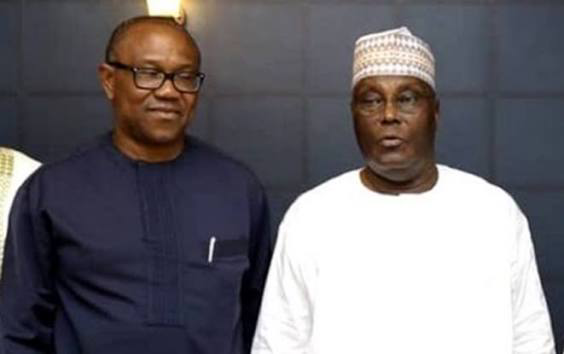
The Nigeria Democratic Congress presidential candidate, Peter Obi, has made it clear that he will not step down for his African Democratic Congress counterpart, Atiku Abubakar, ahead of the 2027 general elections, explaining that at the current stage of politicking, any such decision rests with the political parties rather than the individuals involved. Obi made the declaration during an interview on Arise Television on Thursday, September 10, 2026, where he spoke extensively on national issues, including the ongoing efforts by opposition parties to present a single candidate against President Bola Tinubu in 2027.
When asked whether he would be willing to withdraw from the race in favour of Atiku, Obi responded with a sharp and unambiguous explanation of the political realities that have made such a move impossible. "Do you know where we are now? Where we are now is that I'm a candidate, my leader Atiku is a candidate of another party, so you are talking about two parties coming together; it's no longer me or him as you are now talking about parties coming together," Obi said. He elaborated on the institutional nature of the decision, comparing it to a corporate merger rather than a personal arrangement. "All those parties have candidates, so it's no longer me as Peter talking. It's like a situation where you have two corporations coming together; it's no longer two CEOs going for a drink and saying we are going to work together. It's not me saying I don't want to be this or that; no, we have passed that stage."
Obi's comments come amid mounting pressure from the G-100, a coalition of opposition political groups and stakeholders advocating a united single-ticket ahead of the 2027 election. The group has been pushing for opposition leaders, including Obi, Atiku, and the Allied Peoples Movement presidential candidate, Seyi Makinde, to set aside personal ambitions and unite behind a single candidate capable of challenging the ruling All Progressives Congress. A member of the G-100, Umanu Elijah, told journalists that the coalition had not adopted any single candidate yet but aimed to reach an agreement by September 30 after consultations. Obi, however, made it clear that no individual candidate could unilaterally decide the outcome of such an arrangement. "Atiku will not step down, and neither will I, because both of us have institutional support behind us, and it is only the collective that can come together to create any alliance, not me or Atiku," he said.
The NDC presidential candidate also addressed the recurring claims that he had been offered the opportunity to become Atiku's running mate and rejected it. He dismissed those reports as a misrepresentation of his words and insisted that no such offer had ever been formally presented to him. "My statement was unequivocal, and I am genuinely surprised by the misrepresentation of my words. For the avoidance of doubt, I never stated at any time that I would be vice president to anyone, and it's unequivocal," Obi said. When pressed further on the matter, he was even more direct. "Who said so? Where? I wasn't even in any party where that offer was on the table. I wasn't even in a position where it was being offered and I refused."
Obi's political history with Atiku adds a layer of complexity to the current standoff. In 2019, Obi ran as Atiku's running mate on the platform of the Peoples Democratic Party, and the two shared a political partnership that many believed would continue into the 2023 election cycle. However, the relationship fractured ahead of the 2023 poll, with Obi leaving the PDP and eventually emerging as the presidential candidate of the Labour Party. He went on to finish third in that election, behind Tinubu and Atiku, in a contest that many analysts believed the opposition could have won had it been united. The experience of 2023 looms large over the current discussions, with the G-100 and other stakeholders warning that a divided opposition would only benefit the ruling party.
But Obi's position reflects a deeper challenge facing the opposition: the structural and personal obstacles to unity. The NDC and the ADC are separate political parties with their own constitutions, candidate nomination processes, and institutional interests. Any merger or alliance would require negotiations not just between Obi and Atiku but between the leadership of both parties, their respective campaign structures, and their grassroots networks. The logistics are formidable, and the political will required to overcome them is not guaranteed. Obi's assertion that the parties, not the candidates, must decide the alliance is legally and procedurally correct. It is also a reflection of the reality that both men have built political movements that cannot simply be transferred from one to the other by a handshake. The NDC and the ADC each have their own candidates for other offices, their own structures, and their own supporters who may not accept a merger that relegates their party to a junior role.
The coming weeks will test whether the opposition can overcome these obstacles. The G-100 has set a September 30 deadline for reaching an agreement, but the statements from Obi and his counterparts suggest that the path to a single candidacy is far from clear. Atiku has not publicly commented on Obi's latest remarks, but his camp has previously made it clear that he will not step down. The ADC's National Publicity Secretary, Bolaji Abdullahi, said in August that the party was open to working with other opposition parties but insisted that a coalition was not a precondition for its victory in 2027. That position, combined with Obi's insistence that any alliance must be decided at the party level, suggests that the G-100's efforts may be heading for another setback.
For Obi, the decision to remain in the race is not just a matter of political calculation. He has reiterated his resolve to serve only one term if elected, arguing that four years would be enough to reverse Nigeria's trajectory. "I would not stay one day longer than my one-term presidency. You do not need 100 years to steer this nation in the right direction. Nigeria is heading in the wrong direction today. I just need to reverse course and put it back on track. I am not desperate. In four years, Nigerians will see the difference. I transformed Anambra in four years," he said. Whether that message resonates with the G-100 and the broader opposition will determine whether the 2027 election becomes a genuine contest or another fragmented affair that hands the ruling party an easy victory. For now, Obi has drawn a clear line: the alliance, if it is to happen at all, must be built by parties, not by personalities.
📩 Stone Reporters News | 🌍 stonereportersnews.com
✉️ info@stonereportersnews.com | 📘 Facebook: Stone Reporters News | 🐦 X (Twitter): @StoneReportNew | 📸 Instagram: @stonereportersnews
Add comment
Comments