

Reported by: Oahimire Omone Precious | Edited by: Oravbiere Osayomore Promise.
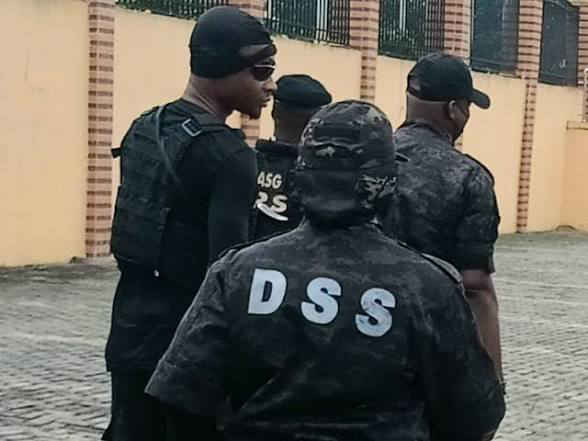
The Department of State Services has alerted Muslim and Christian leaders in Osun State to a credible and disturbing plan by terrorists to attack places of worship, markets, schools and other public gathering centres as part of a broader strategy to disrupt the 2027 general elections. The warning, which was delivered during separate meetings with the Muslim community and the Christian Association of Nigeria in Osogbo on Wednesday, September 9, 2026, has sent shockwaves through a state that has long considered itself insulated from the kind of mass-casualty terrorism that has ravaged parts of northern Nigeria for more than a decade.
According to the intelligence briefing shared with the religious leaders, the attackers had already mapped out targets across Osun State and were expected to move southwards through Kaduna and Jos in Plateau State before pushing further down to the South-West. The DSS reportedly told the leaders that the objective was to cause mayhem, create widespread tension and either prevent the election from holding or induce voter apathy so severe that the democratic process would be fundamentally compromised. The targets identified in the briefing included churches, mosques, markets, schools, clubs and viewing centres, locations where large numbers of civilians gather with little or no security protection.
Alhaji Mustapha Olawuyi, the President of the Osun State Muslim Community, confirmed the meeting and said the threat was genuine. "The meeting is true; it was held on Wednesday in Osogbo. We need to be careful and vigilant," he told Sunday PUNCH. "These people have been trying to infiltrate Osun for quite some time." Olawuyi disclosed that the state had previously turned back around 200 herders who entered from the Ikirun axis, as well as unidentified individuals who arrived on motorcycles and could not speak the local language. His account suggests that the warning was not an abstract intelligence assessment but the culmination of patterns of suspicious activity that had been observed in the state over an extended period. In an audio message sent to imams across Osun, Olawuyi relayed the DSS's specific instructions: no vehicles should be parked close to congregations during Juma'at prayers, nobody should be allowed to sleep in the mosques, night guards should be stationed at every mosque, and both commercial motorcyclists and unfamiliar herders should be treated with heightened suspicion.
Pastor John Adeleke, the Chairman of the Christian Association of Nigeria in Osun State, confirmed that he was invited to a separate session and asked to pass the security warnings to churches and school owners across the state. According to a written report of the Christian briefing that was circulated on WhatsApp among Christian groups, the DSS warned that the attackers had mapped Osun State and that targets included churches, mosques, markets, schools, clubs and viewing centres. Church leaders were told not to allow unknown vehicles to park near their premises because they could contain explosives. They were also advised to question any visitor before allowing them into the church, and to exercise caution with night programmes so that criminals would not exploit the darkness to carry out attacks. "The message is that our people should be security-conscious," Adeleke said. "If they see anything, they should say it."
The DSS alert comes at a moment of heightened political tension across Nigeria. The 2027 general elections are barely four months away, with the presidential poll scheduled for January 16, 2027. Campaign activities have intensified, and the political landscape is already charged with accusations of incitement, intimidation and violence. The previous week alone saw armed thugs attack a Peoples Democratic Party meeting in Enugu, the reported abduction of five Islamic clerics returning from a prayer gathering at Senator Abdulaziz Yari's Zamfara residence, and a protest by residents of Tambuwal Local Government Area in Sokoto State over relentless bandit attacks. In this volatile environment, the possibility that terrorists could exploit the electoral season to launch mass-casualty attacks on soft targets represents a grave escalation that would have profound implications for national security.
Osun State, located in the South-West geopolitical zone, has historically been spared the worst of the terrorism and banditry that have devastated the North-East and North-West. But the DSS warning suggests that the relative peace the state has enjoyed may be under threat. The intelligence points to a deliberate strategy by terrorist networks to expand their operations into southern Nigeria, exploiting the political uncertainty of the election period and the logistical vulnerabilities of states that are not accustomed to confronting armed groups. The South-West has been on alert since 2024, when security agencies warned of plans by bandits and terrorists to infiltrate the region through its porous forest reserves. In March 2024, the police and the military thwarted an attack in Oyo State and arrested some suspects linked to a terrorist network. The DSS's latest alert confirms that the threat has not diminished. If anything, it has become more specific and more urgent.
The federal and Osun State governments have not issued official statements on the alert, but the DSS has been commended by the religious leaders it briefed for what they described as proactive intelligence gathering. Alhaji Olawuyi said the DSS was doing a very good job in terms of intelligence and alerting the people. That commendation is well deserved. But it also raises a fundamental question: if the intelligence is credible enough to warrant a direct warning to religious leaders, what operational measures are being taken to neutralise the threat? Are additional security personnel being deployed to the identified targets? Are surveillance and patrols being intensified around worship centres and markets? Are the suspects being tracked and arrested before they can strike? The DSS alert is a warning, not a solution. It places the burden of vigilance on civilian leaders who have neither the training nor the resources to repel armed attacks. A church committee cannot stop a suicide bomber. A mosque guard cannot confront a gunman. The responsibility for preventing these attacks lies squarely with the security agencies, and the public will be watching to see whether they act on their own intelligence or simply pass the warning down and wait for the worst to happen.
As the 2027 elections approach, the stakes could not be higher. A successful terrorist attack on a place of worship or a market in Osun State would not only claim innocent lives but would also deepen the climate of fear that is already threatening to undermine the credibility of the electoral process. The DSS has done its job by sounding the alarm. The question now is whether the government will do its job by acting on it. For the people of Osun, the message is clear: be vigilant, be careful, and be your brother's keeper. But vigilance alone will not save them if the state fails to protect them.
📩 Stone Reporters News | 🌍 stonereportersnews.com
✉️ info@stonereportersnews.com | 📘 Facebook: Stone Reporters News | 🐦 X (Twitter): @StoneReportNew | 📸 Instagram: @stonereportersnews
Add comment
Comments