

Reported by: Ijeoma G | Edited by: Oravbiere Osayomore Promise.
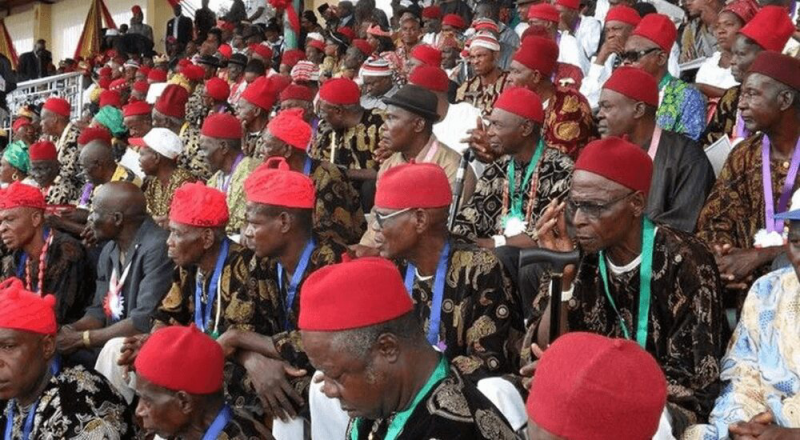
The World Igbo Congress has issued a sweeping and unflinching demand for the modernisation and reopening of eastern coastal ports, a coordinated security strategy for the Southeast, and a renewed commitment to Igbo unity, warning that the challenges confronting Ndigbo in Nigeria and the Diaspora can no longer be addressed through fragmented and reactive responses. The demands were contained in a communiqué issued at the end of the organisation’s 2026 Annual Convention, held in Austin, Texas, United States, from September 3 to 6. The convention, hosted by the Igbo Peoples Congress in Austin, was held under the theme “Igbo Jikota Onu Kwadosie Ike,” meaning “Igbo Unity of Purpose.”
At the heart of the communiqué is a demand that strikes at the economic lifeline of the Southeast: the reopening and modernisation of eastern coastal ports, particularly Bonny, Opobo and Port Harcourt. The Congress argued that restoring maritime access to the Atlantic would stimulate commerce, reduce the region’s dependence on ports in Lagos and the Niger Delta, and strengthen regional economic growth. It also called for the development of integrated transportation infrastructure linking the coast with the hinterland and the Middle Belt, a move it said would deepen economic integration and expand opportunities for trade and investment across the region. The demand is not new. It echoes a longstanding grievance in the Southeast, where traders and manufacturers have long complained that the absence of functional ports in the region imposes crippling costs on businesses, forcing them to transport goods by road to Lagos or Port Harcourt before they can be exported. The Onitsha River Port, completed in 2010, has remained largely comatose, and successive federal administrations have failed to dredge the River Niger to make it navigable for commercial shipping.
The Congress also addressed the security crisis that has engulfed the Southeast in recent years. It called for a comprehensive, community-centred approach involving government institutions, community organisations, traditional institutions, town unions, professionals, security experts, technology specialists and members of the Diaspora. Security, it said, should extend beyond protection from physical violence to include economic security, infrastructure protection, institutional resilience and information awareness. “WIC therefore calls for sustained strategic dialogue on the security of Alaigbo rather than fragmented and reactive responses to crises,” the communiqué said. The organisation’s decision to frame security as a multi-dimensional challenge reflects a recognition that the violence in the Southeast, including attacks on security personnel, the enforcement of sit-at-home orders, and the proliferation of criminal gangs, cannot be resolved through military operations alone. It requires a strategy that addresses the root causes of insecurity, including poverty, unemployment, political marginalisation and the erosion of community trust.
The Congress also reaffirmed its commitment to the proposed Wealth Building Igbo Federal Credit Union, describing it as a vehicle for creating strong and durable Igbo-controlled financial and economic institutions capable of supporting entrepreneurship, financing productive enterprises, and expanding economic opportunities across generations. It reviewed progress toward the initiative and called on Ndigbo worldwide to support it. The organisation also reaffirmed its commitment to the proposed Biafra Memorial Museum Project, saying historical records relating to the Nigeria-Biafra civil war should be preserved for future generations. It urged Ndigbo to support efforts to preserve historical records, oral histories, photographs, documents, artefacts and testimonies relating to the period. The preservation of the Igbo language, culture and identity was also declared an urgent responsibility. The Congress urged Igbo parents and families to deliberately speak Igbo with their children and transmit Igbo values, customs, history and traditions. “Delegates emphasized that a people cannot preserve their collective identity if the language through which that identity is transmitted is allowed to disappear,” the communiqué said.
On what it described as injustice against Ndigbo, the group expressed concern over alleged discriminatory treatment, selective justice, bigotry, political marginalisation and unequal application of state power against Igbo individuals and interests. It reaffirmed the principle that “injustice against any Igbo person should concern all Ndigbo.” The organisation also weighed in on future constitutional arrangements in Nigeria, saying the boundaries of any proposed regions should take into account ethnicity, history, language, culture and the consent of the people rather than being based solely on existing state boundaries. It said future constitutional arrangements should also consider territorial contiguity, minority rights, economic viability, maritime access and democratic consent.
The WIC’s convention was not merely a platform for grievance. It was a call to action. The organisation called on Ndigbo to “transcend internal divisions, resist discrimination and bigotry, demand accountability from leadership, defend the legitimate rights of Igbo people, strengthen Alaigbo economically and institutionally, preserve Igbo civilization for succeeding generations, and work collectively toward a secure, prosperous and dignified future.” The closing line of the communiqué captured the spirit of the gathering: “In unity lies our strength. In collective purpose lies our future.” The Congress said delegates had reviewed political, economic, security, cultural, legal and developmental challenges facing Ndigbo and agreed that collective interests should take precedence over political affiliations, personal ambitions, state loyalties and other divisions. “The challenges confronting Ndigbo require a coordinated and sustained strategy built on unity, collective responsibility, economic empowerment, security, cultural preservation, political engagement, institutional development, and accountable leadership,” the communiqué said.
The timing of the WIC’s demands is significant. Nigeria’s 2027 general elections are less than four months away, and the Southeast is at the centre of political conversations about zoning, power rotation and the demand for a president of Igbo extraction. The Congress’s call for the reopening of eastern ports and a unified security strategy is a direct challenge to the Federal Government, which has been accused of neglecting the region for decades. The demand for port modernisation is also a reminder that the Southeast, despite its status as Nigeria’s most entrepreneurial region, has been denied the infrastructure it needs to compete globally. As the 2027 elections approach, the WIC has made it clear that it will continue to press for the interests of Ndigbo, regardless of which party holds power. Whether the Federal Government will heed the call remains to be seen. What is certain is that the Congress has drawn a line in the sand, and it has done so with the kind of clarity and unity of purpose that it says is essential to the future of the Igbo people.
📩 Stone Reporters News | 🌍 stonereportersnews.com
✉️ info@stonereportersnews.com | 📘 Facebook: Stone Reporters News | 🐦 X (Twitter): @StoneReportNew | 📸 Instagram: @stonereportersnews
Add comment
Comments