

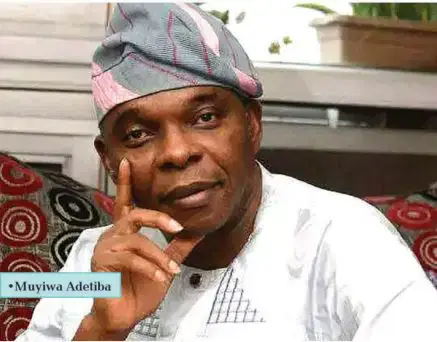
Reported by Ariajegbe Sylvia Esezobor
Veteran journalist Muyiwa Adetiba has launched a blistering critique of Nigeria’s revenue agencies, accusing government officials of operating as self-appointed agents with a de facto license to steal and exploit citizens, in a column published by Vanguard on September 19, 2026.
Adetiba, a former star columnist known for his “Face-To-Face” column in the 1970s and 1980s, drew a pointed analogy to Ian Fleming’s fictional spy James Bond, who held a license to kill for the British Secret Service. “There are many James Bonds in our system who see their uniform or position as a license to ‘kill’,” he wrote. “If not physically, then financially. Or both.” The columnist argued that unlike the romanticized spy of Fleming’s novels, Nigeria’s version of Agent 007 has nothing to romanticize, describing officials who “pretend to make money for government” while ensuring that “for every Naira they make for government, another Naira is shared by them.”
The column singled out the Nigeria Customs Service and tax authorities as the most visible examples of a system that licenses corruption through weak oversight. Adetiba recalled how, in the 1970s and 1980s, grand houses in remote locations were routinely attributed to senior Customs officers, “as if they were the ones who had more money than sense.” He was careful to note that not all Customs officers are corrupt, nor is institutional corruption limited to the Service. The central problem, he argued, is that “the system licenses them because the checks to deter corrupt officers are very weak.”
The columnist devoted significant attention to the abuse of the Best of Judgement assessment, a tax mechanism that allows revenue officials to estimate a taxpayer’s liability when they believe returns are inadequate or missing. Adetiba described a pattern in which individuals with no hidden income are handed crippling assessments based on assumptions rather than evidence. He cited the case of a housewife who received a BOJ of 70 million naira, not because of any discovered income, but because she is married to a successful man, with tax authorities assuming she must have money. The columnist pointed out that the husband would have already paid tax on whatever he transferred to his wife, and that the woman hardly resides in the country anymore.
Other examples in the column painted a troubling picture of a system that targets the compliant while the truly corrupt walk free. A travel agency whose turnover came from selling airline tickets was given an assessment of one hundred million naira. A long-retired military officer trying his hand at business to keep idle hands at bay suddenly found his BOJ jump by about a thousand percent. “It seems the righteous and compliant are being victimized under the guise of raising revenue for government while the real culprits get away,” Adetiba wrote. He argued that those with structured income face savage scrutiny of their inflows, while the very rich with nebulous sources of income escape accountability. In that category, he placed politicians and their business fronts, policymakers, some revenue officers, kidnappers and their sponsors, and scammers and their sponsors.
The columnist alleged that the purpose of a disproportionately high BOJ is not to collect revenue but to intimidate and force a negotiation. “It is often to intimidate and force a negotiation,” he wrote. “It is in the process of a negotiation that ‘ways and means’ of reducing the liabilities are suggested and discussed.” He noted that it is not unusual for a million naira to be paid to government from a seven million naira BOJ, adding: “That is the license they have. That is the power they have.”
The column’s timing is significant. Nigeria’s revenue agencies have faced mounting scrutiny in 2026, with several high-profile cases of alleged corruption and revenue diversion. In June, eight staff members of the Niger State Internal Revenue Service were arrested by police over the alleged diversion of billions of naira belonging to the state government. The same month, a witness in the trial of former Kogi State Governor Yahaya Bello told the Federal Capital Territory High Court that between 50 and 60 percent of commissions earned by his company from consultancy services rendered to the Kogi State Internal Revenue Service were paid to officials of the agency. The EFCC is prosecuting Bello on a 16-count charge bordering on criminal breach of trust and money laundering involving 110.4 billion naira.
The Nigeria Customs Service has also been in the spotlight. In August 2026, the Service rejected allegations of a surge in smuggling, revenue leakage, recruitment impropriety and manipulation of its succession process, following an investigative report published by SaharaReporters. The Service stated that it maintains a “firm, intolerant posture toward corruption, revenue leakage or administrative misconduct,” pointing to the frequency and volume of seizures recorded along key corridors as evidence of its enforcement efforts. In September, Customs seized 56 containers worth over 5.5 billion naira at Onne Port, suspending further transfers to the Tinapa Free Trade Zone pending a full audit.
Adetiba’s column does not offer a detailed policy prescription. Its power lies in the accumulation of anecdotal evidence and the central metaphor of the license. The columnist argues that the system does not merely tolerate corruption but actively enables it by failing to build adequate deterrents. The result, he suggests, is a perverse equilibrium in which revenue officials operate with impunity, compliant taxpayers are squeezed, and the genuinely corrupt enjoy protection. The column ends without a call to action, leaving readers to draw their own conclusions about the gap between the government’s stated commitment to revenue generation and the lived experience of Nigerians who encounter the revenue system.
For the columnist, the metaphor of James Bond serves as both diagnosis and indictment. Bond’s license to kill was a fictional conceit, a plot device that allowed a spy to operate outside the law in service of a higher cause. Nigeria’s revenue officials, Adetiba suggests, have inverted the logic: they operate outside the law in service of themselves, and the state that should hold them to account instead hands them the license. The column is a reminder that corruption in Nigeria is not merely a matter of individual moral failure but a systemic condition sustained by institutional weakness, and that until the checks are strengthened, the licenses will continue to be issued and the exploitation will continue.
Add comment
Comments