

Reported by: Ijeoma G | Edited by: Oravbiere Osayomore Promise.
The village head of Lafagu community in Bagudo Local Government Area of Kebbi State, Alhaji Saidu Mujeli, was on Sunday, September 20, 2026, killed and beheaded by gunmen who stormed his community in an attack that has sent shockwaves through the state and raised urgent questions about the security of traditional institutions in Nigeria's North-West. Mujeli, who held the traditional title of Sarkin Lafagu, was attacked in the early hours of Sunday morning, according to multiple reports. The Kebbi State Police Command confirmed the killing through its spokesperson, SP Bashir Usman, who said in a text message that the incident occurred on Sunday and that some suspects had been arrested in connection with the crime.
The confirmation from the police was terse, and details remain scarce. Usman did not disclose the identity of the deceased traditional ruler, nor did he provide specifics about the circumstances of the attack. "Yes, it is true the village head was killed in Lafagu under Bagudo Local Government. We have made some arrests in respect of the incident and will provide details later," the police spokesperson said. The New Telegraph reported that the incident was disclosed by crisis reporter Bakatsine, who stated that Mujeli, also known as Sarkin Lafagu, was killed by the attackers on Saturday morning. The discrepancy in the reported day of the attack, with some sources saying Saturday and others Sunday, has not been officially resolved.
The killing has triggered an immediate humanitarian response. Residents of the Kaoje-Lafagu area have reportedly fled their homes and relocated to Bagudo town for safety. A community source quoted by Bakatsine said several members of the Fulani community had been killed in attacks in the area and alleged that traditional rulers had also been targeted. "We are requesting justice from the government," the source said, calling for urgent action to protect residents and bring those responsible for the killings to justice. The displacement of residents and the fear that has gripped the community underscore the fragility of security in the region and the inability of the state to protect even its most prominent local leaders.
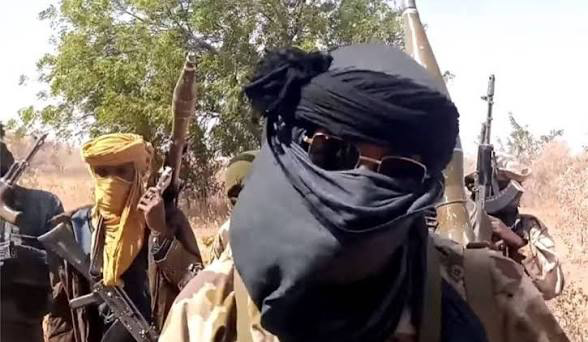
The circumstances surrounding the killing point to a complex and deeply troubling security situation that goes beyond the usual narrative of banditry. Findings by Punch correspondent suggest that the killing may be linked to an armed ethnic militia operating in the area rather than bandits or Lakurawa insurgents. A source, Tukur Kaoje, who spoke to Punch Metro on Sunday, said members of the Fulani, Kambarawa and Bargawa communities had lived together in the area for decades until the recent escalation of insecurity, allegedly associated with cattle rustling and kidnapping. According to him, following the alleged infiltration of some communities by Lakurawa fighters, some residents of the Bargawa and Kambarawa communities reportedly accused Fulani residents of being behind the attacks and subsequently formed armed groups to confront them.
Kaoje alleged that the militia recently attacked Boya village, where scores of Fulani were reportedly killed. "Yes, the village head was beheaded in Lafagu, but we are not sure whether the killers were bandits or Lakurawa. There are allegations that it was carried out by an armed ethnic militia," he said. He described the situation in Lafagu and neighbouring communities as tense, urging the government to urgently intervene to prevent further escalation. He warned that failure to address the situation could lead to a wider cycle of communal violence and make the crisis increasingly difficult to contain. The allegation of ethnic militia involvement, if confirmed, would represent a dangerous escalation in a region already grappling with banditry, kidnapping and the activities of the Lakurawa group, a militant organisation that has exploited existing communal tensions to expand its influence.
Governor Nasir Idris of Kebbi State has condemned the killing in strong terms and assured residents that those responsible would be brought to justice. In a statement signed by his Chief Press Secretary, Ahmed Idris, and made available to journalists on Sunday, the governor expressed profound sadness and deep concern over the incidents around Kaoje, particularly in the Lafagu and Buya communities, which resulted in the loss of lives, including the death of the village head. "I received with profound sadness and deep concern the unfortunate incidents that occurred around Kaoje, particularly in the Lafagu and Buya communities, which resulted in the loss of lives, including the death of the Village Head of Lafagu, Alhaji Saidu Mujeli," Idris said. He said arrangements were being intensified with security agencies to strengthen operations in the affected communities and protect lives and property.
The governor also assured residents who had fled their homes, farmlands and businesses that the government was working to create conditions for their safe return and the restoration of normal activities. He commiserated with the families of the deceased, the District Head of Kaoje, Alhaji Mustapha Usman Kaoje, the Sarkin Yamma of Kaoje, Alhaji Yakubu Abubakar Kaoje, as well as other community and political leaders affected by the attacks. He urged residents to remain calm and cooperate with security agencies by providing information that could assist efforts to apprehend those responsible. The governor's response, while prompt and empathetic, has not addressed the deeper questions about why a traditional ruler could be beheaded in his own domain despite the presence of security agencies in the state.
The killing of the Sarkin Lafagu is not an isolated incident. It follows a pattern of violence that has claimed the lives of traditional rulers and community leaders across Nigeria's North-West in recent years. Traditional rulers are often targeted because of their influence, their role in mediating disputes, and their ability to mobilise communities against criminal elements. The beheading of Mujeli adds a particularly gruesome dimension to the violence, signalling a level of brutality that goes beyond the ordinary calculus of banditry for ransom. It suggests a deliberate attempt to terrorise the community into submission and to eliminate the symbols of traditional authority that provide a counterweight to criminal power.
The security implications of the killing are profound. The community source's allegation that traditional rulers had been targeted raises the spectre of a coordinated campaign against traditional institutions. If such a campaign exists, it would represent a direct assault on the social fabric of the region, undermining the very structures that have historically maintained order and resolved disputes at the local level. The police have arrested some suspects, but the investigation is ongoing, and the full picture of what happened in Lafagu on that Sunday morning remains unclear. What is clear is that the killing has deepened the sense of insecurity in Bagudo and surrounding areas and has raised urgent questions about the ability of the state to protect its citizens.
For the people of Lafagu, the loss of their village head is a personal tragedy and a collective trauma. Alhaji Saidu Mujeli was not just a traditional ruler; he was a father, a community leader, and a symbol of the continuity and stability of his people. His beheading has left a void that will be difficult to fill. As the community mourns and the displaced seek refuge in Bagudo, the question on everyone's mind is whether the government's promise of justice will be matched by action. The police say they have made arrests. The governor says he will ensure justice. But for the people of Lafagu, the measure of justice will be whether the killers are found, prosecuted, and made to face the full weight of the law. Anything less would be a betrayal of the trust that communities place in the state to protect them.
📩 Stone Reporters News | 🌍 stonereportersnews.com
✉️ info@stonereportersnews.com | 📘 Facebook: Stone Reporters News | 🐦 X (Twitter): @StoneReportNew | 📸 Instagram: @stonereportersnews
Add comment
Comments