

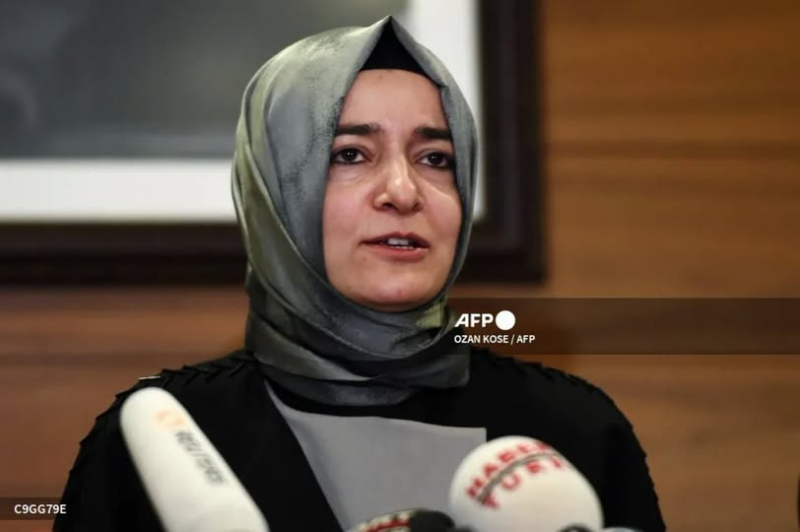
Turkish prosecutors have moved to freeze the assets of former minister Fatma Betül Sayan Kaya and her husband, İlyas Kaya, as authorities widen an investigation into an investment fund crisis that has shaken the country’s financial markets and generated allegations of extraordinary profits from share trading.
The Istanbul Chief Public Prosecutor’s Office announced on Tuesday, September 29, 2026, that it had written to relevant institutions concerning the freezing of all assets belonging to Kaya and her husband. The action forms part of an investigation being conducted by the prosecutor’s Terrorism Financing and Money Laundering Crimes Investigation Bureau.
Kaya previously served as Turkey’s Minister of Family and Social Policies between 2016 and 2018 and, until last weekend, was a deputy chair of President Recep Tayyip Erdoğan’s governing Justice and Development Party, commonly known as the AKP.
She resigned from her party positions following growing controversy over allegations concerning share transactions conducted before Turkey’s investment fund crisis erupted.
The most significant allegations were raised by the opposition Yeni Parti, whose officials questioned transactions involving shares in Özata Denizcilik, a Turkish shipbuilding company.
Opposition representatives alleged that Kaya invested approximately 63.4 million Turkish lira, equivalent to around $1.3 million at reported exchange rates, in shares in April and sold the investment in September for approximately 1.3 billion lira, or roughly $26.5 million.
Her husband has also faced allegations concerning substantial profits.
Opposition officials alleged that İlyas Kaya invested approximately 100 million lira and received about 826 million lira when his shares were sold. Taken together, the opposition has alleged that the couple generated gains approaching 2.2 billion lira from their investments.
Those figures remain allegations rather than established findings of guilt.
The prosecutor’s announcement concerning the asset freeze did not declare that Kaya or her husband had illegally earned the money, nor did it establish that they participated in market manipulation.
The distinction is important because an asset freeze during an investigation is a precautionary legal measure and does not by itself amount to a criminal conviction.
Yeni Parti officials have alleged that the timing of Kaya’s transactions raises questions about whether she received advance information concerning the approaching market turmoil.
One opposition representative claimed it was “clear” that she had received insider information, but that remains the opposition party’s allegation and has not been established by a court.
Kaya has not admitted wrongdoing.
When announcing her resignation from her AKP positions, she said she considered it appropriate to take “political responsibility” so that allegations surrounding the controversy could be investigated independently and impartially.
President Erdoğan accepted her resignation.
The controversy forms part of a considerably wider investigation into Turkey’s investment fund industry and suspected manipulation of shares traded on the Istanbul market.
The crisis intensified in mid-September after investment funds encountered difficulties satisfying redemption requests from investors. Several of the affected funds held significant positions in thinly traded stocks, making it difficult to sell large quantities without substantially affecting prices.
Turkey’s Capital Markets Board subsequently ordered the liquidation of 131 investment funds operated by seven asset-management companies.
More than 455,000 individual investors were reported to have holdings in the affected funds, whose reported assets were valued at approximately $18 billion or more before liquidation.
The reported value of those assets does not necessarily represent the amount investors will eventually recover.
Authorities have been investigating whether some share prices were artificially inflated and whether particular investors received information that allowed them to exit positions before the market disruption became public.
Justice Minister Akın Gürlek said investigators were examining large purchases and sales conducted during the period leading to the crisis.
Authorities had previously frozen assets belonging to dozens of companies, investment funds and individuals as investigators examined potentially suspicious transactions. Travel restrictions were also imposed on some individuals.
Some restrictions on companies and funds have since been lifted following further assessments by Turkey’s Capital Markets Board, while investigations involving individuals have continued.
The Özata Denizcilik transactions have attracted particular attention.
Yeni Parti representatives alleged that Kaya purchased shares largely connected with the shipbuilder for about 63.4 million lira in April and disposed of them shortly before the market turmoil in September for considerably more.
The Capital Markets Board has separately filed criminal complaints against individuals concerning transactions in Özata shares and imposed trading restrictions.
However, an earlier regulatory bulletin concerning those actions did not name Kaya or her husband among the individuals sanctioned, meaning the regulatory action should not be presented as proof of the opposition allegations against the couple.
The investigation has become politically sensitive because of Kaya’s senior position within Erdoğan’s governing party.
AKP spokesman Ömer Çelik has said the party will not protect individuals found to have engaged in corruption, abuse or conduct that causes harm.
Erdoğan has also defended his party’s record while responding to criticism from political opponents.
“The AK Party is clean, just as its name suggests,” the Turkish president told party members, rejecting opposition attempts to associate his administration with wrongdoing arising from the investment fund controversy.
The Turkish government has simultaneously sought to reassure investors that the difficulties surrounding the funds do not threaten the stability of the wider financial system.
Treasury and Finance Minister Mehmet Şimşek has said authorities are prioritising the protection of investment, employment, production and exports while legal proceedings continue against those suspected of disrupting markets.
The scandal nevertheless raises important questions for Turkish regulators about market supervision, transparency and whether investors with privileged information were able to avoid losses before ordinary investors understood the extent of the problems.
For the hundreds of thousands of people whose investments were held by affected funds, the immediate concern is how much of their money can ultimately be recovered through the liquidation process.
For Kaya, the legal question is different.
Prosecutors must determine whether the unusually profitable transactions alleged by opposition politicians resulted from legitimate investment decisions or involved conduct prohibited under Turkish capital-market laws.
Until that investigation produces evidence tested through the legal process, claims that Kaya personally made approximately $26 million through improper trading remain allegations.
What has now been officially confirmed is that prosecutors have taken the significant step of requesting the freezing of all assets belonging to Kaya and her husband as part of the wider fund investigation.
That action, combined with Kaya’s resignation from her senior AKP positions, has moved the controversy beyond a political accusation and into an active prosecutorial investigation.
But an investigation and asset freeze are not findings of guilt.
The coming stages will determine whether prosecutors can substantiate allegations of improper trading, establish where the disputed profits came from and identify whether individuals received privileged information before the investment fund crisis became public.
Until then, the clearest distinction remains between what Turkey’s prosecutors have officially confirmed and what opposition politicians have alleged: Kaya and her husband are subject to an asset-freezing action connected to the fund investigation, while the allegation that she improperly profited by about $26 million remains to be proven.
📩 Stone Reporters News | 🌍 stonereportersnews.com
✉️ info@stonereportersnews.com | 📘 Facebook: Stone Reporters News | 🐦 X (Twitter): @StoneReportNew | 📸 Instagram: @stonereportersnews
Add comment
Comments