

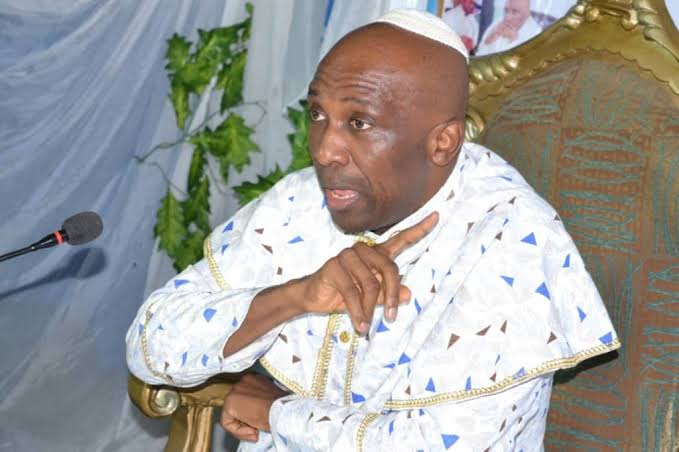
The leader of INRI Evangelical Spiritual Church, Primate Elijah Ayodele, has rejected claims that he categorically predicted President Bola Ahmed Tinubu would lose the 2027 presidential election. The Lagos-based cleric said statements attributed to him had been taken out of context, creating a misleading impression about his position on the president's re-election ambition. His clarification follows the circulation of reports and social media posts suggesting that he had already declared the outcome of the forthcoming election.
In a statement issued on August 4, 2026, through his media aide, Osho Oluwatosin, Ayodele explained that his comments during a Sunday church service had been misrepresented. According to the cleric, he had spoken about the possible consequences of an electoral defeat for President Tinubu but had not predicted that such a defeat would occur. He maintained that the original statement was conditional and that presenting it as a definite prophecy changed its meaning.
Ayodele explained that he had said a defeat in 2027 would be painful for Tinubu, rather than declaring that the president would lose. He expressed concern that the distinction had been ignored in several reports circulating online. The cleric insisted that his comments were available in recorded video footage and could be checked against the claims being attributed to him.
The clarification is significant because Ayodele has repeatedly commented on Nigeria's political developments, including the prospects of leading politicians and the country's economic and security challenges. His statements frequently attract public attention, particularly when they concern presidential elections. However, the cleric maintained that his remarks should be reported accurately, irrespective of how individuals interpret his prophecies.
Ayodele also accused some political actors of deliberately distorting his statements to advance their interests. He argued that attributing predictions to him without examining the original recordings created unnecessary controversy and misled members of the public. His statement urged media organisations to seek clarification from his office whenever uncertainty arose about his pronouncements.
The August clarification followed an earlier controversy in July 2026 involving a video allegedly altered using artificial intelligence. The video purportedly showed Ayodele declaring that Tinubu would not return to office after the 2027 election. The cleric disputed its authenticity and accused those circulating it of manipulating his message.
In a July 6 statement, Ayodele specifically criticised former presidential aide Lauretta Onochie over the circulation of the disputed material. He alleged that the video had been manipulated to create the impression that he had endorsed a particular electoral outcome. The allegation was made by the cleric, and the available reporting did not establish an independent forensic examination of the video.
Ayodele maintained that he had not declared either a winner or a loser during the presentation of the 2026–2027 edition of his annual prophecy publication, Warnings to the Nations. He said he had not received the spiritual direction necessary to make such a declaration publicly. He further advised the public to rely on recordings published through his official communication channels when assessing statements attributed to him.
The controversy illustrates the importance of distinguishing a conditional statement from a definite prediction. Saying that a political figure could lose an election under certain circumstances is different from declaring that the person will lose. In Ayodele's case, that distinction is central to his objection to the reports that circulated in August.
Nevertheless, the cleric has issued warnings about political difficulties facing the Tinubu administration. On September 22, 2026, he expressed concern about public dissatisfaction and suggested that the president's re-election campaign could encounter challenges unless the government addressed issues affecting Nigerians.
In the statement, also communicated through Oluwatosin, Ayodele argued that dissatisfaction with the administration extended beyond ordinary voters to influential political figures. He maintained that the government needed to respond to public concerns rather than assume that established political relationships would guarantee continued support.
He also warned against relying primarily on financial resources to secure electoral support. According to the cleric, public confidence, government performance and the ability to address grievances would remain important issues during the election period. His remarks were presented as political and spiritual warnings rather than findings from an opinion poll.
Ayodele separately identified insecurity as a major concern for the administration. In September, he warned that worsening security conditions could affect political activities and public confidence in the government. He urged the authorities to strengthen their response to security threats and take steps to prevent further deterioration.
These statements demonstrate that Ayodele has criticised aspects of the administration while stopping short of issuing the unconditional prediction attributed to him. His warnings concern circumstances he believes could affect the president's political position, but they do not establish how Nigerians will vote in 2027.
The distinction also matters because electoral outcomes are determined by votes cast and counted under the applicable electoral laws. Religious predictions, political commentary and personal assessments may influence public discussion, but they do not constitute verified evidence of a future election result.
President Tinubu, who assumed office on May 29, 2023, is constitutionally eligible to seek a second four-year term. His administration has faced debate over economic reforms, living costs, insecurity and other national issues, while opposition parties have continued preparations for the next general election.
The All Progressives Congress remains the president's political platform, while opposition organisations, including the Peoples Democratic Party and African Democratic Congress, are involved in political activities ahead of the contest. The positions of these parties and their candidates will be determined through their respective nomination procedures and the electoral process.
Ayodele's clarification also places responsibility on publishers and social media users to distinguish authenticated statements from altered recordings or incomplete quotations. The cleric has repeatedly complained that inaccurate reports about his prophecies can mislead the public and generate unnecessary political controversy. His office has encouraged journalists to verify disputed statements before publication.
For now, the verified position is that Ayodele has warned Tinubu about political challenges but has denied making the categorical declaration that the president will lose the 2027 election. Any report attributing that definite prediction to him would contradict his publicly issued clarification unless supported by a separate, authenticated statement.
As preparations for the election continue, Ayodele's remarks remain part of the wider public discussion about Nigeria's political future. The outcome itself remains undecided and will depend on the electoral process, not on an unverified quotation or a prophecy presented without its original context.
📩 Stone Reporters News | 🌍 stonereportersnews.com ✉️ info@stonereportersnews.com | 📘 Facebook: Stone Reporters News | 🐦 X (Twitter): @StoneReportNew | 📸 Instagram: @stonereportersnews
Add comment
Comments