

Reported by: Ijeoma G | Edited by: Oravbiere Osayomore Promise.
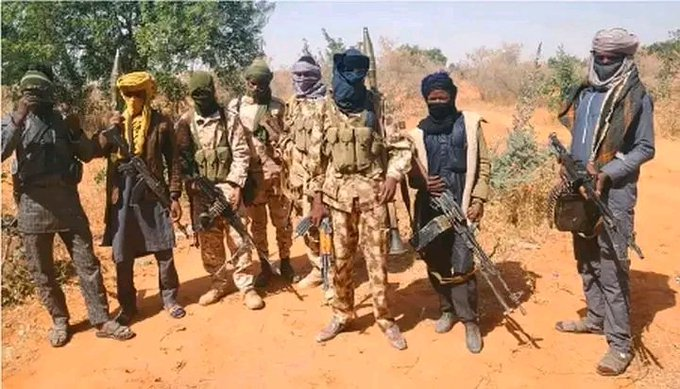
A deadly assault on Nigerian military personnel in northwestern Nigeria has intensified concerns over the evolving security landscape, following reports that suspected Lakurawa militants killed several soldiers in Girinmasa community, located within Yauri of Kebbi State.
The incident, which occurred earlier today, has sent shockwaves through both military circles and local communities, highlighting the persistent threat posed by armed groups operating across Nigeria’s northwestern and north-central regions. While official confirmation from the Nigerian military authorities is still pending as of press time, multiple local sources and security observers indicate that the attack was carried out by members of the Lakurawa group, a relatively lesser-known but increasingly active militant faction in the region.
Residents of Girinmasa described scenes of chaos and fear as heavily armed assailants reportedly ambushed a contingent of Nigerian soldiers stationed or on patrol within the area. Eyewitness accounts suggest that the attackers arrived in significant numbers, overpowering the troops after a brief but intense exchange of gunfire. The exact number of casualties has not been independently verified, but reports consistently indicate that multiple soldiers lost their lives during the confrontation.
The Lakurawa group, believed to operate along remote forest corridors and border communities, has been linked by local intelligence sources to a network of armed bandits and extremist elements exploiting weak security coverage in rural areas. Analysts note that while the group does not yet have the same national recognition as larger insurgent factions, its operational pattern reflects a growing trend of decentralized militant activity across Nigeria’s northwest.
Security experts have long warned that regions like Yauri, with their proximity to dense forests and porous boundaries, are particularly vulnerable to such attacks. These areas often serve as transit routes or hideouts for armed groups, allowing them to launch surprise assaults on both civilian populations and security forces before retreating into difficult terrain.
The attack in Girinmasa underscores the risks faced by Nigerian troops engaged in ongoing counterinsurgency and anti-banditry operations. Over the past decade, the military has been stretched across multiple fronts, combating insurgency in the northeast, banditry in the northwest, and communal conflicts in other parts of the country. This multi-front engagement has raised concerns about resource allocation, troop fatigue, and intelligence coordination.
Local authorities in Yauri are said to be working with security agencies to assess the situation and prevent further escalation. Community leaders have called for urgent reinforcement of military presence and improved surveillance in vulnerable areas, emphasizing the need for proactive measures rather than reactive responses.
The incident has also reignited public discourse حول Nigeria’s broader security challenges, particularly the proliferation of armed groups operating with relative impunity in remote regions. Critics argue that despite repeated military offensives and government assurances, attacks on both civilians and security personnel continue to occur with alarming frequency.
In recent months, there has been a noticeable increase in coordinated assaults on military formations and patrol units across various states. Analysts interpret this trend as a sign that armed groups are becoming more organized, better equipped, and increasingly willing to confront state forces directly. This shift marks a significant evolution from earlier patterns of primarily targeting unprotected rural communities.
Residents in Girinmasa and surrounding villages have reportedly begun fleeing their homes, fearing retaliatory violence or follow-up attacks. Displacement remains a recurring consequence of such incidents, placing additional strain on local resources and humanitarian efforts. Aid organizations operating in the region have repeatedly highlighted the challenges of delivering assistance in areas affected by insecurity, including limited access and logistical constraints.
At the national level, the attack is likely to intensify calls for a reassessment of Nigeria’s security strategy. Policymakers and security analysts have advocated for a more integrated approach that combines military action with intelligence gathering, community engagement, and socio-economic interventions aimed at addressing the root causes of insecurity.
The Nigerian military has, in previous statements, reiterated its commitment to safeguarding the nation’s territorial integrity and protecting citizens from threats posed by insurgents and bandits. However, incidents such as the Girinmasa attack highlight the complexity of the challenge and the need for sustained and adaptive responses.
There are also concerns بشأن the potential cross-border dimensions of the threat. Kebbi State shares boundaries with neighboring countries, raising the possibility that armed groups may exploit transnational networks to access weapons, recruit fighters, or evade security operations. Regional cooperation among West African states has been identified as a critical component in addressing these dynamics, though implementation remains uneven.
For families of the fallen soldiers, the attack represents a profound loss. Military casualties often resonate deeply within communities, serving as a stark reminder of the human cost of ongoing security operations. Advocacy groups have called for enhanced support systems for the families of service members, including timely compensation and access to welfare programs.
As investigations continue, attention is also expected to focus on intelligence gaps that may have contributed to the success of the ambush. Experts emphasize that improving real-time intelligence and early warning systems is essential in preventing similar incidents in the future. This includes leveraging local knowledge and strengthening collaboration between security agencies and community stakeholders.
The broader implications of the Girinmasa attack extend beyond immediate security concerns. Persistent instability in regions like Kebbi State has economic and social consequences, affecting agriculture, trade, and overall development. Farmers, in particular, face increasing risks, which can disrupt food production and contribute to inflationary pressures nationwide.
While the full details of the attack are still emerging, the incident adds to a growing list of security challenges confronting Nigeria. It reinforces the urgency of comprehensive and sustained efforts to address the underlying factors driving violence, including poverty, unemployment, and weak governance structures in vulnerable regions.
As the nation awaits official confirmation and further details from military authorities, the focus remains on ensuring the safety of affected communities and preventing additional attacks. For now, the events in Girinmasa stand as a sobering reminder of the ongoing struggle to achieve lasting peace and stability in parts of Nigeria.
📩 Stone Reporters News | 🌍 stonereportersnews.com
✉️ info@stonereportersnews.com | 📘 Facebook: Stone Reporters | 🐦 X (Twitter): @StoneReportNew | 📸 Instagram: @stonereportersnews
Add comment
Comments