

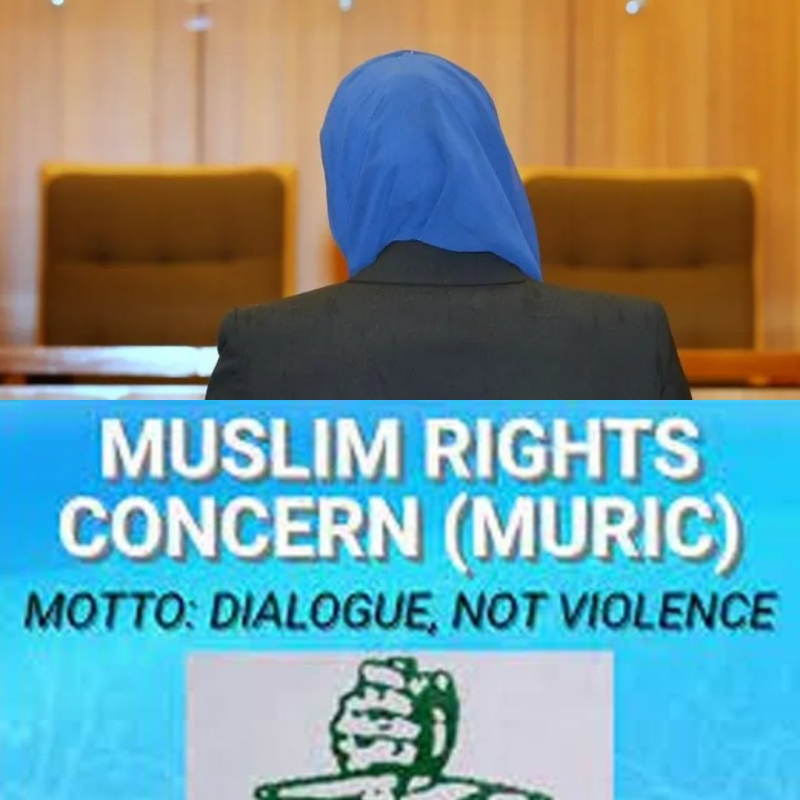
The Muslim Rights Concern (MURIC) has demanded the immediate suspension of examinations across Nigerian Law School campuses following allegations that female Muslim candidates wearing hijabs were harassed, intimidated and prevented from entering examination halls unless they removed their religious head coverings.
The organisation made the demand in a statement issued on Sunday, November 1, 2026, by its founder and Executive Director, Professor Ishaq Akintola. The allegations concern incidents reportedly occurring during the Bar Final Examinations on Saturday, October 31, at examination centres across Nigeria.
Akintola alleged that several candidates experienced discriminatory treatment shortly before their examinations, with some reportedly kept outside examination halls for approximately one hour. He said certain students were eventually admitted only after complying with instructions to remove their hijabs.
MURIC described the reported incidents as violations of religious freedom, dignity and equal treatment. It demanded an investigation, appropriate remedies for affected candidates and assurances that similar incidents would not occur during subsequent examinations.
The organisation also called for candidates whose examinations were disrupted to be offered another opportunity to sit the affected papers, particularly those allegedly delayed for at least 15 minutes.
Akintola said MURIC received numerous telephone calls, text messages and online complaints from distressed candidates, parents and concerned members of the Muslim community while the incidents were unfolding.
He argued that examination officials had no justification for interfering with students' lawful educational pursuits because of their religious clothing.
The allegations have not been independently established across every Nigerian Law School campus. At the time of reporting, the institution had not issued a publicly verified response addressing MURIC's latest demands.
The controversy follows an earlier disagreement over a reported directive restricting hijabs during the final examinations.
On October 31, MURIC had urged the Nigerian Law School to permit female Muslim candidates to wear their head coverings, following reports that a restriction had been communicated verbally.
The organisation linked the alleged directive to an earlier incident involving a candidate reportedly found with an earpod during an examination.
Akintola acknowledged that examination misconduct should attract appropriate disciplinary action after proper investigation. However, he argued that the alleged actions of one candidate could not justify restrictions against others sharing her religious identity.
He maintained that examination integrity and religious accommodation should not be treated as incompatible objectives.
The Hijab Rights Advocacy Initiative also intervened before the examinations, advising candidates that hijabs were permissible under an existing dress standard, provided the coverings were shoulder length.
Its director, Mutiat Orolu-Balogun, referred to requirements associated with the Nigerian Law School's formal dinners and encouraged candidates to comply with the specified length.
That clarification suggested that the dispute involved not only whether hijabs were permitted but also how examination supervisors interpreted and implemented existing clothing requirements.
Further allegations emerged from Abuja, where lawyer and hijab rights advocate Amasa Firdausa reported observing inconsistent treatment at examination halls.
In an account dated October 31, she said candidates wearing hijabs entered four of five halls she visited without obstruction.
However, she alleged that supervisors at the Multipurpose Hall required female candidates to remove their hijabs and rearrange them as turbans before entering.
Amasa reported seeing two candidates crying during the confrontation and expressed concern that the experience could affect their concentration and performance.
Her account provides a specific allegation concerning one examination venue, although it does not independently establish identical practices across other campuses.
The Nigerian Law School's response to these particular claims remains important for determining whether supervisors acted under official instructions or interpreted regulations independently.
MURIC has grounded its objections in constitutional protections, particularly Section 38 of Nigeria's 1999 Constitution, which guarantees freedom of thought, conscience and religion.
The organisation also cited Section 42, concerning protection against discrimination, and Section 34, which safeguards human dignity.
Akintola referred to the Supreme Court's 2022 decision concerning the right of female Muslim students to wear hijabs in Lagos public schools.
That judgment forms part of Nigeria's legal debate over religious clothing in educational institutions, although its application to particular professional examination regulations requires consideration of the relevant facts and legal framework.
The organisation argued that an institution responsible for educating future lawyers should demonstrate particular respect for constitutional protections and judicial decisions.
MURIC further warned that it could organise peaceful demonstrations at Nigerian Law School campuses if its demands were ignored.
According to Akintola, the proposed protests would involve parents of affected candidates, Muslim youths and other stakeholders concerned about religious freedom.
He insisted that any demonstrations organised by MURIC would remain peaceful, consistent with the organisation's stated commitment to dialogue rather than violence.
The group also urged Muslim parents and community leaders to become more involved in protecting students against alleged discrimination.
The threatened protests raise questions about how the authorities might address grievances without disrupting examinations for candidates who were not directly affected.
A comprehensive response would require establishing what happened at individual centres, identifying applicable examination instructions and determining whether candidates suffered measurable disadvantages.
It would also require hearing from examination supervisors, school management and affected students before conclusions about responsibility are reached.
The controversy recalls Amasa's experience in 2017, when she was initially prevented from participating in a Call to Bar ceremony because she insisted on wearing her hijab.
That dispute attracted national attention and intensified discussion about religious accommodation within Nigeria's legal profession.
The present allegations demonstrate that disagreements over religious clothing remain sensitive, particularly when they arise during examinations with significant consequences for candidates' professional futures.
Examination authorities have legitimate responsibilities to prevent cheating, verify candidates' identities and maintain consistent standards.
Those responsibilities must nevertheless be exercised lawfully, proportionately and without unjustified discrimination.
For affected candidates, uncertainty over entry requirements can create unnecessary anxiety during an already demanding examination period.
For the Nigerian Law School, the immediate challenge is establishing a consistent policy that protects examination integrity while respecting applicable constitutional rights.
MURIC's demand for a nationwide suspension remains a proposal, not an announced decision by the institution.
Whether examinations will continue, affected papers will be repeated or disciplinary measures will follow depends on the outcome of official consideration and any investigation.
The controversy ultimately places renewed attention on fairness, religious liberty and administrative accountability within an institution central to Nigeria's legal profession.
📩 Stone Reporters News | 🌍 stonereportersnews.com
✉️ info@stonereportersnews.com | 📘 Facebook: Stone Reporters News | 🐦 X (Twitter): @StoneReportNew | 📸 Instagram: @stonereportersnews
Add comment
Comments