

Reported by: Oahimire Omone Precious | Edited by: Oravbiere Osayomore Promise.
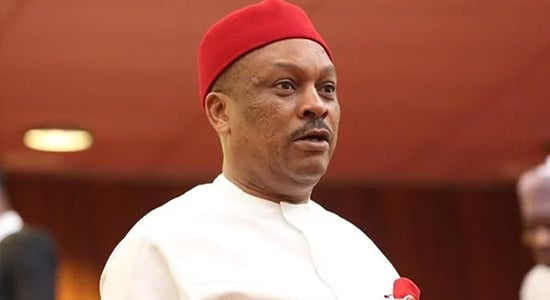
The internal crisis within Nigeria’s main opposition party has intensified as Samuel Anyanwu, a prominent chieftain of the Peoples Democratic Party (PDP), formally approached the Court of Appeal seeking to overturn a lower court judgment that upheld his expulsion from the party.
In a notice of appeal filed on April 10, 2026, Anyanwu challenged the ruling of the Federal Capital Territory High Court, which had earlier dismissed his suit against the disciplinary action taken by the party. The appeal marks the latest development in a protracted legal and political battle that has come to symbolize the widening divisions within the PDP.
The dispute traces back to March 2025, when a disciplinary committee chaired by Tom Ikimi recommended Anyanwu’s expulsion over allegations of anti-party activities. The committee’s decision followed a petition submitted by a PDP-affiliated group, which accused him of conduct deemed detrimental to the party’s cohesion and interests.
According to the committee, Anyanwu failed to appear before it despite being given an opportunity to defend himself against the allegations. This absence was cited as part of the justification for recommending his expulsion, a move later ratified during the party’s national convention in November 2025.
That convention, held in Ibadan, saw a sweeping purge of several high-profile figures, including Nyesom Wike, Minister of the Federal Capital Territory, and Ayo Fayose, alongside other senior members. The decision was widely viewed as a turning point in the PDP’s internal struggle, deepening factional lines and triggering multiple legal challenges.
Dissatisfied with his expulsion, Anyanwu initially approached the FCT High Court, arguing that the disciplinary process was flawed and that his removal from the party violated due process. However, in January 2026, the presiding judge, Yusuf Halilu, dismissed the suit, ruling that there was no legal basis to grant the reliefs sought.
In his judgment, Halilu held that the PDP disciplinary committee had afforded Anyanwu a fair opportunity to present his case and that he failed to demonstrate that the procedure was fundamentally defective. The court also emphasized the principle that internal party matters should, in most cases, be resolved within the party’s own mechanisms before recourse to litigation.
It is this judgment that Anyanwu is now seeking to overturn at the appellate level. In his filing, he outlined nine grounds of appeal, arguing that the lower court erred in its interpretation of both the facts and the law.
A central plank of his argument is that the trial court wrongly held that his failure to exhaust internal party remedies rendered his suit premature. Anyanwu contends that the circumstances of his case justified judicial intervention and that the court should not have declined jurisdiction on that basis.
He further argued that the court erred in concluding that he was inviting it to interfere in the internal affairs of a political party. According to him, the issues raised in his suit go beyond mere party politics and touch on enforceable legal rights that fall within the court’s purview.
The respondents in the appeal include key figures within the PDP hierarchy, among them Iliya Umar Damagun, who is listed both in his personal capacity and as a representative of the party’s National Executive Committee. Other respondents include members of the disciplinary committee and party officials involved in the expulsion process.
The legal battle unfolds against the backdrop of a deeply fractured PDP, which currently operates under competing factions, each laying claim to legitimacy and control of the party structure. One faction is associated with Kabiru Turaki, while another is aligned with interests linked to Wike and led by Abdulrahman Mohammed.
Both factions have engaged in parallel political activities, including conventions and leadership appointments, further complicating the party’s internal dynamics. Notably, the faction loyal to Wike recently conducted its own national convention, during which Mohammed and Anyanwu were announced as national chairman and secretary, respectively—an outcome that underscores the contested nature of leadership within the party.
Political analysts say the ongoing litigation reflects a broader struggle for control and direction within the PDP as it seeks to reposition itself ahead of future electoral contests. The party, which has historically been a dominant force in Nigerian politics, has in recent years grappled with defections, internal dissent, and leadership disputes.
The outcome of Anyanwu’s appeal could have significant implications not only for his political future but also for the balance of power within the PDP. A favorable ruling could potentially reinstate him and alter the dynamics within one of the party’s factions, while an unfavorable decision may further entrench the current divisions.
Legal experts note that appellate courts are often cautious in intervening in internal party matters, particularly where due process appears to have been followed. However, they also acknowledge that courts retain the authority to intervene where there is clear evidence of procedural irregularity or violation of legal rights.
As the case progresses, attention will focus on how the Court of Appeal navigates these competing considerations, including the extent to which it is willing to scrutinize the internal processes of a political party.
For now, the PDP remains mired in a complex web of legal disputes and factional rivalries, with multiple cases pending in various courts. These developments continue to shape the party’s trajectory and raise questions about its ability to present a unified front in Nigeria’s evolving political landscape.
The appeal by Anyanwu adds another layer to this unfolding crisis, highlighting the intersection of law and politics in the contest for influence within one of the country’s प्रमुख opposition parties. The coming months are likely to be critical in determining both the legal and political outcomes of this high-stakes dispute.
📩 Stone Reporters News | 🌍 stonereportersnews.com
✉️ info@stonereportersnews.com | 📘 Facebook: Stone Reporters News | 🐦 X (Twitter): @StoneReportNew | 📸 Instagram: @stonereportersnews
Add comment
Comments