

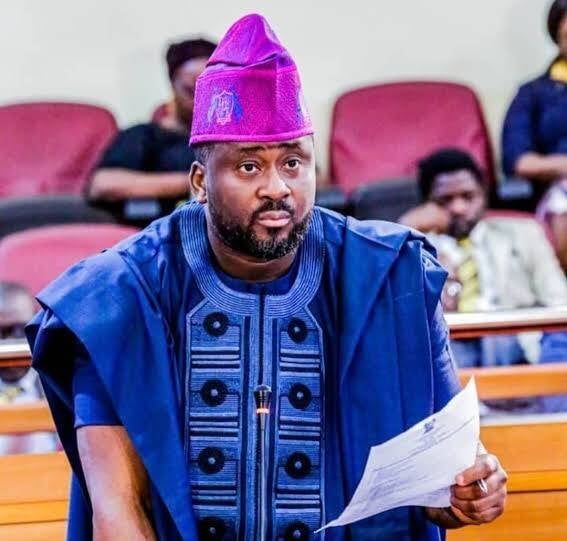
Nigerian actor-turned-lawmaker Desmond Elliot has drawn renewed public attention after reiterating his position on political ethics, stating that his personal standard for leadership excludes involvement in the misappropriation of public funds.
The comment was made on Tuesday, June 24, 2026, during a televised interview on the Morayo Brown Show, where the Lagos State House of Assembly member representing Surulere Constituency I reflected on governance, accountability and his experience in public office in Lagos State, according to verified reporting from Nigerian media outlets.
In the interview, Elliot insisted that his approach to politics is guided by service delivery rather than personal enrichment, adding that he does not engage in the diversion of public resources. The remark was made in response to broader discussions on governance and public trust in political leadership.
His statement quickly circulated across media platforms and social networks, reigniting public debate about ethical standards among elected officials in Nigeria, where concerns over corruption in governance remain a recurring national issue.
Elliot, who has served in the Lagos State legislature since 2015 after being elected under the All Progressives Congress, has previously highlighted constituency development projects such as improvements in electricity supply and infrastructure within Surulere as part of his achievements in office.
The latest remarks were delivered during a conversation that also focused on leadership challenges and the pressures faced by politicians, particularly in managing public expectations and delivering development projects within limited budgets.
He argued that many political actors are often driven by uncertainty about their future in office, which in his view influences how they manage resources during their tenure.
The interview did not reference any specific allegation or ongoing investigation, but instead formed part of a broader discussion on governance philosophy and political behaviour in Nigeria’s democratic system.
Public reaction to the statement has been mixed, with supporters describing it as a reaffirmation of accountability in public service, while critics argue that such declarations require consistent evidence through transparent governance and measurable outcomes.
Nigeria continues to face sustained scrutiny over corruption risks in public administration, with institutions such as the Economic and Financial Crimes Commission and other oversight bodies frequently involved in investigations of public officials at different levels of government.
Elliot’s remarks also come at a time when national conversations around political reform, youth engagement in governance, and institutional transparency remain prominent in public discourse.
Observers note that statements on integrity from political figures often gain traction in Nigeria’s media environment, where public trust in governance is closely linked to perceptions of accountability and service delivery.
Elliot entered politics in 2014 and has since remained one of the most visible entertainers-turned-politicians in Lagos State, maintaining a profile that blends public communication with constituency representation.
The renewed attention around his comments reflects the ongoing sensitivity of governance-related discourse in Nigeria, particularly when linked to corruption, resource management, and public expectations from elected officials.
📩 Stone Reporters News | 🌍 stonereportersnews.com
✉️ info@stonereportersnews.com | 📘 Facebook: Stone Reporters News | 🐦 X (Twitter): @StoneReportNew | 📸 Instagram: @stonereportersnews
Add comment
Comments