

Reported by: Oahimire Omone Precious | Edited by: Oravbiere Osayomore Promise.
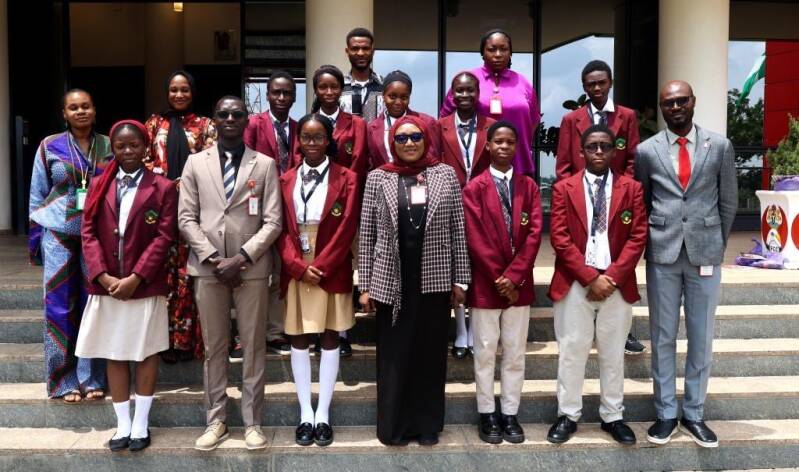
In a statement released on the 18th of May, 2026, the Executive Chairman of the Economic and Financial Crimes Commission (EFCC), Ola Olukoyede, has charged students across Nigeria to see themselves as critical stakeholders in the fight against corruption, urging them to embrace integrity and take active roles in shaping a crime‑free future. Olukoyede made the call on Thursday, May 14, 2026, when students of Fairview Academy, Abuja, visited the EFCC’s corporate headquarters in Jabi for a study tour. Represented by the Head of the Enlightenment and Re‑orientation Unit, Assistant Commander of the EFCC (ACE II) Aisha Mohammad, the EFCC boss told the young visitors that the younger generation remains the greatest hope of the nation’s future. He stressed the need for them to uphold moral values capable of repositioning Nigeria for sustainable development.
“You are stakeholders in the future of this country. Just as your parents sacrifice to secure your future, Nigeria is also investing in you because you are the leaders of tomorrow,” Olukoyede said. He urged the students to become ambassadors of integrity and anti‑corruption advocates in their schools, homes and communities. He also called on them to serve as “foot soldiers” and whistle‑blowers for the EFCC, noting that the Commission cannot win the war against corruption without the support of Nigerians, especially the youth. “The EFCC cannot fight corruption alone. We need young people like you to stand up for integrity, reject wrongdoing and speak out against corruption wherever you see it,” he said.
Olukoyede further urged the students to remain patriotic and shun all forms of criminality, including examination malpractice, cybercrime, internet fraud and other unethical practices capable of destroying their future. He likened the sacrifices made by parents for their children’s future to the investments being made by the country in its young people, warning the students not to betray that trust.
The students were also sensitised on the dangers and consequences of cybercrime by Deputy Superintendent of the EFCC (DSE) Abdulhameed Wodi of the Cybercrime Section. In his presentation, Wodi explained that cybercrime refers to unlawful activities carried out through digital platforms and electronic devices. He warned that the menace continues to threaten national security and economic development. According to him, common forms of cybercrime include romance scams, identity theft, impersonation, hacking, fake news, phishing and online fraud schemes targeted at unsuspecting victims.
Wodi noted that many young people take to cybercrime due to ignorance, peer pressure and the desire for quick wealth, warning that such actions carry severe legal and social consequences. He advised the students to protect themselves online by avoiding suspicious links, enabling two‑factor authentication on their devices and social media accounts, verifying information before sharing, and exercising caution in accepting online friendship requests. “Do not click on suspicious links. Verify information before sharing it online. Be careful with unknown websites and friend requests. Your digital activities can remain online permanently and may affect your future career and reputation,” he warned. He encouraged the students to maintain integrity in the digital space and be responsible users of communication devices.
In his contribution, Assistant Superintendent of the EFCC (ASE I) Gbenga Akinwande, explained that the Enlightenment and Re‑orientation Unit of the Commission was established to prevent crimes through public sensitisation and value reorientation. According to him, prevention remains more effective and less costly than investigation and prosecution. He noted that the Commission is committed to reaching young Nigerians early, before they are exposed to negative influences that could lead them into criminality.
The visit by Fairview Academy students was part of the EFCC’s ongoing public enlightenment and outreach strategy, which targets schools, religious institutions and community organisations. The Commission believes that educating young people on the dangers of corruption and cybercrime at an early age is essential to building a generation of Nigerians who will reject unethical behaviour and contribute positively to national development.
The EFCC’s engagement with students comes at a time when Nigeria is grappling with rising cases of internet fraud, commonly known as “Yahoo Yahoo”, which has increasingly drawn in young people, including teenagers. According to data from the Nigerian Communications Commission (NCC), the country loses billions of naira annually to various forms of cybercrime. The EFCC has intensified its enforcement efforts, arresting and prosecuting thousands of suspects, but officials acknowledge that prevention through education is the most sustainable solution.
Olukoyede’s message to the students reflects a broader strategic shift within the Commission, which has been expanding its preventive mandate beyond investigation and prosecution. The Enlightenment and Re‑orientation Unit has carried out numerous school visits, public lectures and media campaigns aimed at changing the mindset of young Nigerians. The Commission has also partnered with educational authorities to integrate anti‑corruption themes into school curricula.
As the students of Fairview Academy departed the EFCC headquarters, many expressed a renewed determination to stay away from cybercrime and to report any suspicious activities they might encounter. One student told reporters that the visit had opened her eyes to the long‑term consequences of a single bad digital decision. “I never knew that something as simple as clicking a wrong link could ruin my future. Now I will be more careful,” she said.
The EFCC has announced that it will continue to host school tours and outreach programmes across the country, calling on other educational institutions to partner with the Commission in the fight against corruption. “We cannot arrest our way out of this problem. We must also educate,” an EFCC spokesman said.
📩 Stone Reporters News | 🌍 stonereportersnews.com
✉️ info@stonereportersnews.com | 📘 Facebook: Stone Reporters News | 🐦 X (Twitter): @StoneReportNew | 📸 Instagram: @stonereportersnews
Add comment
Comments