

Reported by: Ijeoma G | Edited by: Oravbiere Osayomore Promise.
Lagos State enforcement teams have demolished or removed 1,544 structures illegally built on drainage channels across the megacity between 2025 and April 2026. The Ministry of Environment and Water Resources stated that the removals are part of an ongoing effort to tackle the devastating seasonal flooding that regularly paralyzes Africa's largest city.
The Drainage Enforcement and Compliance Department identified a total of 2,218 structures in various communities found to be situated on or obstructing drainage alignments. Of these, 1,544 were successfully cleared—a 70 percent success rate. The remaining 30 percent, roughly 674 structures, were not removed during the review period, and the ministry gave no timeline for when they would be addressed.
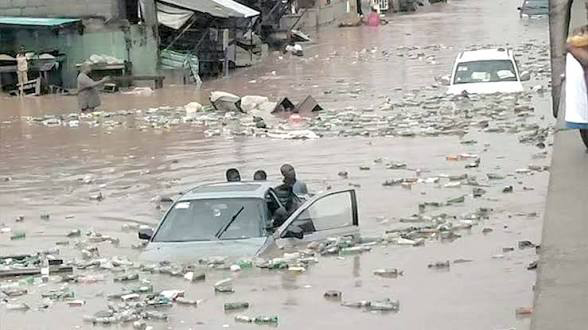
Drainage obstruction has been identified as one of the primary causes of flooding in Lagos, a low-lying coastal megacity of over 20 million people where heavy rainfall regularly inundates communities, damages roads, and claims lives. The city’s drainage network, comprising primary channels that carry water to the lagoon and secondary collectors that feed into them, can only function if the channels remain clear. When structures are built on drainage alignments, water backs up into surrounding neighborhoods.
In addition to the removals, the department restored 12 kilometers of primary channels and cleared 123.5 meters of right-of-way during the same period. Separately, rapid-response teams cleaned approximately 210 kilometers of secondary and tertiary drains across all 20 local government areas, including emergency interventions during flooding events. Nine facilities were sealed for illegal wetland encroachment in areas including Ogombo, Lekki Phase II, Itoikin-Epe, and Majidun in Ikorodu—developments that officials said would have permanently degraded ecosystems that naturally buffer the city against flooding.
The ministry said that between April 2025 and April 2026, the state awarded construction contracts for over 100 kilometers of new secondary collector drains and 30 kilometers of primary channels—work that officials say will significantly expand the city’s drainage capacity once completed.
Flooding in Lagos causes losses running into billions of naira annually. A report cited by the Lagos State Ministry of Finance at a separate briefing this month estimated that climate inaction could cost the city close to $40 billion by 2050.
The scale of the enforcement challenge reflects a broader pattern across Lagos, where informal construction has for decades expanded into areas designated for drainage, open space, or environmental protection. Residents and developers who build on drainage channels rarely face immediate consequences, and enforcement has historically been inconsistent. However, the latest figures indicate a more aggressive approach by the administration of Governor Babajide Sanwo-Olu.
In April 2026, the government ordered the swift evacuation of waste generated during the monthly environmental sanitation exercise, with drainage channels and canals being cleared simultaneously to curb flooding as rains intensify. The Ministry has maintained that persistent indiscriminate waste disposal, blocked drainage channels, and recurrent flooding have made stronger community participation necessary.
The Commissioner for the Environment and Water Resources has stated that the government will continue to demolish structures built over drainage channels to ensure justice and fairness to all residents. The government has also defended recent demolition exercises in Makoko and other waterfront communities, describing them as necessary interventions designed to prevent potential disasters, enhance public safety, and reposition Lagos as a resilient and sustainable megacity.
The removals have not been without controversy. In January 2026, about 100 houses and shanties on water channels in the Agege area were demolished by the Lagos State Task Force on Environment to give way for the reconstruction of a canal in the affected areas. In February 2026, the Lagos Environmental Sanitation Corps (LAGESC) demolished shanties and removed illegal occupants from the Ajao Estate section of the Mass Burial Canal, later setting the structures ablaze and warning that the site would be monitored to prevent reoccupation. In October 2025, the government demolished 17 unapproved buildings in Oral Estate II, Lekki, as part of an ongoing enforcement drive to reclaim waterways, restore natural drainage systems, and reduce flood risks.
The figures were disclosed at the ministry’s annual press briefing held recently at the Bagauda Kaltho Press Centre in Alausa. The ministry gave no specific timeline for when the remaining 674 structures would be addressed. The state government has not indicated whether it plans to demolish them or seek other means of removal.
For the millions of Lagos residents who face the annual threat of flooding, the removal of 1,544 structures is a step forward. But with 674 more still blocking the drains, and with the rainy season already underway, the true test of the state’s flood prevention efforts will come with the next downpour. The question is not whether the drains can handle the water, but whether the political will to keep them clear will outlast the next electoral cycle.
📩 Stone Reporters News | 🌍 stonereportersnews.com
✉️ info@stonereportersnews.com | 📘 Facebook: Stone Reporters News | 🐦 X (Twitter): @StoneReportNew | 📸 Instagram: @stonereportersnews
Add comment
Comments