

Reported by: Oahimire Omone Precious | Edited by: Oravbiere Osayomore Promise.
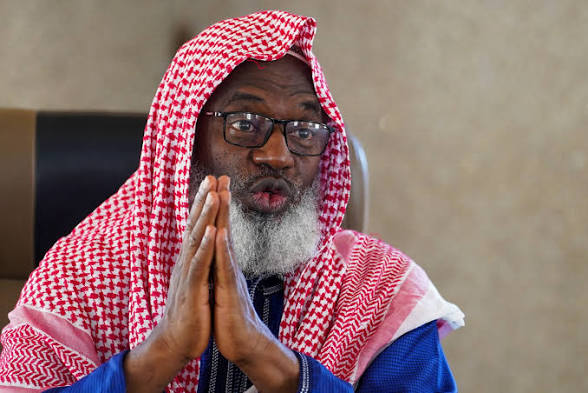
Saudi Arabian authorities arrested and deported controversial Nigerian Islamic cleric, Sheikh Ahmad Gumi, shortly after his arrival in the Kingdom on Sunday, 24 May 2026, over suspicions that he is a sympathiser of terrorist and bandit groups operating in Nigeria. According to multiple reports, Gumi travelled to Saudi Arabia to perform the lesser Hajj (Umrah) and to continue his doctoral studies in Islamic jurisprudence, a programme he had previously been allowed to complete after an earlier investigation exonerated him. However, upon landing at Prince Mohammad Bin Abdulaziz International Airport in Medina, immigration officials denied him entry, citing that his name did not appear on their authorised entry list.,
The cleric was immediately placed in detention and, after a brief administrative process, was deported back to Nigeria on a return flight. The development has triggered a wave of reactions across Nigeria, with many expressing concern over the implications for the nation's image and for the cleric's long‑standing advocacy for a non‑kinetic approach to resolving banditry.
In his first public comments after the incident, Sheikh Gumi firmly denied any connection to banditry or terrorism, insisting that his engagements with armed groups in Nigeria were transparent and carried out with the knowledge of authorities. "I don't have any links with bandits, and I've never done anything to promote insecurity. Saudi Arabia couldn't find my name in their computer and so they asked me to come back home. I was not deported," he told AIT Television in an interview broadcast on 25 May 2026., He maintained that the episode was a routine administrative glitch rather than a politically motivated ban, although he acknowledged that Saudi officials had previously investigated him and found no wrongdoing. "After full investigation, they found me not wanting," he stated.
The arrest and deportation come less than a year after a similar incident in May 2025, when Gumi was barred from performing the Hajj pilgrimage and was turned back at the same Medina airport. On that occasion, he was part of Nigeria's official Hajj delegation under the National Hajj Commission of Nigeria (NAHCON), but authorities cited his "controversial views on world politics" as a reason for the denial., At the time, an anonymous NAHCON official disclosed that Gumi had been explicitly banned from entering the Kingdom and was fully aware of the entry restriction before his 2025 trip. "He has since been banned from entry into the Kingdom. They normally will issue a visa, and then upon arrival, they will not allow you to leave immigration and will deport you," the official explained.
Sheikh Gumi has long been a polarising figure in Nigeria's security discourse. He gained national prominence in 2021 after visiting bandit camps in the North‑West, where he held direct talks with armed groups and advocated for amnesty and dialogue as alternatives to military force. Critics, including several federal lawmakers and human rights activists, have repeatedly accused him of legitimising criminality and acting as an apologist for terrorists. In the lead‑up to his latest trip, Gumi had once again urged the federal government to pursue mass amnesty for bandits, arguing that nearly two decades of military operations had failed to end insurgency and banditry in the country. "If the kinetic approach is not working for 17 years, why don't we change the approach?" he asked during a press conference in Kaduna on 24 May 2026.
Despite his firm denials, the Saudi authorities’ decision to arrest and deport him suggests that the Kingdom continues to view the cleric as a security risk. No official statement has been issued by either the Saudi government or the Nigerian Ministry of Foreign Affairs regarding the incident as of Tuesday, 26 May 2026. Gumi, who returned to Kaduna on Monday evening, has since resumed his normal activities, telling supporters that he remains committed to peacebuilding and that the matter would be resolved through diplomatic channels.
The deportation marks a significant escalation in the Kingdom's approach to the cleric, shifting from a simple denial of entry to a formal arrest and removal. It also highlights the increasing difficulty faced by Nigerian figures who engage with armed non‑state actors, even when those engagements are publicly acknowledged as peace initiatives. For now, Sheikh Gumi remains free in Nigeria, but his ability to travel internationally—especially to Saudi Arabia—now appears severely constrained.
📩 Stone Reporters News | 🌍 stonereportersnews.com
✉️ info@stonereportersnews.com
📘 Facebook: Stone Reporters News
🐦 X (Twitter): @StoneReportNew
📸 Instagram: @stonereportersnews
Add comment
Comments