

Reported by: Oahimire Omone Precious | Edited by: Oravbiere Osayomore Promise.
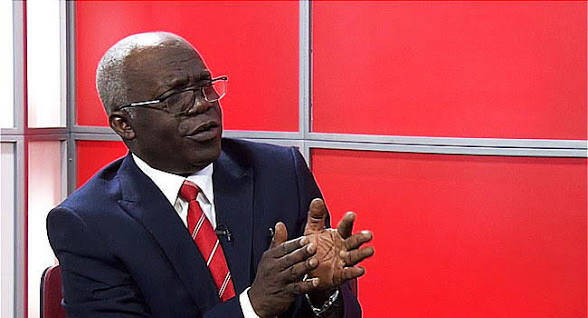
Human rights lawyer Femi Falana (SAN) has escalated his criticism of Justice James Omotosho, insisting that the Federal High Court judge violated a fundamental judicial principle by delivering a ruling that contradicted a previous judgment of a court of coordinate jurisdiction. In a detailed response to legal scholar Prof. Ernest Ojukwu, Falana revealed that Justice Omotosho himself had once publicly admitted that he lacked the authority to overrule a colleague’s decision. Falana also reiterated his intention to formally petition the National Judicial Council (NJC) over the matter, dismissing Ojukwu’s defence of the judge as a misunderstanding of settled law.
The controversy stems from two conflicting judgments delivered by Justices Mohammed Umar and James Omotosho of the Federal High Court in Abuja. On May 20, 2026, Justice Umar nullified INEC’s directive requiring political parties to submit their membership registers by May 10, 2026, ruling that the commission could not shorten the statutory timeline provided under Section 29(1) of the Electoral Act 2026. Days later, Justice Omotosho delivered a ruling affirming INEC’s constitutional authority to issue and adjust election timetables, including deadlines for party primaries and candidate nominations. Falana had earlier called for the NJC and the Nigerian Bar Association (NBA) to investigate the circumstances surrounding the conflicting rulings, arguing that Justice Omotosho ought to have awaited the determination of the Court of Appeal on Justice Umar’s judgment before delivering his own ruling on substantially the same issues.
In a series of posts on his X handle on May 27, 2026, Prof. Ernest Ojukwu disagreed sharply with Falana’s position, arguing that judges of coordinate jurisdiction are not bound by each other’s decisions and that conflicting interpretations of new legislation are a normal part of the judicial process that should be resolved by the appellate court, not the NJC. Ojukwu also questioned the propriety of Falana’s call for a probe, suggesting it amounted to harassment of the judge.
In his swift rejoinder, Falana maintained that the disagreement was “not a matter of opinion but of law.” He reminded Ojukwu that Justice James Omotosho himself had previously ruled that he could not overrule a colleague of coordinate jurisdiction. “Justice Omotosho once said he cannot overrule a colleague’s decision. That is the law. So why the sudden change?” Falana queried. He cited the elementary principle that a court lacks jurisdiction to sit on appeal over its own judgment or over a decision of a court of coordinate jurisdiction, a rule consistently upheld by the Supreme Court in cases such as Odu’a Investment Co. Ltd v. Talabi (1998). Falana argued that the need for consistency and predictability in judicial decisions demands that where conflicting judgments exist, a trial judge should await the outcome of an appeal before delivering a contradictory ruling. He insisted that Justice Omotosho was aware of the pendency of the appeal in the sister case and should have stayed proceedings.
Legal observers note that the substantive appeals arising from both judgments are now pending before the Court of Appeal, which is expected to harmonise the conflicting interpretations and provide binding guidance for INEC and political parties ahead of the 2027 elections. However, Falana has given the clearest indication yet that he is “going to take up this matter” with the NJC, raising the stakes in what is already a landmark constitutional debate. Whether the Council will find any misconduct in the judges’ actions or dismiss Falana’s complaint remains to be seen.
📩 Stone Reporters News | 🌍 stonereportersnews.com
✉️ info@stonereportersnews.com | 📘 Facebook: Stone Reporters News | 🐦 X (Twitter): @StoneReportNew | 📸 Instagram: @stonereportersnews
Add comment
Comments