

Reported by: Ijeoma G | Edited by: Oravbiere Osayomore Promise.
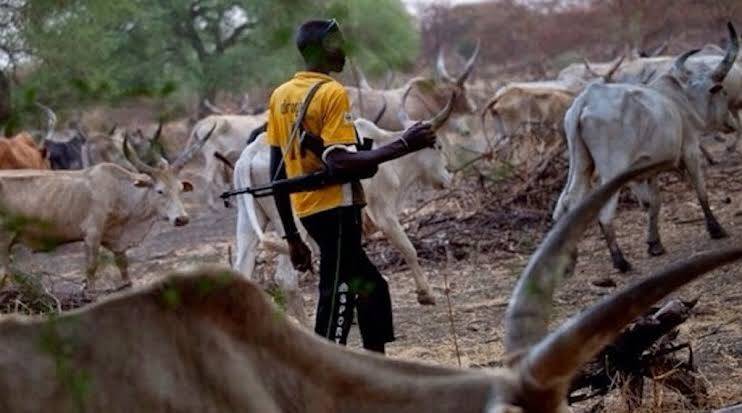
The Concerned Fulani People of Nigeria has urged international actors, particularly the United States, to desist from portraying the Fulani ethnic group as the singular source of insecurity in Nigeria, warning that such narratives risk deepening ethnic tensions and undermining national unity. The group raised the concern in a statement issued on Thursday, 28 May 2026, and signed by Ibrahim Barkindo Chubado. The statement was a direct response to what the group described as “contradictions” in United States security-related assessments and commentary on Nigeria, especially reports that have drawn attention to Fulani herders in discussions on banditry and violence.
The group questioned what it called a recurring shift in the United States’ position on insecurity in Nigeria, particularly claims that have linked Fulani communities to armed militancy. According to the group, earlier US assessments had cautioned against broad generalisations and ethnic profiling, warning that such narratives could escalate communal tensions. It recalled that during the administration of former President Muhammadu Buhari, insecurity debates were frequently linked to Fulani identity or religion, and that such framing contributed to hostility against innocent Fulani communities in parts of southern and north-central Nigeria, leading to attacks on settlements, destruction of property, and loss of livestock.
The group argued that conflicts involving herders and farmers have often been oversimplified in public discourse, despite security experts attributing them to land disputes, environmental pressures, grazing routes, and local political tensions. It cited recurring crises in Benue, Plateau, and Taraba States, insisting that many Fulani families in those areas have lived there for generations and should not be treated as outsiders. It further maintained that previous assessments had described the herder-farmer crisis as largely economic and environmental rather than ethnic or religious in nature, recommending reforms such as ranching, land-use policy adjustments, and stronger law enforcement.
The statement also referenced past criminal incidents in Ekiti, Ondo, and Edo States, noting that initial public accusations against Fulani groups were later disputed by security findings. On the 2022 attack on St. Francis Catholic Church in Owo, Ondo State, the group said early reactions wrongly attributed the incident to Fulani herders, adding that the Defence Headquarters later linked the attack to criminal elements associated with an Ebira subgroup. Despite this clarification, it alleged that some Fulani residents in Ondo State were still subjected to arrest and profiling following the incident.
The group expressed particular concern over reports attributed to the United States Commission on International Religious Freedom (USCIRF), which had claimed that an estimated 30,000 armed Fulani militants were responsible for insecurity in Nigeria. The USCIRF report, titled “Nonstate Violators of Religious Freedom in Nigeria: Fulani Militants” and released in May 2026, described the armed groups as some of the deadliest non-state actors driving religious freedom violations in Nigeria, with attacks linked to Fulani militants accounting for the highest number of deaths among religious communities in the past year, surpassing casualties attributed to organised insurgent groups and criminal gangs. The report stated that the militants operate in clusters ranging from 10 to 1,000 fighters, carrying out coordinated assaults that have led to thousands of deaths, mass displacement, and heightened religious tensions.
The Concerned Fulani People of Nigeria described the figure of 30,000 armed militants as “unfair stereotyping” that could worsen ethnic relations, arguing that insecurity in Nigeria involves multiple actors across different regions and backgrounds. It insisted that banditry, terrorism, separatist violence, kidnapping, and communal clashes cannot be attributed to any single ethnic group or religion. The group called for balanced reporting, evidence-based analysis, and caution against narratives capable of inflaming ethnic divisions. It urged Nigerian authorities and international partners to promote fairness, justice, and national unity in addressing security challenges, adding that “Nigeria’s future cannot be built on ethnic scapegoating, mutual suspicion or divisive narratives.”
The group’s rejection of the USCIRF report aligns with previous objections raised by other Fulani organisations. In February 2026, the Miyetti Allah Cattle Breeders Association of Nigeria (MACBAN) rejected its inclusion in a proposed United States sanctions list, insisting that it is a lawful, non-violent organisation unfairly linked to religious persecution and insecurity in Nigeria. MACBAN had petitioned the United States Congress, through the American embassy in Abuja, seeking the removal of its name from the sanctions list. Similarly, the Concerned Fulani People of Nigeria has now added its voice to the growing chorus of Fulani groups pushing back against what they perceive as the stigmatisation of their ethnic community in international security discourse.
The USCIRF report had also alleged that Nigerian security forces sometimes collude with Fulani militias in deadly attacks and mass abductions targeting religious communities, a claim that the Nigerian government has consistently denied. The commission further stated that Nigerian government censorship had hindered accurate analysis of the identities and motivations of the armed groups violating religious freedom. The Concerned Fulani People of Nigeria, however, urged international actors to recognise that Nigeria’s security crisis is complex and multifaceted, involving terrorism, banditry, separatist insurgencies, communal clashes, and criminal networks that cross ethnic and religious lines. The group warned that the continued portrayal of Fulani people as the primary drivers of insecurity could exacerbate retaliatory violence against innocent Fulani communities, many of whom are themselves victims of attacks by bandits and insurgents.
The statement concluded with a call for evidence-based analysis and responsible political rhetoric. “Nigeria’s future cannot be built on ethnic scapegoating, mutual suspicion or divisive narratives,” it read. The group expressed hope that the United States would reconsider its approach to reporting on Nigeria’s security challenges, and that international partners would work with Nigerian authorities to address the root causes of violence rather than resorting to ethnic profiling that could further destabilise the country.
📩 Stone Reporters News | 🌍 stonereportersnews.com
✉️ info@stonereportersnews.com
📘 Facebook: Stone Reporters News
🐦 X (Twitter): @StoneReportNew
📸 Instagram: @stonereportersnews
Add comment
Comments