

Reported by: Ijeoma G | Edited by: Oravbiere Osayomore Promise.
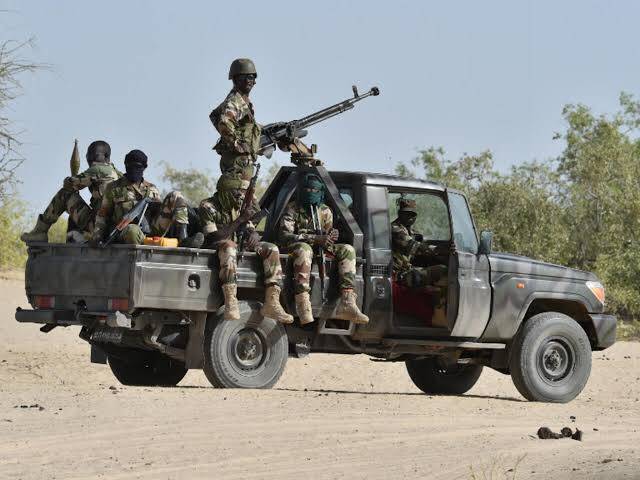
Troops of the Nigerian Army successfully repelled an attack by suspected Islamic State West Africa Province (ISWAP) terrorists in Chibok Local Government Area of Borno State on Wednesday, May 27, 2026, security sources told Zagazola Makama, a counter‑insurgency publication. The attack occurred at about 12:30 p.m. when the terrorists attempted to overrun the troops of 115 Task Force Battalion stationed at Yarchida. According to the sources, the soldiers responded swiftly and engaged the attackers in a fierce gun battle. Reinforcement from 117 Task Force Battalion supported the defending troops, leading to the successful repulsion of the assault. The terrorists were forced to withdraw following superior firepower from the troops. Security operations have since been intensified in the area to prevent further insurgent attacks and sustain stability in the region.
Chibok, located in southern Borno, rose to global attention following the abduction of over 270 schoolgirls by Boko Haram in April 2014. While the area has faced repeated attacks over the years, the Nigerian military has maintained a presence there as part of ongoing counter‑insurgency efforts under Operation HADIN KAI. The latest attack represents a failed attempt by ISWAP fighters to breach the defensive perimeter of the 115 Task Force Battalion, a strategically placed unit responsible for protecting the local population and key transport routes. The swift reinforcement by the 117 Task Force Battalion proved decisive, as the combined firepower forced the terrorists to abandon their objective and retreat into the surrounding bush. No casualty figures or equipment losses have been officially released, but military sources indicated that the troops held their ground and the terrorists withdrew without achieving any of their objectives.
The incident occurred just a day after the Defence Headquarters announced that more than 370 terrorists had been killed, 342 suspects arrested, and 239 hostages freed during a 30‑day nationwide military offensive in May 2026. It also followed a pattern of intensified operations in the North‑East, where the military has been conducting clearance missions and ambushes to flush out insurgent hideouts. In separate operations earlier in May, the Nigerian Air Force carried out airstrikes in the Lake Chad basin, neutralising dozens of ISWAP fighters, while ground troops foiled multiple attacks across Borno and Yobe states. Despite these tactical gains, the attempted assault on a key military position in Chibok underscores the continued threat posed by ISWAP, which has proven resilient even after the elimination of several of its commanders.
The Yarchida axis has been a recurring hot spot in the Chibok area, with earlier offensives by the military focusing on clearing villages such as Mboa, Yarchida, Bombula and Bamzir of insurgent presence. The successful defence of the 115 Task Force Battalion position highlights the army’s emphasis on rapid reinforcement and coordinated response to infiltration attempts. The use of two task force battalions in a single engagement suggests that the military has improved its reaction time and inter‑unit coordination, a critical factor in counter‑insurgency warfare where insurgents often rely on speed and surprise.
Local residents in Chibok, many of whom have endured years of displacement and fear, expressed relief following the news of the repelled attack. A community leader, who spoke on condition of anonymity, told Stone Reporters News that the swift military response had prevented what could have been a major disaster. “We heard the gunfire and feared the worst, but the soldiers did their job. The terrorists were pushed back, and we are grateful,” he said. However, he also expressed concern that the insurgents might regroup and target nearby villages, calling for sustained military patrols and improved early‑warning systems.
The Nigerian Army has not issued an official statement on the incident beyond the security sources quoted by Zagazola Makama. However, military analysts expect that the successful repulsion of the attack will be included in the next weekly operational briefing by the Defence Headquarters. The military has consistently maintained that it is making progress in degrading the capacity of Boko Haram and ISWAP, even as sporadic attacks continue to occur in rural parts of Borno and Yobe states.
The Chibok engagement comes amid heightened vigilance across the North‑East, where the military has been on alert following intelligence reports of planned attacks during the Eid‑el‑Kabir festivities. The successful defence of the 115 Task Force Battalion position on May 27 suggests that the preventive deployments and proactive patrolling ordered by the Theatre Command may have contributed to the timely detection and neutralisation of the threat. While the ultimate goal of completely eradicating insurgency in the North‑East remains elusive, the Chibok counter‑attack represents a tactical success that boosts troop morale and reassures local communities that the military remains capable of defending its positions.
As of Thursday, May 28, 2026, normalcy had been restored to the Yarchida area, and troops remained on high alert for any possible retaliation. The military has called on residents to continue cooperating with security forces by providing timely intelligence on the movement of suspicious individuals. The terrorists who survived the encounter are believed to have fled in the direction of the Mandara Mountains, a known hideout for insurgent groups operating along the Nigeria‑Cameroon border. Efforts to track them are ongoing.
📩 Stone Reporters News | 🌍 stonereportersnews.com
✉️ info@stonereportersnews.com
📘 Facebook: Stone Reporters News
🐦 X (Twitter): @StoneReportNew
📸 Instagram: @stonereportersnews
Add comment
Comments